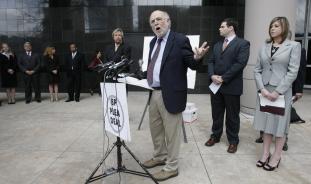
TPJ and its allies in the consumer, environmental and labor community addressed a joint House hearing Thursday to urge the legislature to overturn liability limits that give immunity for corporate wrongdoers and jeopardize community and worker safety.
Read the advocacy groups' media statement.
 |
 |
 |
 |
 |
Showing posts with label BP. Show all posts
Showing posts with label BP. Show all posts
Friday, March 13, 2009
Houston Chronicle: Judge approves disputed BP plea deal in Texas City blast
A division of BP officially became a felon Thursday when a federal judge accepted a long-pending plea bargain to resolve a criminal investigation into the deadly 2005 explosion at the company’s Texas City refinery. U.S. District Judge Lee Rosenthal ordered BP to pay the agreed-upon $50 million fine by Monday and comply with blast-related settlements with regulators while on probation for three years. Read the article at the Houston Chronicle
By KRISTEN HAYS
Copyright 2009 Houston Chronicle
March 13, 2009
A division of BP officially became a felon Thursday when a federal judge accepted a long-pending plea bargain to resolve a criminal investigation into the deadly 2005 explosion at the company’s Texas City refinery.
U.S. District Judge Lee Rosenthal ordered BP to pay the agreed-upon $50 million fine by Monday and comply with blast-related settlements with regulators while on probation for three years.
The explosion on March 23, 2005, killed 15 workers and hurt many more.
Rosenthal’s ruling came nearly a year and a half after the plea deal was unveiled in late October 2007. In February 2008, Texas City plant manager Keith Casey pleaded guilty on the company’s behalf to a felony violation of the Clean Air Act.
But Rosenthal held off on approving or rejecting the deal as blast victims repeatedly implored her to toss it out.
Victims say the fine is too small, that BP has failed to abide by blast-related settlements with regulators and that prosecutors bypassed a 2004 federal victim rights law requiring prosecutors to confer with victims before drafting the accord.
Rosenthal heard arguments and testimony on all those points. A 5th U.S. Circuit Court of Appeals panel sided with victims regarding the 2004 law but stopped short of ordering Rosenthal to reject the plea deal, leaving the final decision in her hands.
“I don’t think there’s any question as to the extent of opportunity that has been extended and used” by everyone who wanted to be heard, Rosenthal said Thursday.
After “a great deal of thought and consideration,” she said, “the plea should be accepted.”
Trial chances considered
In a 138-page order, Rosenthal noted that the case is among few in which the government successfully applied a felony violation to an industrial accident. She also said she considered the possibility that the government might lose at trial or fail to prove under environmental laws that BP should pay more than $50 million.
Eva Rowe, whose parents, James and Linda Rowe, were among the 15 people killed by the blast, dabbed tears from her eyes as Rosenthal announced her decision.
“I just think it’s unfair,” she said after the brief hearing. “Fifty million dollars, they make that much in less than one day.”
‘Cost of a traffic ticket’
Brent Coon, the attorney who represented Rowe and headed up massive civil litigation stemming from the blast, said the fine “equates to the cost of a traffic ticket for an individual.”
BP has responded that $50 million is the highest fine ever imposed for a Clean Air Act violation and the punishment is sufficiently harsh.
In addition to the felony plea and fine, BP’s North American products division, which oversees U.S. refineries including Texas City, must comply with settlements with the U.S. Occupational Safety and Health Administration and the Texas Commission on Environmental Quality to meet conditions of probation. Failure to do so would violate the plea deal.
Rowe said she’s certain BP will violate those probation terms at some point in the next three years despite the company’s professed commitment to safety.
“We’ll be waiting for them to mess up. It won’t be long,” she said.
Company spokesman Daren Beaudo said the company deeply regrets the harm caused by the disaster and BP remains committed to its efforts to “reduce risk, increase plant integrity and increase environmental compliance.”
Rosenthal told victims in a hearing more than a year ago that she could only accept or reject what was presented to her. She could not impose a different punishment or a higher fine.
All civil claims settled
In the deal, BP admits that on the morning of the blast, several procedures required under the Clean Air Act to ensure mechanical integrity and the safe startup of processing units were either ignored or not established.
Since the plea deal was unveiled, BP settled all the more than 4,000 civil claims stemming from the blast, with claims paid from $2.1 billion BP set aside to resolve them.
David Perry, one of the lawyers who represented victims, told Rosenthal that “notwithstanding our disagreement with the court’s decision,” victims appreciate that they were heard.
Judge approves disputed BP plea deal in Texas City blast
By KRISTEN HAYS
Copyright 2009 Houston Chronicle
March 13, 2009
A division of BP officially became a felon Thursday when a federal judge accepted a long-pending plea bargain to resolve a criminal investigation into the deadly 2005 explosion at the company’s Texas City refinery.
U.S. District Judge Lee Rosenthal ordered BP to pay the agreed-upon $50 million fine by Monday and comply with blast-related settlements with regulators while on probation for three years.
The explosion on March 23, 2005, killed 15 workers and hurt many more.
Rosenthal’s ruling came nearly a year and a half after the plea deal was unveiled in late October 2007. In February 2008, Texas City plant manager Keith Casey pleaded guilty on the company’s behalf to a felony violation of the Clean Air Act.
But Rosenthal held off on approving or rejecting the deal as blast victims repeatedly implored her to toss it out.
Victims say the fine is too small, that BP has failed to abide by blast-related settlements with regulators and that prosecutors bypassed a 2004 federal victim rights law requiring prosecutors to confer with victims before drafting the accord.
Rosenthal heard arguments and testimony on all those points. A 5th U.S. Circuit Court of Appeals panel sided with victims regarding the 2004 law but stopped short of ordering Rosenthal to reject the plea deal, leaving the final decision in her hands.
“I don’t think there’s any question as to the extent of opportunity that has been extended and used” by everyone who wanted to be heard, Rosenthal said Thursday.
After “a great deal of thought and consideration,” she said, “the plea should be accepted.”
Trial chances considered
In a 138-page order, Rosenthal noted that the case is among few in which the government successfully applied a felony violation to an industrial accident. She also said she considered the possibility that the government might lose at trial or fail to prove under environmental laws that BP should pay more than $50 million.
Eva Rowe, whose parents, James and Linda Rowe, were among the 15 people killed by the blast, dabbed tears from her eyes as Rosenthal announced her decision.
“I just think it’s unfair,” she said after the brief hearing. “Fifty million dollars, they make that much in less than one day.”
‘Cost of a traffic ticket’
Brent Coon, the attorney who represented Rowe and headed up massive civil litigation stemming from the blast, said the fine “equates to the cost of a traffic ticket for an individual.”
BP has responded that $50 million is the highest fine ever imposed for a Clean Air Act violation and the punishment is sufficiently harsh.
In addition to the felony plea and fine, BP’s North American products division, which oversees U.S. refineries including Texas City, must comply with settlements with the U.S. Occupational Safety and Health Administration and the Texas Commission on Environmental Quality to meet conditions of probation. Failure to do so would violate the plea deal.
Rowe said she’s certain BP will violate those probation terms at some point in the next three years despite the company’s professed commitment to safety.
“We’ll be waiting for them to mess up. It won’t be long,” she said.
Company spokesman Daren Beaudo said the company deeply regrets the harm caused by the disaster and BP remains committed to its efforts to “reduce risk, increase plant integrity and increase environmental compliance.”
Rosenthal told victims in a hearing more than a year ago that she could only accept or reject what was presented to her. She could not impose a different punishment or a higher fine.
All civil claims settled
In the deal, BP admits that on the morning of the blast, several procedures required under the Clean Air Act to ensure mechanical integrity and the safe startup of processing units were either ignored or not established.
Since the plea deal was unveiled, BP settled all the more than 4,000 civil claims stemming from the blast, with claims paid from $2.1 billion BP set aside to resolve them.
David Perry, one of the lawyers who represented victims, told Rosenthal that “notwithstanding our disagreement with the court’s decision,” victims appreciate that they were heard.


Thursday, October 16, 2008
Health, Consumer & Safety Advocates Cite Dangers If 'Entergy' Ruling Stands
Leaders from Texas consumer, labor, worker-safety and corporate-accountability organizations warned of dangerous consequences for Texas’ workers and communities if the Texas Supreme Court’s reckless ‘Entergy’ ruling is not reversed by either the Court or the Legislature. Under growing pressure from safety advocates, editorial writers, and legislators who insist the Texas Supreme Court overstepped its bounds in its 2007 ruling in Entergy v Summers, the court held a rare rehearing today in Dallas. 
Health, Consumer & Safety Advocates
Dallas: Leaders from Texas consumer, labor, worker-safety and corporate-accountability organizations warned of dangerous consequences for Texas’ workers and communities if the Texas Supreme Court’s reckless ‘Entergy’ ruling is not reversed by either the Court or the Legislature. Under growing pressure from safety advocates, editorial writers, and legislators who insist the Texas Supreme Court overstepped its bounds in its 2007 ruling in Entergy v Summers, the court held a rare rehearing today in Dallas.
Texas safety advocates contend the Entergy ruling harms Texas communities and workers by shielding the owners of large industrial plants from accountability for injuries to contract workers employed at dangerous workplaces. Under the Entergy ruling, for example, the families of workers killed or injured in the 2005 BP explosion in Texas City would have been barred from pursuing legal claims in Texas courts. Those claims exposed unsafe plant practices, prompted new safety procedures and compensated victims of a preventable disaster. Absent such courtroom accountability, workers and communities will not be safe.
“The Texas Supreme Court’s do-over in the Entergy v. Summers case will have a direct impact on worker safety,” Texas AFL-CIO President Becky Moeller said. “Continuing the legal principle that has served Texas well for years will encourage companies to emphasize safety in dangerous workplaces. Reverting to the result reached in the first Entergy opinion would ‘fix’ what’s not broken and encourage companies to make new calculations of the cost of safety v. the risk of injury or death. As we have seen so many times, it is both cheaper and better business practice to place worker safety first, rather than game the system in a way that compromises safety.”
“Ignoring the law, legal precedent and the intent of the Legislature in the Entergy case, the Texas Supreme Court made the workplace in Texas even more dangerous,” said Glenn Smith, co-founder of the Texas Progress Council. “The ruling destroyed all notions of accountability, a Texas value if ever there was one. When no one is accountable, no one is safe. Let's hope the court restores accountability by reversing its earlier opinion."
“The Texas Supreme Court, once again, got it wrong in the Entergy decision on the facts and on the law,” said Alex Winslow, Executive Director of Texas Watch. “The ruling eliminates accountability and leaves us all more vulnerable. If the court doesn’t reverse this ruling, the legislature will be left to clean up the mess.”
“The court’s unanimous Entergy ruling is a reckless deregulation of Texas workplaces,” said Craig McDonald, director of Texans for Public Justice. “It will result in more accidents, more injuries and more preventable deaths. This is the ultimate example of an activist court legislating from the bench. The high court rewrote the law to benefit the oil, gas and chemical giants that will no longer be accountable to the public or to Texas courts.”
Link to Press Release from Rep. Craig Eiland, Sens. Jeff Wentworth & Rodney Ellis
Link to TPJ Fact Sheet on contributions to Supreme Court from Energy & Chemical Industry Donors
Health, Consumer & Safety Advocates
Cite Dangers If 'Entergy' Ruling Stands
Groups Renew Call for Legislative Action If High Court Fails to Restore Accountability
| For Immediate Release: | For More Information Contact: |
| October 16, 2008 Download PDF | Ed Sills, AFL-CIO, 512-477-6195 Alex Winslow, Texas Watch, 512-381-1111 Glenn Smith, Texas Progress Council, 512-322-0700 Craig McDonald, Texans for Public Justice, 512-472-9770 |
Texas safety advocates contend the Entergy ruling harms Texas communities and workers by shielding the owners of large industrial plants from accountability for injuries to contract workers employed at dangerous workplaces. Under the Entergy ruling, for example, the families of workers killed or injured in the 2005 BP explosion in Texas City would have been barred from pursuing legal claims in Texas courts. Those claims exposed unsafe plant practices, prompted new safety procedures and compensated victims of a preventable disaster. Absent such courtroom accountability, workers and communities will not be safe.
“The Texas Supreme Court’s do-over in the Entergy v. Summers case will have a direct impact on worker safety,” Texas AFL-CIO President Becky Moeller said. “Continuing the legal principle that has served Texas well for years will encourage companies to emphasize safety in dangerous workplaces. Reverting to the result reached in the first Entergy opinion would ‘fix’ what’s not broken and encourage companies to make new calculations of the cost of safety v. the risk of injury or death. As we have seen so many times, it is both cheaper and better business practice to place worker safety first, rather than game the system in a way that compromises safety.”
“Ignoring the law, legal precedent and the intent of the Legislature in the Entergy case, the Texas Supreme Court made the workplace in Texas even more dangerous,” said Glenn Smith, co-founder of the Texas Progress Council. “The ruling destroyed all notions of accountability, a Texas value if ever there was one. When no one is accountable, no one is safe. Let's hope the court restores accountability by reversing its earlier opinion."
“The Texas Supreme Court, once again, got it wrong in the Entergy decision on the facts and on the law,” said Alex Winslow, Executive Director of Texas Watch. “The ruling eliminates accountability and leaves us all more vulnerable. If the court doesn’t reverse this ruling, the legislature will be left to clean up the mess.”
“The court’s unanimous Entergy ruling is a reckless deregulation of Texas workplaces,” said Craig McDonald, director of Texans for Public Justice. “It will result in more accidents, more injuries and more preventable deaths. This is the ultimate example of an activist court legislating from the bench. The high court rewrote the law to benefit the oil, gas and chemical giants that will no longer be accountable to the public or to Texas courts.”
Link to Press Release from Rep. Craig Eiland, Sens. Jeff Wentworth & Rodney Ellis
Link to TPJ Fact Sheet on contributions to Supreme Court from Energy & Chemical Industry Donors
Tuesday, May 13, 2008
KHOU: Justice for sale in Texas?
We all expect our courts to offer a fair and impartial trial. It is, after all, one of the basic demands we make of our society in America. But are the scales of justice in Texas tipping against you and instead, in favor of big corporations? What’s worse, experts say you may be paying the price with lower safety standards. Read and view the 11 News Report at KHOU-Houston
By Mark Greenblatt / 11 News Defenders
Tuesday, May 13, 2008
KHOU-Houston
We all expect our courts to offer a fair and impartial trial. It is, after all, one of the basic demands we make of our society in America. But are the scales of justice in Texas tipping against you and instead,in favor of big corporations?
What’s worse, experts say you may be paying the price with lower safety standards. Jose Herrera liked working at the CITGO refinery, sometimes spending 80 hours a week working -- as many men do at similar plants -- as a contract laborer. But he didn’t mind. He was the breadwinner for his family and for his young son.
But today, Herrera is trapped in a nightmare of a memory of a work accident. One that poured 475-degree petroleum all over his body as he struggled to free himself from a jammed safety harness for what seemed like ages.
“Between seven to 12 minutes,” he said. “I got burned literally up in my head.”
And even after hospital treatment, even months later, he is still trapped in isolation.
“We can’t hug him because he hurts all over,” his wife Hortencia said. “He can’t hug me or hug my little boy.”
And trapped in the worst way possible for a proud working man -- Financially, with seemingly no way out.
11 News: “What is going to happen to your family?”
Jose: “I don’t know.”
11 News: “Are you concerned?”
Jose: “Yes.”
So how could this happen?
Let’s start with March 23, 2005 as the Texas City refinery of BP detonates into flames, killing 15 workers and injuring more than 170 others.
Linda Hunnings remembers that morning, as her husband, a contract worker, “Gave me a kiss and said, ‘Don’t forget baby I am working over today,’ and I said, OK,’” she said.
She never saw him again.
“He used to say that plant was an accident waiting to happen,” Hunnings said.
So, Hunnings and others filed lawsuits against BP. The result: $1.6 billion in total awards, and it rocked corporate Texas.
But not for long.
“The Legislature has repeatedly refused to pass this law,” state Rep. Craig Eiland said.
Eiland says big business had already been pushing a law that would shield them from contract employee accident claims in Texas, but, “Since 1995, there have been five attempts,” he said. “Five times, shot down.”
So, without the legislature’s help, experts say industry began focusing on another possibility: the Texas Supreme Court and the case of Entergy vs. Summers.
It’s where they finally succeeded.
In the case, the judges ruled that if Texas companies bought a certain type of worker’s compensation insurance, they were protected from contract worker lawsuits stemming from injury.
Eiland’s reaction?
“My initial reaction was ‘they didn’t do this,’” he said.
To legislators from both sides of the aisle, the high court had overstepped its bounds.
Eiland: “The judiciary is supposed to interpret the law as it is written.”
11 News: “And what is happening here?”
Eiland: “They are making the law.”
"This decision is leaps and bounds beyond what the legislature intended," said Alex Winslow of Texas Watch, a government watchdog group based in Austin. "This is not a small and insignificant ruling, this is sweeping and far reaching. It affects every worker in the state and I believe threatens communities across the state."
So why did the court do it?
“This is supposed to be an impartial panel,” said Andrew Wheat, a member of Texans for Public Justice that follows money in politics.
His conclusion?
“This judicial system has become a joke, a farce,” he said.
Why? Wheat analyzed campaign contributions to Texas Supreme Court justices and he said he found that “some of the biggest donors that came up are old school oil and gas companies.”
Companies, Wheat said that would benefit handsomely from the Court’s recent ruling.
“This is an industry that invested heavily in these justices’ campaigns,” Wheat said.
Take a look for yourself: BP, the Texas Oil and Gas PAC and others with an interest in the ruling gave nearly $750,000 to the justices in the six years leading up to the decision.
We should note that three of the nine justices have been there the full six-year period, while six have not.
And who got the biggest share? Justice Don Willett, the same justice who wrote the Entergy opinion that gives these industries immunity.
But for some?
11 News: “You agree with the Supreme Court’s decision?”
Leo Linbeck Jr.: “Absolutely.”
Linbeck is a founding member of Texans for Lawsuit Reform.
“I don’t know why a lawsuit is a necessary ingredient in investigating what happened,” he said.
So we showed him Jose Herrera’s picture.
11 News: “He has no recourse against the people he believes could be responsible. Do you believe this is really the right thing to do?”
Linbeck: “You’re asking me to respond to you in an emotional way about a fact situation. I didn’t make the law.”
Here’s an interesting fact: Two of the largest donations ever made to Justice Willett, the author of the ruling, came from the political action committee for Texans for Lawsuit Reform.
“We have to get money out of the courtroom,” Texans for Public Justice’s Wheat said.
11 News: “They believe this stinks. Your response?”
Linbeck: “Then they ought to hold their nose.”
Which brings us back to Herrera. With the clock now ticking on his two years of workers compensation money.
11 News: “They say your right to sue does not exist anymore. What do you think about that?”
Herrera: “That’s not right.”
11 News: “Why?”
Herrera: “They (treat) us like a piece of tool. We are not a tool. We are human beings.”
Linbeck told 11 News that on a personal basis, he supports the idea of reforming the current system of electing Supreme Court Justices. He said it is “unseemly” for justices to raise money personally for campaigns. However, he said he expects Texans For Lawsuit Reform and others to play by the rules as they are currently written until such reform comes along.
So, what was the Court’s reaction?
In a rare move, it has agreed to rehear the Case of Entergy vs. Summers. A spokesman says that likely will take place in September or October.
From there, the 11 News Defenders were told it could be more than a year before the Court issues its ruling.
Entergy declined comment on this story, citing the pending rehearing of the case.
After two years, Herrera could be eligible for other benefits if he qualifies.
The Texas Supreme Court justices declined comment, but some say any campaign contributions to the court give more of the appearance of impropriety than the real thing.
For example, the Court recently made a controversial ruling in favor of Perry Homes. But in that case, Chief Justice Willett, who received a substantial amount of campaign money from Perry, actually dissented against that judgment.
Texans for Lawsuit Reform said that they've advocated for years to have supreme court justices appointed on merit.
They also deny any impropriety has occurred due to any campaign contributions they've made.
Finally, both Entergy and BP declined comment, but Citgo told us that they strive to provide a safe workplace and say they support Jose Herrera and his family through medical care and income benefits under the Texas Workers Compensation system as provided by law.
They also say they are fully cooperating with state and federal investigations into Herrera’s accident.
Justice for sale in Texas?
State supreme court ruling may leave industrial workers in the cold; was it paid for?By Mark Greenblatt / 11 News Defenders
Tuesday, May 13, 2008
KHOU-Houston
We all expect our courts to offer a fair and impartial trial. It is, after all, one of the basic demands we make of our society in America. But are the scales of justice in Texas tipping against you and instead,in favor of big corporations?
What’s worse, experts say you may be paying the price with lower safety standards. Jose Herrera liked working at the CITGO refinery, sometimes spending 80 hours a week working -- as many men do at similar plants -- as a contract laborer. But he didn’t mind. He was the breadwinner for his family and for his young son.
But today, Herrera is trapped in a nightmare of a memory of a work accident. One that poured 475-degree petroleum all over his body as he struggled to free himself from a jammed safety harness for what seemed like ages.
“Between seven to 12 minutes,” he said. “I got burned literally up in my head.”
And even after hospital treatment, even months later, he is still trapped in isolation.
“We can’t hug him because he hurts all over,” his wife Hortencia said. “He can’t hug me or hug my little boy.”
And trapped in the worst way possible for a proud working man -- Financially, with seemingly no way out.
11 News: “What is going to happen to your family?”
Jose: “I don’t know.”
11 News: “Are you concerned?”
Jose: “Yes.”
So how could this happen?
Let’s start with March 23, 2005 as the Texas City refinery of BP detonates into flames, killing 15 workers and injuring more than 170 others.
Linda Hunnings remembers that morning, as her husband, a contract worker, “Gave me a kiss and said, ‘Don’t forget baby I am working over today,’ and I said, OK,’” she said.
She never saw him again.
“He used to say that plant was an accident waiting to happen,” Hunnings said.
So, Hunnings and others filed lawsuits against BP. The result: $1.6 billion in total awards, and it rocked corporate Texas.
But not for long.
“The Legislature has repeatedly refused to pass this law,” state Rep. Craig Eiland said.
Eiland says big business had already been pushing a law that would shield them from contract employee accident claims in Texas, but, “Since 1995, there have been five attempts,” he said. “Five times, shot down.”
So, without the legislature’s help, experts say industry began focusing on another possibility: the Texas Supreme Court and the case of Entergy vs. Summers.
It’s where they finally succeeded.
In the case, the judges ruled that if Texas companies bought a certain type of worker’s compensation insurance, they were protected from contract worker lawsuits stemming from injury.
Eiland’s reaction?
“My initial reaction was ‘they didn’t do this,’” he said.
To legislators from both sides of the aisle, the high court had overstepped its bounds.
Eiland: “The judiciary is supposed to interpret the law as it is written.”
11 News: “And what is happening here?”
Eiland: “They are making the law.”
"This decision is leaps and bounds beyond what the legislature intended," said Alex Winslow of Texas Watch, a government watchdog group based in Austin. "This is not a small and insignificant ruling, this is sweeping and far reaching. It affects every worker in the state and I believe threatens communities across the state."
So why did the court do it?
“This is supposed to be an impartial panel,” said Andrew Wheat, a member of Texans for Public Justice that follows money in politics.
His conclusion?
“This judicial system has become a joke, a farce,” he said.
Why? Wheat analyzed campaign contributions to Texas Supreme Court justices and he said he found that “some of the biggest donors that came up are old school oil and gas companies.”
Companies, Wheat said that would benefit handsomely from the Court’s recent ruling.
“This is an industry that invested heavily in these justices’ campaigns,” Wheat said.
Take a look for yourself: BP, the Texas Oil and Gas PAC and others with an interest in the ruling gave nearly $750,000 to the justices in the six years leading up to the decision.
We should note that three of the nine justices have been there the full six-year period, while six have not.
And who got the biggest share? Justice Don Willett, the same justice who wrote the Entergy opinion that gives these industries immunity.
But for some?
11 News: “You agree with the Supreme Court’s decision?”
Leo Linbeck Jr.: “Absolutely.”
Linbeck is a founding member of Texans for Lawsuit Reform.
“I don’t know why a lawsuit is a necessary ingredient in investigating what happened,” he said.
So we showed him Jose Herrera’s picture.
11 News: “He has no recourse against the people he believes could be responsible. Do you believe this is really the right thing to do?”
Linbeck: “You’re asking me to respond to you in an emotional way about a fact situation. I didn’t make the law.”
Here’s an interesting fact: Two of the largest donations ever made to Justice Willett, the author of the ruling, came from the political action committee for Texans for Lawsuit Reform.
“We have to get money out of the courtroom,” Texans for Public Justice’s Wheat said.
11 News: “They believe this stinks. Your response?”
Linbeck: “Then they ought to hold their nose.”
Which brings us back to Herrera. With the clock now ticking on his two years of workers compensation money.
11 News: “They say your right to sue does not exist anymore. What do you think about that?”
Herrera: “That’s not right.”
11 News: “Why?”
Herrera: “They (treat) us like a piece of tool. We are not a tool. We are human beings.”
Linbeck told 11 News that on a personal basis, he supports the idea of reforming the current system of electing Supreme Court Justices. He said it is “unseemly” for justices to raise money personally for campaigns. However, he said he expects Texans For Lawsuit Reform and others to play by the rules as they are currently written until such reform comes along.
So, what was the Court’s reaction?
In a rare move, it has agreed to rehear the Case of Entergy vs. Summers. A spokesman says that likely will take place in September or October.
From there, the 11 News Defenders were told it could be more than a year before the Court issues its ruling.
Entergy declined comment on this story, citing the pending rehearing of the case.
After two years, Herrera could be eligible for other benefits if he qualifies.
The Texas Supreme Court justices declined comment, but some say any campaign contributions to the court give more of the appearance of impropriety than the real thing.
For example, the Court recently made a controversial ruling in favor of Perry Homes. But in that case, Chief Justice Willett, who received a substantial amount of campaign money from Perry, actually dissented against that judgment.
Texans for Lawsuit Reform said that they've advocated for years to have supreme court justices appointed on merit.
They also deny any impropriety has occurred due to any campaign contributions they've made.
Finally, both Entergy and BP declined comment, but Citgo told us that they strive to provide a safe workplace and say they support Jose Herrera and his family through medical care and income benefits under the Texas Workers Compensation system as provided by law.
They also say they are fully cooperating with state and federal investigations into Herrera’s accident.
Thursday, May 8, 2008
Dallas Morning News: Plea violated rights of Houston BP blast victims
Federal prosecutors violated the rights of victims of a deadly 2005 explosion at a BP PLC plant when they didn't consult them about a plea agreement to settle criminal conduct in connection with the blast, a federal appeals court ruled Wednesday. But the 5th U.S. Circuit Court of Appeals court did not block the much-criticized plea deal, instead sending the case back to a Houston judge and asking that she fully consider the victims' objections before deciding whether to accept the agreement. Read the article at the Dallas Morning News
By JUAN A. LOZANO / Associated Press
Wednesday, May 8, 2008
HOUSTON — Federal prosecutors violated the rights of victims of a deadly 2005 explosion at a BP PLC plant when they didn't consult them about a plea agreement to settle criminal conduct in connection with the blast, a federal appeals court ruled Wednesday.
But the 5th U.S. Circuit Court of Appeals court did not block the much-criticized plea deal, instead sending the case back to a Houston judge and asking that she fully consider the victims' objections before deciding whether to accept the agreement.
"We are confident that when those objections are considered, this sweetheart plea bargain will be ultimately rejected," David Perry, an attorney for blast victims, said in a statement.
U.S. Attorney Don DeGabrielle in Houston said his office was ready to proceed with the case.
"We are, however, disappointed by the appellate court's criticism of the government's good faith reliance upon a court's order approving our approach to meet" obligations to consult blast victims about the plea agreement, he said in a statement.
BP spokesman Neil Chapman declined to comment.
The plea deal, which has a BP subsidiary pleading guilty to a violation of the Clean Air Act, includes a $50 million fine and sentences the oil giant to three years' probation for its role in the blast.
BP formally entered its guilty plea during a February court hearing, but a decision on the deal's fate was pending before U.S. District Judge Lee Rosenthal when blast victims appealed the case.
The explosion, which killed 15 people and injured more than 170, occurred in Texas City, about 40 miles southeast of Houston.
Prosecutors and BP have defended the plea agreement, saying it's the harshest option available in assessing criminal punishment for the blast. A congressional committee is investigating the deal.
Family members of those killed and workers injured by the blast say the fine is insufficient. They argue federal sentencing laws allow the fine to be as high as $3.2 billion.
They also say the plea deal doesn't provide for an independent watchdog to monitor whether BP would meet its safety obligations at the refinery.
Rosenthal earlier this year rejected claims by blast victims that their rights were violated under the Crime Victims' Rights Act.
Blast victims had wanted the deal rejected because under the act, they should have been notified and consulted about the plea agreement prior to it being announced in November.
Prosecutors had argued it would have been impractical to consult all of the hundreds of victims connected to the blast before a deal was struck and any advance notification might have jeopardized the agreement.
But a three-judge panel of the 5th Circuit on Wednesday disagreed with prosecutors.
"The number of victims here did not render notice to, or conferring with, the victims to be impracticable, so the victims should have been notified of the ongoing plea discussions and should have been allowed to communicate meaningfully with the government, personally or through counsel, before a deal was struck," the three-judge panel wrote.
However, the appeals court concluded it would not be appropriate for it to order that the plea agreement be rejected, saying blast victims had been allowed to state their objections through a February court hearing, "albeit much too late in the process."
"We conclude that the better course is to deny relief, confident that the district court will take heed that the victims have not been accorded their full rights," the judges wrote.
Perry said he was disappointed the appeals court did not reject the plea deal.
"These victims were first injured by (BP's) illegal conduct, then again by the illegal actions of the U.S. attorney ... and now once again by a ruling effectively approving the illegal conduct of the U.S. attorney and negating an act of Congress," Perry said.
The deal was part of an October agreement by BP to pay $373 million to settle various criminal and civil charges.
The explosion occurred after a piece of equipment called a blowdown drum overfilled with highly flammable liquid hydrocarbons. The excess liquid and vapor hydrocarbons then were vented from the drum and ignited at the startup of the isomerization unit -- a device that boosts the octane in gasoline. Alarms and gauges that were supposed to warn of the overfilled equipment did not work properly.
Court: Plea violated rights of Houston BP blast victims
By JUAN A. LOZANO / Associated Press
Wednesday, May 8, 2008
HOUSTON — Federal prosecutors violated the rights of victims of a deadly 2005 explosion at a BP PLC plant when they didn't consult them about a plea agreement to settle criminal conduct in connection with the blast, a federal appeals court ruled Wednesday.
But the 5th U.S. Circuit Court of Appeals court did not block the much-criticized plea deal, instead sending the case back to a Houston judge and asking that she fully consider the victims' objections before deciding whether to accept the agreement.
"We are confident that when those objections are considered, this sweetheart plea bargain will be ultimately rejected," David Perry, an attorney for blast victims, said in a statement.
U.S. Attorney Don DeGabrielle in Houston said his office was ready to proceed with the case.
"We are, however, disappointed by the appellate court's criticism of the government's good faith reliance upon a court's order approving our approach to meet" obligations to consult blast victims about the plea agreement, he said in a statement.
BP spokesman Neil Chapman declined to comment.
The plea deal, which has a BP subsidiary pleading guilty to a violation of the Clean Air Act, includes a $50 million fine and sentences the oil giant to three years' probation for its role in the blast.
BP formally entered its guilty plea during a February court hearing, but a decision on the deal's fate was pending before U.S. District Judge Lee Rosenthal when blast victims appealed the case.
The explosion, which killed 15 people and injured more than 170, occurred in Texas City, about 40 miles southeast of Houston.
Prosecutors and BP have defended the plea agreement, saying it's the harshest option available in assessing criminal punishment for the blast. A congressional committee is investigating the deal.
Family members of those killed and workers injured by the blast say the fine is insufficient. They argue federal sentencing laws allow the fine to be as high as $3.2 billion.
They also say the plea deal doesn't provide for an independent watchdog to monitor whether BP would meet its safety obligations at the refinery.
Rosenthal earlier this year rejected claims by blast victims that their rights were violated under the Crime Victims' Rights Act.
Blast victims had wanted the deal rejected because under the act, they should have been notified and consulted about the plea agreement prior to it being announced in November.
Prosecutors had argued it would have been impractical to consult all of the hundreds of victims connected to the blast before a deal was struck and any advance notification might have jeopardized the agreement.
But a three-judge panel of the 5th Circuit on Wednesday disagreed with prosecutors.
"The number of victims here did not render notice to, or conferring with, the victims to be impracticable, so the victims should have been notified of the ongoing plea discussions and should have been allowed to communicate meaningfully with the government, personally or through counsel, before a deal was struck," the three-judge panel wrote.
However, the appeals court concluded it would not be appropriate for it to order that the plea agreement be rejected, saying blast victims had been allowed to state their objections through a February court hearing, "albeit much too late in the process."
"We conclude that the better course is to deny relief, confident that the district court will take heed that the victims have not been accorded their full rights," the judges wrote.
Perry said he was disappointed the appeals court did not reject the plea deal.
"These victims were first injured by (BP's) illegal conduct, then again by the illegal actions of the U.S. attorney ... and now once again by a ruling effectively approving the illegal conduct of the U.S. attorney and negating an act of Congress," Perry said.
The deal was part of an October agreement by BP to pay $373 million to settle various criminal and civil charges.
The explosion occurred after a piece of equipment called a blowdown drum overfilled with highly flammable liquid hydrocarbons. The excess liquid and vapor hydrocarbons then were vented from the drum and ignited at the startup of the isomerization unit -- a device that boosts the octane in gasoline. Alarms and gauges that were supposed to warn of the overfilled equipment did not work properly.
Monday, April 28, 2008
AP News: Lawmakers look at injured worker ruling
Relatives of those killed in a 2005 BP plant explosion and other industrial accident victims urged the Legislature on Monday to undo a Texas Supreme Court ruling in a high-profile workplace injury case. "If no one is held accountable, then nobody is safe," said Eva Rowe, who lost both parents in the blast at BP's Texas City refinery. "The people that this will affect are working people."
By KELLEY SHANNON
Associated Press
AUSTIN — Relatives of those killed in a 2005 BP plant explosion and other industrial accident victims urged the Legislature on Monday to undo a Texas Supreme Court ruling in a high-profile workplace injury case.
"If no one is held accountable, then nobody is safe," said Eva Rowe, who lost both parents in the blast at BP's Texas City refinery. "The people that this will affect are working people."
State Senate and House committees are hearing testimony about a Texas Supreme Court decision last year that an injured contract worker couldn't sue the worksite company for damages because he was covered by the company's workers' compensation policy.
Critics say the ruling wrongly expanded liability protection for businesses under the workers' comp law.
Some lawmakers and labor leaders say legislators didn't automatically extend such lawsuit immunity to plant owners — that it only applies to companies' direct employees who are covered by workers' comp insurance. The Supreme Court has agreed to reconsider the case.
Regardless of what the court does, accident victims and their families say the Legislature needs to address the matter. They contend some workers hurt in the BP explosion, which killed 15 people in March 2005, wouldn't have been able to sue if the court's ruling had been in place.
Some 4,000 lawsuits were filed after the BP refinery explosion. The majority have settled with the London-based company. The company has set aside $2.13 billion to settle lawsuits.
"If you walked a mile in all our shoes — please, please don't let this happen," Linda Hunnings, the widow of BP contract worker Jim Hunnings, said in an emotional news conference at the Texas Capitol.
Jose Herrera, a contract worker who was badly burned in a Citgo plant explosion and came to the Capitol scarred and in a wheelchair, also could be prevented from suing under the court's ruling, said his attorney, Arthur J. Gonzalez.
Sen. Robert Duncan, R-Lubbock, chairman of the State Affairs Committee, questioned granting a no-fault status for a plant and said that it provides "nothing for the employee."
Leo Linbeck Jr., chairman and chief executive of the construction firm Linbeck Corp., warned against the Legislature trying to manage the way business is conducted.
"I think the Legislature is laboring with whether or not they really want a no-fault workers' comp system," Linbeck said after appearing before the committee. "If you want a no-fault system, then it ought to be truly no-fault."
Houston attorney John Eddie Williams, who has represented people hurt in refinery explosions along the Gulf Coast for years, urged lawmakers to clarify their position and protect injured workers, not unsafe companies.
"We must clear up this problem. The Legislature must make a decision. Do you want to grant immunity to these wrongdoers or do you want to hold them accountable?" he said.
Ralph Dean, whose wife was injured in the BP explosion and whose father-in-law was killed, urged lawmakers to think about blue-collar workers, not just the corporate bottom line.
"We're not talking about a smashed finger here. We're talking about 15 deaths," he said.
In other testimony, the Senate committee heard from business representatives and trial lawyers about how lawsuit limitation laws are working.
Texans for Lawsuit Reform released a study by economist Ray Perryman that says civil lawsuit limits imposed beginning in 1995 have resulted in a $112 billion increase in annual spending and 499,000 new jobs in Texas.
"People are now beginning to trust the law again," said Richard Weekley, chairman of Texans for Lawsuit Reform.
Nelson Roach, president-elect of the Texas Trial Lawyers Association, disputed the Perryman report results. He questioned the methods used to arrive at the findings.
Lawmakers look at injured worker ruling
By KELLEY SHANNON
Associated Press
AUSTIN — Relatives of those killed in a 2005 BP plant explosion and other industrial accident victims urged the Legislature on Monday to undo a Texas Supreme Court ruling in a high-profile workplace injury case.
"If no one is held accountable, then nobody is safe," said Eva Rowe, who lost both parents in the blast at BP's Texas City refinery. "The people that this will affect are working people."
State Senate and House committees are hearing testimony about a Texas Supreme Court decision last year that an injured contract worker couldn't sue the worksite company for damages because he was covered by the company's workers' compensation policy.
Critics say the ruling wrongly expanded liability protection for businesses under the workers' comp law.
Some lawmakers and labor leaders say legislators didn't automatically extend such lawsuit immunity to plant owners — that it only applies to companies' direct employees who are covered by workers' comp insurance. The Supreme Court has agreed to reconsider the case.
Regardless of what the court does, accident victims and their families say the Legislature needs to address the matter. They contend some workers hurt in the BP explosion, which killed 15 people in March 2005, wouldn't have been able to sue if the court's ruling had been in place.
Some 4,000 lawsuits were filed after the BP refinery explosion. The majority have settled with the London-based company. The company has set aside $2.13 billion to settle lawsuits.
"If you walked a mile in all our shoes — please, please don't let this happen," Linda Hunnings, the widow of BP contract worker Jim Hunnings, said in an emotional news conference at the Texas Capitol.
Jose Herrera, a contract worker who was badly burned in a Citgo plant explosion and came to the Capitol scarred and in a wheelchair, also could be prevented from suing under the court's ruling, said his attorney, Arthur J. Gonzalez.
Sen. Robert Duncan, R-Lubbock, chairman of the State Affairs Committee, questioned granting a no-fault status for a plant and said that it provides "nothing for the employee."
Leo Linbeck Jr., chairman and chief executive of the construction firm Linbeck Corp., warned against the Legislature trying to manage the way business is conducted.
"I think the Legislature is laboring with whether or not they really want a no-fault workers' comp system," Linbeck said after appearing before the committee. "If you want a no-fault system, then it ought to be truly no-fault."
Houston attorney John Eddie Williams, who has represented people hurt in refinery explosions along the Gulf Coast for years, urged lawmakers to clarify their position and protect injured workers, not unsafe companies.
"We must clear up this problem. The Legislature must make a decision. Do you want to grant immunity to these wrongdoers or do you want to hold them accountable?" he said.
Ralph Dean, whose wife was injured in the BP explosion and whose father-in-law was killed, urged lawmakers to think about blue-collar workers, not just the corporate bottom line.
"We're not talking about a smashed finger here. We're talking about 15 deaths," he said.
In other testimony, the Senate committee heard from business representatives and trial lawyers about how lawsuit limitation laws are working.
Texans for Lawsuit Reform released a study by economist Ray Perryman that says civil lawsuit limits imposed beginning in 1995 have resulted in a $112 billion increase in annual spending and 499,000 new jobs in Texas.
"People are now beginning to trust the law again," said Richard Weekley, chairman of Texans for Lawsuit Reform.
Nelson Roach, president-elect of the Texas Trial Lawyers Association, disputed the Perryman report results. He questioned the methods used to arrive at the findings.
Thursday, March 13, 2008
Houston Chronicle: House committee opens probe into BP blast plea deal
A congressional committee is investigating the government's proposed criminal plea deal with BP stemming from the deadly 2005 Texas City refinery explosion, questioning whether the deal would protect workers or deter future misconduct.
By KRISTEN HAYS and LISE OLSEN
Copyright 2008 Houston Chronicle
March 13, 2008
A congressional committee is investigating the government's proposed criminal plea deal with BP stemming from the deadly 2005 Texas City refinery explosion, questioning whether the deal would protect workers or deter future misconduct.
House Committee on Energy and Commerce Chairman John Dingell, D-Mich., alerted Attorney General Michael Mukasey to the probe in a nine-page letter today. The letter posed dozens of pointed questions about the deal's adequacy, how it was forged, prosecutors' responsibilities to include blast victims in the plea process and whether top executives are culpable.
"Every worker and consumer has a deep and abiding interest in the government taking all necessary measures to deter the kind of reckless conduct exhibited by BP in managing its refining business," the letter said.
The committee wants a meeting with prosecutors, documents related to the plea deal, and an assessment from the Department of Justice about whether the deal is an "ineffectual deterrent to future violations" given BP's history of problems including the blast itself, pipeline leaks in Alaska and manipulation of propane trading.
Brent Coon, a Beaumont attorney who led a vast investigation into the blast and BP's safety history for thousands of blast-related lawsuits, welcomed the committee probe.
"Maybe that makes all the work worthwhile. We'll have to see what the outcome is," he said.
"My point all along was that the problem with the DOJ plea is that it lets the individuals off, the fine is too light and the budget cuts aren't addressed," Coon said.
Blast survivors say a proposed $50 million fine is too low and barely scratches BP for imposing years of budget cuts that undermined the plant's safety before the disaster killed 15 people and hurt many more.
The Justice Department and BP declined comment on the House committee's letter.
The committee's concerns largely mirror those of blast victims who have decried the plea deal as too lenient and have urged U.S. District Judge Lee Rosenthal of Houston to reject it.
The proposed deal, unveiled by the Justice Department last October, calls for BP's North American products division to plead guilty to a felony environmental crime, pay the $50 million fine, and serve probation for three years.
BP and federal prosecutors have said in court filings that the deal is harsh enough because it requires the division that encompasses BP's U.S. refineries to become a felon, and the fine is the highest ever assessed under the Clean Air Act.
Dingell and Rep. Bart Stupak, D-Mich., who is chairman of the Energy and Commerce subcommittee that conducts investigations, said in the letter that even if the fine is the largest imposed for a violation of the Clean Air Act, "this alone does not address whether the fine is adequate to achieve the goal of deterrence, particularly since this fine is less than a single day of profits for BP in 2006 and 2007."
BP's annual profit was $22 billion in 2006 and $21 billion last year.
The committee also said the deal "does not appear to either protect the safety of workers and residents near this refinery or ensure that a proper signal is sent to BP's senior management whose budgeting decisions led to this tragedy."
BP has repeatedly denied any link between the blast and budget cuts in 1999 and 2004 that deferred maintenance and upgrades while shrinking training and personnel.
But the U.S. Chemical Safety and Hazard Investigation Board also concluded that budget cuts, failure to invest and production pressures from top executives at BP's London headquarters jeopardized safety.
The House committee questions why individuals - particularly top executives who imposed budget cuts - appear to have avoided prosecution and how the government arrived at the $50 million fine. Prosecutors said last October that the probe is ongoing, and that individuals could be charged.
The committee also challenges whether prosecutors violated DOJ guidelines by failing to consult with blast victims before finalizing the plea deal. Those guidelines say officials should make reasonable efforts to notify victims about proposed plea negotiations and consider their views.
However, those guidelines also say that because victims might disclose what they learn in conversations with prosecutors, such consultations "may be limited to gathering information."
In court filings, prosecutors have repeatedly said they didn't consult with victims because public disclosure of plea talks before a deal was finalized could have jeopardized BP's right to a fair trial had the deal fallen through. A federal magistrate approved that approach.
Rosenthal has ruled that the government's action was proper, and that victims' right to confer doesn't equate to a right to participate in or approve a plea deal. An appeals court is considering that issue.
Rosenthal has yet to address whether the fine is large enough.
kristen.hays@chron.com
lise.olsen@chron.com
House committee opens probe into BP blast plea deal
By KRISTEN HAYS and LISE OLSEN
Copyright 2008 Houston Chronicle
March 13, 2008
A congressional committee is investigating the government's proposed criminal plea deal with BP stemming from the deadly 2005 Texas City refinery explosion, questioning whether the deal would protect workers or deter future misconduct.
House Committee on Energy and Commerce Chairman John Dingell, D-Mich., alerted Attorney General Michael Mukasey to the probe in a nine-page letter today. The letter posed dozens of pointed questions about the deal's adequacy, how it was forged, prosecutors' responsibilities to include blast victims in the plea process and whether top executives are culpable.
"Every worker and consumer has a deep and abiding interest in the government taking all necessary measures to deter the kind of reckless conduct exhibited by BP in managing its refining business," the letter said.
The committee wants a meeting with prosecutors, documents related to the plea deal, and an assessment from the Department of Justice about whether the deal is an "ineffectual deterrent to future violations" given BP's history of problems including the blast itself, pipeline leaks in Alaska and manipulation of propane trading.
Brent Coon, a Beaumont attorney who led a vast investigation into the blast and BP's safety history for thousands of blast-related lawsuits, welcomed the committee probe.
"Maybe that makes all the work worthwhile. We'll have to see what the outcome is," he said.
"My point all along was that the problem with the DOJ plea is that it lets the individuals off, the fine is too light and the budget cuts aren't addressed," Coon said.
Blast survivors say a proposed $50 million fine is too low and barely scratches BP for imposing years of budget cuts that undermined the plant's safety before the disaster killed 15 people and hurt many more.
The Justice Department and BP declined comment on the House committee's letter.
The committee's concerns largely mirror those of blast victims who have decried the plea deal as too lenient and have urged U.S. District Judge Lee Rosenthal of Houston to reject it.
The proposed deal, unveiled by the Justice Department last October, calls for BP's North American products division to plead guilty to a felony environmental crime, pay the $50 million fine, and serve probation for three years.
BP and federal prosecutors have said in court filings that the deal is harsh enough because it requires the division that encompasses BP's U.S. refineries to become a felon, and the fine is the highest ever assessed under the Clean Air Act.
Dingell and Rep. Bart Stupak, D-Mich., who is chairman of the Energy and Commerce subcommittee that conducts investigations, said in the letter that even if the fine is the largest imposed for a violation of the Clean Air Act, "this alone does not address whether the fine is adequate to achieve the goal of deterrence, particularly since this fine is less than a single day of profits for BP in 2006 and 2007."
BP's annual profit was $22 billion in 2006 and $21 billion last year.
The committee also said the deal "does not appear to either protect the safety of workers and residents near this refinery or ensure that a proper signal is sent to BP's senior management whose budgeting decisions led to this tragedy."
BP has repeatedly denied any link between the blast and budget cuts in 1999 and 2004 that deferred maintenance and upgrades while shrinking training and personnel.
But the U.S. Chemical Safety and Hazard Investigation Board also concluded that budget cuts, failure to invest and production pressures from top executives at BP's London headquarters jeopardized safety.
The House committee questions why individuals - particularly top executives who imposed budget cuts - appear to have avoided prosecution and how the government arrived at the $50 million fine. Prosecutors said last October that the probe is ongoing, and that individuals could be charged.
The committee also challenges whether prosecutors violated DOJ guidelines by failing to consult with blast victims before finalizing the plea deal. Those guidelines say officials should make reasonable efforts to notify victims about proposed plea negotiations and consider their views.
However, those guidelines also say that because victims might disclose what they learn in conversations with prosecutors, such consultations "may be limited to gathering information."
In court filings, prosecutors have repeatedly said they didn't consult with victims because public disclosure of plea talks before a deal was finalized could have jeopardized BP's right to a fair trial had the deal fallen through. A federal magistrate approved that approach.
Rosenthal has ruled that the government's action was proper, and that victims' right to confer doesn't equate to a right to participate in or approve a plea deal. An appeals court is considering that issue.
Rosenthal has yet to address whether the fine is large enough.
kristen.hays@chron.com
lise.olsen@chron.com
Tuesday, February 5, 2008
Houston Chronicle: Victims decry BP plea deal
Victims of the 2005 explosion that killed 15 people at BP's Texas City refinery appeared before a U.S. District Judge on Monday in an effort to persuade her to reject a plea deal between the U.S. Justice Department and BP's division that oversees its U.S. refineries. The proposed deal - which includes a guilty plea to a felony environmental crime, a $50 million fine and three years' probation - has drawn the ire of victims and their lawyers, who say it's too lenient for a tragedy that caused such carnage. Read the article at the Houston Chronicle
By KRISTEN HAYS
Copyright 2008 Houston Chronicle
Feb. 5, 2008
JULIO CORTEZ: CHRONICLE
Top: Eva Rowe's parents were killed in the BP Texas City refinery blast. "I will never forget seeing my father's blood-soaked face with the lines running from his eyes down his cheeks from the tears that he cried before he died," she said.
Bottom: Craig McDonald, executive director of Texans for Public Justice, talks to members of
the news media on Monday.
Nearly three years after Ralph Dean dug his injured wife, Alisa, from the rubble of the 2005 blast that killed 15 people at BP's Texas City refinery, he still can't talk about it without breaking down.
So he stood silent before U.S. District Judge Lee Rosenthal on Monday as his lawyer read his account of what the Deans endured.
"The world turned to smoke and flames," attorney Edward Mallet read, having already noted that Alisa Dean and her father, Larry Thomas, were working in a trailer 121 feet away when the blast obliterated the flimsy building. Alisa Dean survived, but her father was among the 15 people killed by the blast.
Ralph Dean's account was among several from blast victims who appeared before Rosenthal on Monday in an effort to persuade her to reject a plea deal between the U.S. Justice Department and BP's division that oversees its U.S. refineries.
Keith Casey, who has been the manager of the Texas City plant for about a year, pleaded guilty on behalf of the company.
"Our guilty plea is an admission that we failed to meet our own standards and the requirements of the law. The result was a terrible tragedy that could have been avoided," Casey told the judge.
Rosenthal delayed a ruling to allow plaintiffs' attorneys and prosecutors to submit filings on complicated legal issues that dominated several hours of arguments after the victims had their say. The judge didn't set a date for another hearing.
She said the company can withdraw its guilty plea if she rejects the agreement.
The proposed deal - which includes a guilty plea to a felony environmental crime, a $50 million fine and three years' probation - has drawn the ire of victims and their lawyers, who say it's too lenient for a tragedy that caused such carnage.
BP and federal prosecutors counter that it's harsh enough because it requires BP's North American products division to become a felon and $50 million would be the highest fine ever assessed under the Clean Air Act.
That stance gave little comfort to those who implored the judge on Monday to see the deal through their eyes.
"My mother had to be identified by DNA because there was not much of her left. She had been severely burned and decapitated during the blast," said Eva Rowe, whose parents, James and Linda Rowe, were among those killed.
"I will never forget seeing my father's blood-soaked face with the lines running from his eyes down his cheeks from the tears that he cried before he died. I often wonder what he was thinking at that moment," she said.
Dean's statement said he felt the blast when running a forklift about 100 yards away. He dug into the rubble where the trailer once stood, desperate to find his wife and father-in-law.
He found Thomas' body first. Then he fished his unconscious wife out from under a bookcase, her lungs seared by burns.
"Alisa's injuries will control the rest of our lives," his statement said.
Becky Linsenbardt, whose husband of 36 years, Larry, was killed, said of the proposed deal that BP followed its own rules "and for all this, receive only a slap on the hand."
David Leining, another survivor, faced tragedy at the plant again last year when his cousin died of electrocution while doing a job there.
Leining also worked with William Joseph Gracia, who died in an accident three weeks ago - the third fatality at the refinery since the blast.
"BP cares more about money than safety. To coin a phrase, they will kill again," Leining said.
Rosenthal said at the outset that she can only consider a plea agreement presented to her. "I must not evaluate a hypothetical plea that has not been presented," the judge said.
Under the proposed agreement, the company admits that several procedures required under the law for ensuring that mechanical integrity and a safe startup of the processing unit that exploded either had not been established or were ignored. The company also admits that BP knowingly put trailers near the unit and failed to inform workers that the unit was going to be restarted, a potentially dangerous process.
However, the Clean Air Act calculates criminal fines with a mathematical formula that doesn't account for fatalities.
Over several hours, attorneys hashed out various issues. They included whether a larger fine could be assessed accounting for victim losses and whether the court should appoint a monitor to oversee BP's improvements.
The company is spending $1 billion to overhaul the plant. But Gracia's family said his death shows that the company should be forced to do all that's necessary.
"Now, BP claims it has made major safety changes at the plant. Joe's death proves that BP has not done nearly enough. My husband's death proves that BP will not do what is needed unless this court forces it to," Gracia's daughter, Nicole Pina, read from a statement on behalf of her mother, Robbie Gracia.
kristen.hays@chron.com
Brad Hem contributed to this story.
Victims decry BP plea deal
Judge delays ruling in the case after families have their sayBy KRISTEN HAYS
Copyright 2008 Houston Chronicle
Feb. 5, 2008

JULIO CORTEZ: CHRONICLE
JULIO CORTEZ: CHRONICLE
Top: Eva Rowe's parents were killed in the BP Texas City refinery blast. "I will never forget seeing my father's blood-soaked face with the lines running from his eyes down his cheeks from the tears that he cried before he died," she said.
Bottom: Craig McDonald, executive director of Texans for Public Justice, talks to members of
the news media on Monday.
Nearly three years after Ralph Dean dug his injured wife, Alisa, from the rubble of the 2005 blast that killed 15 people at BP's Texas City refinery, he still can't talk about it without breaking down.
So he stood silent before U.S. District Judge Lee Rosenthal on Monday as his lawyer read his account of what the Deans endured.
"The world turned to smoke and flames," attorney Edward Mallet read, having already noted that Alisa Dean and her father, Larry Thomas, were working in a trailer 121 feet away when the blast obliterated the flimsy building. Alisa Dean survived, but her father was among the 15 people killed by the blast.
Ralph Dean's account was among several from blast victims who appeared before Rosenthal on Monday in an effort to persuade her to reject a plea deal between the U.S. Justice Department and BP's division that oversees its U.S. refineries.
Keith Casey, who has been the manager of the Texas City plant for about a year, pleaded guilty on behalf of the company.
"Our guilty plea is an admission that we failed to meet our own standards and the requirements of the law. The result was a terrible tragedy that could have been avoided," Casey told the judge.
Rosenthal delayed a ruling to allow plaintiffs' attorneys and prosecutors to submit filings on complicated legal issues that dominated several hours of arguments after the victims had their say. The judge didn't set a date for another hearing.
She said the company can withdraw its guilty plea if she rejects the agreement.
The proposed deal - which includes a guilty plea to a felony environmental crime, a $50 million fine and three years' probation - has drawn the ire of victims and their lawyers, who say it's too lenient for a tragedy that caused such carnage.
BP and federal prosecutors counter that it's harsh enough because it requires BP's North American products division to become a felon and $50 million would be the highest fine ever assessed under the Clean Air Act.
That stance gave little comfort to those who implored the judge on Monday to see the deal through their eyes.
"My mother had to be identified by DNA because there was not much of her left. She had been severely burned and decapitated during the blast," said Eva Rowe, whose parents, James and Linda Rowe, were among those killed.
"I will never forget seeing my father's blood-soaked face with the lines running from his eyes down his cheeks from the tears that he cried before he died. I often wonder what he was thinking at that moment," she said.
Dean's statement said he felt the blast when running a forklift about 100 yards away. He dug into the rubble where the trailer once stood, desperate to find his wife and father-in-law.
He found Thomas' body first. Then he fished his unconscious wife out from under a bookcase, her lungs seared by burns.
"Alisa's injuries will control the rest of our lives," his statement said.
Becky Linsenbardt, whose husband of 36 years, Larry, was killed, said of the proposed deal that BP followed its own rules "and for all this, receive only a slap on the hand."
David Leining, another survivor, faced tragedy at the plant again last year when his cousin died of electrocution while doing a job there.
Leining also worked with William Joseph Gracia, who died in an accident three weeks ago - the third fatality at the refinery since the blast.
"BP cares more about money than safety. To coin a phrase, they will kill again," Leining said.
Rosenthal said at the outset that she can only consider a plea agreement presented to her. "I must not evaluate a hypothetical plea that has not been presented," the judge said.
Under the proposed agreement, the company admits that several procedures required under the law for ensuring that mechanical integrity and a safe startup of the processing unit that exploded either had not been established or were ignored. The company also admits that BP knowingly put trailers near the unit and failed to inform workers that the unit was going to be restarted, a potentially dangerous process.
However, the Clean Air Act calculates criminal fines with a mathematical formula that doesn't account for fatalities.
Over several hours, attorneys hashed out various issues. They included whether a larger fine could be assessed accounting for victim losses and whether the court should appoint a monitor to oversee BP's improvements.
The company is spending $1 billion to overhaul the plant. But Gracia's family said his death shows that the company should be forced to do all that's necessary.
"Now, BP claims it has made major safety changes at the plant. Joe's death proves that BP has not done nearly enough. My husband's death proves that BP will not do what is needed unless this court forces it to," Gracia's daughter, Nicole Pina, read from a statement on behalf of her mother, Robbie Gracia.
kristen.hays@chron.com
Brad Hem contributed to this story.
Monday, February 4, 2008
NPR: Deal over Texas Refinery Blast Opposed
Three years ago, an explosion rocked a British Petroleum refinery in Texas City, Texas, killing 15 workers. A proposed plea deal would see BP fined $50 million in exchange for avoiding an investigation of its safety history. But the deal has critics. Morning Edition, February 4, 2008
Three years ago, an explosion rocked a British Petroleum refinery in Texas City, Texas, killing 15 workers. A proposed plea deal would see BP fined $50 million in exchange for avoiding an investigation of its safety history. But the deal has critics.
Listen to Wade Goodwyn's report on the BP plea hearing aired on National Public
Radio's Morning Edition program
Three years ago, an explosion rocked a British Petroleum refinery in Texas City, Texas, killing 15 workers. A proposed plea deal would see BP fined $50 million in exchange for avoiding an investigation of its safety history. But the deal has critics.
Listen to Wade Goodwyn's report on the BP plea hearing aired on National Public
Radio's Morning Edition program
Monday, January 28, 2008
Plea Deal For BP Explosion Under Increasing Fire
Victims, legal scholars, safety proponents and consumer advocates are denouncing a pending plea deal between the Bush Justice Department and BP Products North America to settle criminal felony charges arising from a deadly explosion at the oil giant’s Texas City refinery. U.S. District Judge Lee Rosenthal is scheduled to review the plea bargain at a Houston hearing on February 4.
Download PDF
Austin, TX: Victims, legal scholars, safety proponents and consumer advocates are denouncing a pending plea deal between the Bush Justice Department and BP Products North America to settle criminal felony charges arising from a deadly explosion at the oil giant’s Texas City refinery. U.S. District Judge Lee Rosenthal is scheduled to review the plea bargain at a Houston hearing on February 4. The 2005 BP explosion killed 15 workers and injured several hundred more.
Blast victims and their survivors say the proposed deal is ludicrously lenient. The victims are seeking a larger fine and assurances that BP will make good on its pledges to improve safety at the plant. Since the 2005 explosion, industrial accidents at the same plant have killed three additional workers.
Legal scholars as well as consumer and public safety advocates also are denouncing the government’s plea deal.
“This is a sweetheart deal for BP,” said Texans for Public Justice Director Craig McDonald. “BP sucked a billion dollars in profits out of its runaway refinery in the 14 months preceding the blast. If it now walks away with a $50 million wrist slap, then the government has sent a clear message—that global companies can come here and break U.S. laws with impunity. This fine represents less than one day’s profits for BP.”
Under the plea, BP will admit to criminal violations under the Clean Air Act and the Justice Department will impose a $50 million fine on BP and grant its Texas City plant three years to comply with OSHA laws and regulations that it should have upheld all along. The blast victims also contend the agreement will provide the corporation with immunity for unspecified violations that BP has committed in other parts of the nation. Prosecutors are presenting the deal to the court as a “take-it-or-leave-it” proposal, which bars the judge from independently imposing stiffer penalties. Victims and advocates are urging the judge to reject this lenient deal.
Prosecutors and BP also have sought to waive a standard pre-sentence investigation in the case, in which the court would assess the company’s extensive criminal history. While BP acknowledged to the court two prior criminal and civil violations, the company has been fined for wrongdoing on at least 30 occasions. BP is a recidivist corporate criminal. Its lengthy rap-sheet should factor into its sentence.
“This penalty is far too small, given the enormous profits the company extracted from this single plant during the time that it was consciously refusing to implement much needed worker protections for which plant safety managers had been begging for years,” said Professor Thomas O. McGarity, an administrative law expert at the University of Texas School of Law.
“When corporations engage in criminal conduct to fatten profits at the expense of the lives of their employees, they must be held accountable,” said Joan B. Claybrook, President of Public Citizen, the nationally renowned health and safety advocacy organization. “The penalties sought by the government for BP’s felony behavior will have little or no deterrent effect on BP or other corporate wrongdoers. A democracy cannot tolerate two standards of justice—one for street criminals and another for corporate criminals.”
Giving the enormous profit that BP extracted from the Texas City refinery, blast victims are seeking a fine of $1 billion to $2 billion. While the plea deal gives BP three years to comply with U.S. health and safety laws, it relies on the company to police itself. Given the company’s long history of violating safety standards, victims and safety advocates are calling for a court-appointed supervisor to ensure that BP complies with the legal and regulatory terms of the plea deal.
“At this point, the public can have no confidence in BP’s ability to manage its facilities in a way that protects its workers and neighbors,” said Eric Schaeffer, Executive Director of the Environmental Integrity Project. “The plea agreement should authorize and fund the U.S. Chemical Safety and Hazard Investigation Board to supervise cleanup of the plant, make the changes needed to protect workers and neighbors from future accidents, and provide the public with periodic reports on progress.”
Attorneys for the BP victims are permitted to participate in the February 4 hearing. They are expected to urge the Court to order a thorough and independent pre-sentence investigation into the blast as well as BP’s history of civil and criminal misconduct. Attorneys representing the victims are: David Perry of Corpus Christi (361-880-7500), Mark Lanier of Houston (713-659-5200) and Brent Coon of Beaumont (409-835-2666).
Other advocates and experts critical of the BP plea bargain include: Joel Mintz, Professor of Law at Nova Southeastern University Law Center; Matthew Tejada, PhD., Executive Director of the Galveston-Houston Association for Smog Prevention (GASP); Denny Larson, Coordinator of the National Refinery Reform Campaign; Tom “Smitty” Smith, Director of Texas Public Citizen; Russell Mokhiber, editor of the Corporate Crime Reporter; Alex Winslow, Director of Texas Watch; Joanne Doroshow, Executive Director of the Center for Justice and Democracy; Suzie Canales, Director of Corpus Christi-based Citizens for Environmental Justice; Hilton Kelley, Executive Director of Community In-Power and Development; Mark Dudzic, former official of the Oil, Chemical and Atomic Workers Union and National Organizer of the Labor Party; Juan Parras, Executive director of Houston-based Texas Environmental Justice Advocacy Services (TEJAS); Heather Fry, TexPIRG; Sierra Club Lone Star Chapter.
Plea Deal For BP Explosion Under Increasing Fire
Victims, Legal Scholars, Consumer Advocates & Safety Experts Say
Government Deal is Too Lenient
Government Deal is Too Lenient
| For Immediate Release: | For More Information Contact: |
| January 28, 2008 | Craig McDonald, 512-472-9770 |
Austin, TX: Victims, legal scholars, safety proponents and consumer advocates are denouncing a pending plea deal between the Bush Justice Department and BP Products North America to settle criminal felony charges arising from a deadly explosion at the oil giant’s Texas City refinery. U.S. District Judge Lee Rosenthal is scheduled to review the plea bargain at a Houston hearing on February 4. The 2005 BP explosion killed 15 workers and injured several hundred more.
Blast victims and their survivors say the proposed deal is ludicrously lenient. The victims are seeking a larger fine and assurances that BP will make good on its pledges to improve safety at the plant. Since the 2005 explosion, industrial accidents at the same plant have killed three additional workers.
Legal scholars as well as consumer and public safety advocates also are denouncing the government’s plea deal.
“This is a sweetheart deal for BP,” said Texans for Public Justice Director Craig McDonald. “BP sucked a billion dollars in profits out of its runaway refinery in the 14 months preceding the blast. If it now walks away with a $50 million wrist slap, then the government has sent a clear message—that global companies can come here and break U.S. laws with impunity. This fine represents less than one day’s profits for BP.”
Under the plea, BP will admit to criminal violations under the Clean Air Act and the Justice Department will impose a $50 million fine on BP and grant its Texas City plant three years to comply with OSHA laws and regulations that it should have upheld all along. The blast victims also contend the agreement will provide the corporation with immunity for unspecified violations that BP has committed in other parts of the nation. Prosecutors are presenting the deal to the court as a “take-it-or-leave-it” proposal, which bars the judge from independently imposing stiffer penalties. Victims and advocates are urging the judge to reject this lenient deal.
Prosecutors and BP also have sought to waive a standard pre-sentence investigation in the case, in which the court would assess the company’s extensive criminal history. While BP acknowledged to the court two prior criminal and civil violations, the company has been fined for wrongdoing on at least 30 occasions. BP is a recidivist corporate criminal. Its lengthy rap-sheet should factor into its sentence.
“This penalty is far too small, given the enormous profits the company extracted from this single plant during the time that it was consciously refusing to implement much needed worker protections for which plant safety managers had been begging for years,” said Professor Thomas O. McGarity, an administrative law expert at the University of Texas School of Law.
“When corporations engage in criminal conduct to fatten profits at the expense of the lives of their employees, they must be held accountable,” said Joan B. Claybrook, President of Public Citizen, the nationally renowned health and safety advocacy organization. “The penalties sought by the government for BP’s felony behavior will have little or no deterrent effect on BP or other corporate wrongdoers. A democracy cannot tolerate two standards of justice—one for street criminals and another for corporate criminals.”
Giving the enormous profit that BP extracted from the Texas City refinery, blast victims are seeking a fine of $1 billion to $2 billion. While the plea deal gives BP three years to comply with U.S. health and safety laws, it relies on the company to police itself. Given the company’s long history of violating safety standards, victims and safety advocates are calling for a court-appointed supervisor to ensure that BP complies with the legal and regulatory terms of the plea deal.
“At this point, the public can have no confidence in BP’s ability to manage its facilities in a way that protects its workers and neighbors,” said Eric Schaeffer, Executive Director of the Environmental Integrity Project. “The plea agreement should authorize and fund the U.S. Chemical Safety and Hazard Investigation Board to supervise cleanup of the plant, make the changes needed to protect workers and neighbors from future accidents, and provide the public with periodic reports on progress.”
Attorneys for the BP victims are permitted to participate in the February 4 hearing. They are expected to urge the Court to order a thorough and independent pre-sentence investigation into the blast as well as BP’s history of civil and criminal misconduct. Attorneys representing the victims are: David Perry of Corpus Christi (361-880-7500), Mark Lanier of Houston (713-659-5200) and Brent Coon of Beaumont (409-835-2666).
Other advocates and experts critical of the BP plea bargain include: Joel Mintz, Professor of Law at Nova Southeastern University Law Center; Matthew Tejada, PhD., Executive Director of the Galveston-Houston Association for Smog Prevention (GASP); Denny Larson, Coordinator of the National Refinery Reform Campaign; Tom “Smitty” Smith, Director of Texas Public Citizen; Russell Mokhiber, editor of the Corporate Crime Reporter; Alex Winslow, Director of Texas Watch; Joanne Doroshow, Executive Director of the Center for Justice and Democracy; Suzie Canales, Director of Corpus Christi-based Citizens for Environmental Justice; Hilton Kelley, Executive Director of Community In-Power and Development; Mark Dudzic, former official of the Oil, Chemical and Atomic Workers Union and National Organizer of the Labor Party; Juan Parras, Executive director of Houston-based Texas Environmental Justice Advocacy Services (TEJAS); Heather Fry, TexPIRG; Sierra Club Lone Star Chapter.
- View “What Experts Say About the BP Plea Deal.”
- View fact-sheet: BP Plea Bargain-Deadly Felony Draws Slap On the Wrist.
- View the Victims’ Joint Memorandum in Opposition to Plea Agreement.
- View History of BP Criminal and Civil Wrongdoing (Victims’ Submission to Court).
- Editorial: Getting off light, Houston Chronicle, November 29, 2007.
- News Article: Bigger Fine Sought for BP, Houston Chronicle, December 27, 2007.
Wednesday, October 24, 2007
Lobby Watch:
Justices Probe Lord Browne's Bulging Briefs
The Texas Supreme Court is weighing a $2 million aristocratic appeal. British oil giant BP has asked the justices to reverse lower-court orders that direct the company’s knighted ex-CEO to tell plaintiffs what he knows about the 2005 explosion of a BP refinery in Texas City, which killed 15 workers and injured scores more.
Read the Lobby Watch
Read the Lobby Watch
Friday, October 19, 2007
Austin American-Statesman: Should former BP chief testify?
Lord John Browne, the former chief executive for energy giant BP PLC, hopes to use his corporate leader status to skip lawyers' questions about the 2005 refinery explosion that killed 15 Texas City workers and injured more than 170. However, Browne is no longer a BP executive, which ledto a spirited hearing Thursday before the Texas Supreme Court in a case that pits blue-collar workers against the corporate elite.
By Chuck Lindell
AMERICAN-STATESMAN STAFF
Friday, October 19, 2007
Texas courts have long acknowledged that corporate leaders deserve greater deference than most mortals, at least when it comes to demands on their time, and thus require greater protections when their companies are sued.
Lord John Browne, the former chief executive for energy giant BP PLC, hopes to use his corporate leader status to skip lawyers' questions about the 2005 refinery explosion that killed 15 Texas City workers and injured more than 170.
However, Browne is no longer a BP executive, which ledto a spirited hearing Thursday before the Texas Supreme Court in a case that pits blue-collar workers against the corporate elite.
"If a CEO personally cuts (a refinery's) budget — money needed to run the plant safely — and then is warned that it is compromising safety, he doesn't get a walk," Brent Coon, a lawyer for plaintiffs suing BP, said outside court. "The CEO, in some cases, has to be personally accountable. This is one of those cases."
Coon wants to question Browne about a 1999 order requiring BP refineries to cut 25 percent of their operating budgets and about corporate reports assessing safety risks at the Texas City refinery.
Browne, joined by industry groups whose members include 175 of the nation's leading chief executive officers, asked the court's nine justices to overrule two lower courts and bar Browne's testimony.
At issue is Texas' "apex deposition doctrine," which protects corporate leaders from being forced to give depositions intended to harass executives, disrupt management or pressure businesses to settle lawsuits.
To avoid exposing executives to questioning in dozens, perhaps hundreds of lawsuits, the doctrine requires opposing lawyers to show that the leader has "unique or superior knowledge" about the issue being litigated.
Forcing Browne to testify would violate the apex doctrine, and weaken its protection in future cases, because plaintiffs' lawyers failed to show that Browne held unique knowledge of the Texas City operations, lawyer Katherine Mackillop said.
But Mackillop was immediately met with questions, particularly from Chief Justice Wallace Jefferson and Justice David Medina, asking why apex protection should apply to a former executive. Browne quit BP in May after admitting that he had lied to a British court in a separate matter.
"How long will this cloak of protection follow?" Medina asked.
Mackillop said logic dictates that the protection continues because the threat of continued legal harassment remains. "The value of a CEO deposition as a litigation trophy ... is not gone at all," she said.
Outside of court, labor and consumer groups rallied in favor of the Texas City plaintiffs.
Exempting Browne from questions would send a message that "corporate CEOs are too important, too busy, too rich, too big to submit to the laws of the people of Texas," said Craig McDonald, director of Texans for Public Justice. "No individual is above the rule of law."
The Texas City explosion prompted several thousand lawsuits, ranging from claims of minor property damage to loss of life. Most cases have been settled, but several hundred remain to be litigated, Coon said.
The attempt to question Browne, which began more than a year ago, has not slowed any of the lawsuits, he said.
Justice Harriet O'Neill recused herself from the Browne case, offering no explanation.
She was replaced by 9th Appeals Court Judge David Gaultney when the eight remaining justices split 4-4 over whether to accept BP's appeal. The relief sought by BP — reversing lower court orders that Browne testify — required the approval of five justices to proceed.
Should former BP chief testify?
Court to decide if 'Lord John' can be questioned in Texas City explosion cases.By Chuck Lindell
AMERICAN-STATESMAN STAFF
Friday, October 19, 2007
Texas courts have long acknowledged that corporate leaders deserve greater deference than most mortals, at least when it comes to demands on their time, and thus require greater protections when their companies are sued.
Lord John Browne, the former chief executive for energy giant BP PLC, hopes to use his corporate leader status to skip lawyers' questions about the 2005 refinery explosion that killed 15 Texas City workers and injured more than 170.
However, Browne is no longer a BP executive, which ledto a spirited hearing Thursday before the Texas Supreme Court in a case that pits blue-collar workers against the corporate elite.
"If a CEO personally cuts (a refinery's) budget — money needed to run the plant safely — and then is warned that it is compromising safety, he doesn't get a walk," Brent Coon, a lawyer for plaintiffs suing BP, said outside court. "The CEO, in some cases, has to be personally accountable. This is one of those cases."
Coon wants to question Browne about a 1999 order requiring BP refineries to cut 25 percent of their operating budgets and about corporate reports assessing safety risks at the Texas City refinery.
Browne, joined by industry groups whose members include 175 of the nation's leading chief executive officers, asked the court's nine justices to overrule two lower courts and bar Browne's testimony.
At issue is Texas' "apex deposition doctrine," which protects corporate leaders from being forced to give depositions intended to harass executives, disrupt management or pressure businesses to settle lawsuits.
To avoid exposing executives to questioning in dozens, perhaps hundreds of lawsuits, the doctrine requires opposing lawyers to show that the leader has "unique or superior knowledge" about the issue being litigated.
Forcing Browne to testify would violate the apex doctrine, and weaken its protection in future cases, because plaintiffs' lawyers failed to show that Browne held unique knowledge of the Texas City operations, lawyer Katherine Mackillop said.
But Mackillop was immediately met with questions, particularly from Chief Justice Wallace Jefferson and Justice David Medina, asking why apex protection should apply to a former executive. Browne quit BP in May after admitting that he had lied to a British court in a separate matter.
"How long will this cloak of protection follow?" Medina asked.
Mackillop said logic dictates that the protection continues because the threat of continued legal harassment remains. "The value of a CEO deposition as a litigation trophy ... is not gone at all," she said.
Outside of court, labor and consumer groups rallied in favor of the Texas City plaintiffs.
Exempting Browne from questions would send a message that "corporate CEOs are too important, too busy, too rich, too big to submit to the laws of the people of Texas," said Craig McDonald, director of Texans for Public Justice. "No individual is above the rule of law."
The Texas City explosion prompted several thousand lawsuits, ranging from claims of minor property damage to loss of life. Most cases have been settled, but several hundred remain to be litigated, Coon said.
The attempt to question Browne, which began more than a year ago, has not slowed any of the lawsuits, he said.
Justice Harriet O'Neill recused herself from the Browne case, offering no explanation.
She was replaced by 9th Appeals Court Judge David Gaultney when the eight remaining justices split 4-4 over whether to accept BP's appeal. The relief sought by BP — reversing lower court orders that Browne testify — required the approval of five justices to proceed.
Wednesday, October 17, 2007
Corporate Crime Reporter: Must Former BP CEO Lord Browne Testify in Texas City Explosion Case?
The Texas Supreme Court will hear arguments tomorrow to determine whether the former CEO of BP must travel from London, England to Austin, Texas to give a deposition to lawyers representing the families of those injured in the March 2005 explosion at the BP refinery in Texas City, Texas. The explosion killed 15 workers and seriously injured more than 170. Read the article at the Corporate Crime Reporter
October 17, 2007
Lord John Browne, where art thou?
Must you testify in the Texas City explosion case?
The Texas Supreme Court will hear arguments tomorrow to determine whether the former CEO of BP must travel from London, England to Austin, Texas to give a deposition to lawyers representing the families of those injured in the March 2005 explosion at the BP refinery in Texas City, Texas.
The explosion killed 15 workers and seriously injured more than 170.
At issue is a narrow legal doctrine – the apex deposition doctrine – which in a nutshell says before deposing a high ranking corporate executive – an apex official – plaintiffs must show that the executive possessed relevant knowledge not otherwise available through less intrusive discovery.
But worker safety activists say something bigger is at stake tomorrow.
“The hearing is really about accountability,” said Becky Moeller, president of the Texas AFL-CIO. “Are we as a state going to require that corporations take responsibility for getting workers to their homes and families safely? Or will we stand by as the Supreme Court continues to erect shields protecting corporate leaders from that accountability?”
“Some 230 years ago a group of American patriots told King George to take a hike – they went on to create a democracy where no one was above the rule of law,” said Craig McDonald of Texans for Public Justice. “Now comes Lord Browne of London, England with a gang of 175 CEO’s behind him – many of whom sit atop the most dangerous and toxic manufacturing operations in Texas – to argue they too – like the King – should be above the law.”
McDonald said the case before the court tomorrow is bigger than Lord Browne & British Petroleum.
“Will the Texas Supreme Court will bestow additional legal protections to the CEOs of multinational corporations who, through misconduct kill their workers, injure our citizens and pollute our communities?” McDonald asked. “The issue pits public safety against corporate lawlessness. This horde of CEOs is before the court to fight against corporate accountability – against public safety. Their argument is quite simple, but shameful. It is that corporate CEOs are too important, too busy, too big, too rich, to submit to the laws of the people of Texas.”
By horde of CEOs, McDonald was referring to an amicus curiae brief filed by the oil and gas industry and by BP to protect CEOs from being “harassed” by plaintiffs’ attorneys.
“The litany of Browne’s activities upon which plaintiffs rely establish, at most, that Browne was doing the things a CEO does – not that he has unique or superior knowledge,” BP argues in its brief. “More fundamentally, the record is replete with evidence that other people had direct knowledge regarding the topics about which plaintiffs profess to need Browne’s testimony. Despite plaintiffs’ arguments otherwise, that others have knowledge of the events or activities is proof positive that this CEO does not have unique or superior knowledge.”
But the AFL’s Moeller says that with a regulatory system in shambles, the civil justice system is the only door left to injured workers seeking justice.
“Our regulatory system has failed,” Moeller said. “Because of a long-standing budgetary starvation diet and warped priorities, the federal Occupational Safety and Health Administration will do a preventive inspection of a Texas workplace on the order of once every 100 years unless a complaint is filed.”
Texas has no state OSHA to pick up the slack.
“When someone dies, OSHA shows up and may impose fines that are for practical purposes regarded as a cost of doing business,” Moeller said. “In the case of the BP explosion, the U.S. Chemical Safety Board issued an objective report that took BP’s management to task. But it was the civil justice system that invoked the most serious consequences for BP and laid bare the cold calculations BP made in trading worker safety for short-term profit.”
“Without access to the civil justice system, we would never know how corporate executives at the highest level of the company actively considered and rejected safety protocols that would have prevented the explosion. The victims of the blast have been able to publicize reams of information fully detailing a cost-benefit analysis that went horribly awry, to the tune of more than $1.5 billion to date.”
Moeller said that the legal action has produced evidence that the former CEO of BP, Lord John Browne, has relevant information that could bring out the truth.
“But the corporate community in Texas believes the higher principle in this case is suppression of the truth,” she said.
Must Former BP CEO Lord Browne Testify in Texas City Explosion Case?
Corporate Crime ReporterOctober 17, 2007
Lord John Browne, where art thou?
Must you testify in the Texas City explosion case?
The Texas Supreme Court will hear arguments tomorrow to determine whether the former CEO of BP must travel from London, England to Austin, Texas to give a deposition to lawyers representing the families of those injured in the March 2005 explosion at the BP refinery in Texas City, Texas.
The explosion killed 15 workers and seriously injured more than 170.
At issue is a narrow legal doctrine – the apex deposition doctrine – which in a nutshell says before deposing a high ranking corporate executive – an apex official – plaintiffs must show that the executive possessed relevant knowledge not otherwise available through less intrusive discovery.
But worker safety activists say something bigger is at stake tomorrow.
“The hearing is really about accountability,” said Becky Moeller, president of the Texas AFL-CIO. “Are we as a state going to require that corporations take responsibility for getting workers to their homes and families safely? Or will we stand by as the Supreme Court continues to erect shields protecting corporate leaders from that accountability?”
“Some 230 years ago a group of American patriots told King George to take a hike – they went on to create a democracy where no one was above the rule of law,” said Craig McDonald of Texans for Public Justice. “Now comes Lord Browne of London, England with a gang of 175 CEO’s behind him – many of whom sit atop the most dangerous and toxic manufacturing operations in Texas – to argue they too – like the King – should be above the law.”
McDonald said the case before the court tomorrow is bigger than Lord Browne & British Petroleum.
“Will the Texas Supreme Court will bestow additional legal protections to the CEOs of multinational corporations who, through misconduct kill their workers, injure our citizens and pollute our communities?” McDonald asked. “The issue pits public safety against corporate lawlessness. This horde of CEOs is before the court to fight against corporate accountability – against public safety. Their argument is quite simple, but shameful. It is that corporate CEOs are too important, too busy, too big, too rich, to submit to the laws of the people of Texas.”
By horde of CEOs, McDonald was referring to an amicus curiae brief filed by the oil and gas industry and by BP to protect CEOs from being “harassed” by plaintiffs’ attorneys.
“The litany of Browne’s activities upon which plaintiffs rely establish, at most, that Browne was doing the things a CEO does – not that he has unique or superior knowledge,” BP argues in its brief. “More fundamentally, the record is replete with evidence that other people had direct knowledge regarding the topics about which plaintiffs profess to need Browne’s testimony. Despite plaintiffs’ arguments otherwise, that others have knowledge of the events or activities is proof positive that this CEO does not have unique or superior knowledge.”
But the AFL’s Moeller says that with a regulatory system in shambles, the civil justice system is the only door left to injured workers seeking justice.
“Our regulatory system has failed,” Moeller said. “Because of a long-standing budgetary starvation diet and warped priorities, the federal Occupational Safety and Health Administration will do a preventive inspection of a Texas workplace on the order of once every 100 years unless a complaint is filed.”
Texas has no state OSHA to pick up the slack.
“When someone dies, OSHA shows up and may impose fines that are for practical purposes regarded as a cost of doing business,” Moeller said. “In the case of the BP explosion, the U.S. Chemical Safety Board issued an objective report that took BP’s management to task. But it was the civil justice system that invoked the most serious consequences for BP and laid bare the cold calculations BP made in trading worker safety for short-term profit.”
“Without access to the civil justice system, we would never know how corporate executives at the highest level of the company actively considered and rejected safety protocols that would have prevented the explosion. The victims of the blast have been able to publicize reams of information fully detailing a cost-benefit analysis that went horribly awry, to the tune of more than $1.5 billion to date.”
Moeller said that the legal action has produced evidence that the former CEO of BP, Lord John Browne, has relevant information that could bring out the truth.
“But the corporate community in Texas believes the higher principle in this case is suppression of the truth,” she said.
Subscribe to:
Comments (Atom)