



Showing posts with label Homebuilders. Show all posts

Sunday, March 29, 2009

NPR: Critics: Texas Agency Favors Builders Over Buyers

Imagine hundreds of executives from BP, Shell and Exxon Mobil rallying on the steps of the Capitol in Washington to save the Environmental Protection Agency. That may be hard to picture, but recently in Texas, 1,000 homebuilders rallied at the state Capitol in an effort to save the agency that theoretically regulates them. Read the article and listen to the news clip at NPR

Critics: Texas Agency Favors Builders Over Buyers

by Wade Goodwyn, NPR
Sunday, March 29, 2009

Imagine hundreds of executives from BP, Shell and Exxon Mobil rallying on the steps of the Capitol in Washington to save the Environmental Protection Agency.

That may be hard to picture, but recently in Texas, 1,000 homebuilders rallied at the state Capitol in an effort to save the agency that theoretically regulates them. Texas homebuilders are big fans of the job the Texas Residential Construction Commission has done since its inception five years ago. But after a backlash from homebuyers, who say the process is stacked in the builders' favor, state lawmakers are now considering whether to abolish it.

Out of 181 legislators
, there are only six who don't take money from the Texas Association of Builders. So when the homebuilders come to Austin to lobby, the most powerful politicians in the state pay their respects.

After a welcome message from the governor, the rallying homebuilders fanned out to the offices of every legislator, bearing small gifts and a message: Save the Texas Residential Construction Commission.
View homebuilder contributions
to Texas officials.


"We're happy, you bet," says Ron Connally, a homebuilder and developer out of Amarillo who is also president of the Texas Association of Builders. "Court actions are way, way down because TRCC has taken care of a lot of those problems."


Process Can Be Costly And Prolonged

The TRCC was written into existence by a lawyer for Houston homebuilder Bob Perry, the most powerful and politically connected homebuilder in Texas. Perry's lawyer was then named the new housing agency's first commissioner by the Texas governor, who has taken hundreds of thousands of dollars in campaign contributions from the homebuilder.

Connally says when the GOP gained control of both houses of the Texas Legislature at the beginning of the decade, the homebuilders moved quickly.

"We were proactive," he says. "We didn't wait for the Legislature to bring some bill that would try to control or regulate the builders — we worked hand in hand with them."

The TRCC was designed to protect new homebuilders from frivolous lawsuits. Its mission is to provide an alternative state administrative process that resolves new homebuyer complaints before they go to arbitration. But two independent state reviews of the TRCC reported the commission routinely fails: For example, only 12 percent of homebuyer complaints were resolved. And half of the time, homebuyers' grievances were rejected outright by the TRCC's inspectors. The process takes up to 20 months and can cost the homebuyer thousands of dollars.

"Two state reports on TRCC have concluded that it is beholden to the building industry," says Tom Archer, the president of Homeowners of Texas, a nonprofit dedicated to residential construction reform.

Archer says that of the nine TRCC commissioners who review homeowner complaints, the homebuilders regularly get seven votes.

"In actuality, I think the number most would say would be eight out of nine," he says.


Staying Out Of Court


Archer says an even bigger problem with the TRCC is that the agency has no ability to discipline bad or even criminal builders. In Texas, there is no state licensing of builders, and builders of new homes are not required by law to disclose known defects, unlike sellers of existing homes.

Even if a builder is repeatedly negligent and deceptive, there's little the state can do about it. In five years of existence, the Texas Residential Construction Commission has revoked just one builder's registration. Archer says when it comes to protecting buyers of new homes, the Lone Star State is not exactly leading the pack.

"I would say we're dead last," he says. "I don't believe there's any state in the country where the homeowner is up against more obstacles and more impossible tasks in terms of getting relief than they face here in Texas."

The TRCC process is designed to keep new homebuyers out of court, where a state judge would hear the facts and rule. That's the way it used to be in Texas. But the executive director of the TRCC, Duane Waddill, believes his agency has been a big improvement over unreliable state judges.

"It ultimately came down to a judge hearing dueling experts and that judge had to make the decision, so it was very arbitrary and was left in the hands of that adjudicator," Waddill says. "What we provide through our inspection process is a neutral professional."

Waddill agrees that the TRCC needs to tweak how it handles homebuyer complaints. But he says the agency does a good job of serving the interests of both builders and new homebuyers.

"We want to do everything we can to make sure that people want to use our process," he says. "What we've seen in every review of ours has been that the agency is run well."


Complaints From Homebuyers


When the TRCC was first proposed in 2003, most Republicans in the Legislature supported it in the name of tort reform. But a steady stream of complaints has come out of the growing suburbs of Houston, San Antonio, Austin and Dallas. GOP legislators have been getting an earful from young, conservative, first-time homebuyers.

"I have a builder in my community that currently has 37 felony indictments against him — you know, over basic TRCC-type of issues," says state Rep. Dan Gattis, who represents the fastest-growing county in the state, just north of Austin.

Gattis says buyers of new homes in Texas, who are often first-time buyers, have to be better protected.

"When you're talking about the No. 1 investment asset vehicle that anybody owns, there ought to be some protections there to make sure that people are not being taken advantage of," Gattis says.

Gattis is sponsoring a bill that would abolish the TRCC. But the Texas Association of Builders intends to do everything it can to kill that bill and save its regulatory agency.

Saturday, March 28, 2009

NPR: Did Builder's Clout Trap Couple In Dream Home?

Bob and Jane Cull bought the home of their dreams in Texas. It was built by one of the most powerful and politically connected homebuilders in the country — and it was defective. Thus began a 13-year odyssey that would teach them some unhappy lessons about money, power and influence. Read the article and listen to the news clip at NPR

Did Builder's Clout Trap Couple In Dream Home?

By Wade Goodwyn
, NPR
Saturday, March 28, 2009

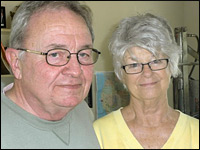
Bob and Jane Cull bought the home of their dreams in Texas. It was built by one of the most powerful and politically connected homebuilders in the country — and it was defective. Thus began a 13-year odyssey that would teach them some unhappy lessons about money, power and influence.

Back in the early 1990s, the Culls decided they wanted to build the home where they'd retire and live out the remainder of their days. Although they didn't play, they wanted a lot on a golf course in a new development in the suburbs of Dallas.

"We actually spent about five years looking all around," Jane says. "We found a perfect lot. It was just a perfect place to call home."

So Bob and Jane Cull bought from one of the state's largest homebuilders. And before they knew it, they were playing with their grandchildren in their new living room with a tall ceiling that looked out over hole No. 2. And they lived happily ever after. For about six weeks.

"There were windows that you could not raise," Bob says, and "a roof support in the attic that fell away."

The Culls' new home was undergoing "foundation heave." The clay soil underneath was expanding and contracting like a sponge as it got wet and dried out. The edges of the foundation began lifting, and the wooden frame began to bow under the stress.


'You Win, And You Win And You Still Haven't Won'

"It's overwhelming," Jane says. "The process and the system and the years that fly by. The fact that you win, and you win, and you win, and you win and you still haven't won is totally unbelievable."

After two years of getting nowhere with their builder and warranty company, the Culls hired a structural engineer. To their chagrin, he said their house would either have to be torn down or put up on jacks, and piers driven into the bedrock. Either way, it was going to cost hundreds of thousands of dollars. The Culls hired a lawyer, and when their case went to arbitration, they were confident about the evidence.

"The only person in 12 years who has heard every bit of testimony, read all the depositions, the engineering reports and sat face-to-face with all parties for three days is the arbitrator," Bob Cull says.

The arbitrator sided with the Culls. Perry Homes was ordered to pay $800,000 in damages and retake ownership of the house. The Culls felt triumphant and vindicated. But they were about to discover that if your builder has the resources, binding arbitration isn't necessarily all that binding.


Political Ties In High Places

Seventy-six-year-old Bob Perry is one of Texas' most successful homebuilders. For the last two decades, he has used his $600 million fortune to fund the Republican revolution, both in Texas and nationally. He helped put George W. Bush into the White House. He was the Swift Boat Veterans For Truth's largest contributor. In Texas, if you hold a position of legislative, judicial or executive power, a Bob Perry donation is almost certainly in your campaign account.

After he lost in arbitration to the Culls, the builder began appealing the award through the state courts. Perry's appeals were rejected at each stop until he got to the Texas Supreme Court. And there, he got satisfaction.

"They overturn two lower courts and vacate an arbitration system — all for their biggest donor," argues Andrew Wheat.

Wheat is the research director of Texans for Public Justice, which tracks campaign contributions in Texas. Wheat says that since 2006, Bob Perry has contributed more than $21 million to political candidates and judges — including the nine Republican justices who make up the Texas Supreme Court.

"They all took money," Wheat says. "Not a single member of that court should have sat and heard a case involving Bob Perry Homes."

Six years after winning in arbitration, the Culls' $800,000 award was thrown out. In a 5-4 decision, the Court disallowed arbitration and sent the case back to the courts.

Anthony Holm, spokesperson for Bob Perry, defends the Texas Supreme Court's ruling and the justices' decision to sit and hear the case. He says that if the judges recused themselves every time a case involving a big donor was before them, they'd almost never hold court.

"Every single major law firm in Texas are huge donors to the Texas Supreme Court — and every other judicial candidate at every level in this state," Holm says.

The decision to throw out the arbitration award provoked an outcry from public interest groups and Texas newspapers. The ruling and Perry's money had tarnished the state's highest court with the appearance of impropriety, critics said. It's an allegation Perry's spokesperson dismisses.

"I mean, it's simply absurd," Holm says. "The situation is tragic and no one wants to be here, but all we have sought from day one is our day in court."

The Culls are trapped. They can't sell the house — it wouldn't pass inspection. They say they're not that kind of people anyway. It's now been 13 years, and to Jane and Bob Cull's amazement, inspectors hired by their builder are once again inside their house, drilling holes through their foundation. One arbitration and a half-dozen court rulings later, they are starting the process all over again.

A Legal Odyssey

NPR.org, March 27, 2009 · Jane and Bob Cull's legal battle over their home has lasted 13 years. Here, a timeline of events, based on the Culls' records:

April 1996
The Culls purchase a lot and sign a contract with Perry Homes to build a house in Mansfield, Texas.

October 1996
The Culls move into their new home on Walnut Creek Oaks golf course.

January 1997
The Culls write the first of 11 letters in 1997 alone to Perry Homes about home foundation movement and structural heaving.

July 1999
Warranty company Home of Texas takes over structural issues; agrees to cover foundation and roof framing system. In September, Perry Homes is named contractor for the warranty coverage.

June 2000
Perry Homes announces plan of repair complete.

July 2000
Realtor refuses to list Cull home for sale.

September 2000
Culls retain legal counsel.
November 2001
Culls seek arbitration.

December 2002
Arbitrator rules in favor of the Culls, awards $800,000 in compensatory and punitive damages, orders Perry Homes to retake ownership of house. Perry Homes appeals.

January 2004
District court confirms the arbitrator's award; Perry Homes appeals.

August 2005
Court of Appeals affirms trial court ruling in favor of Culls.

October 2005
Perry Homes appeals to the Texas Supreme Court.

May 2008
Texas Supreme Court sides with Perry Homes, returning the case to district court.

February 2009
Process begins anew.

Thursday, September 25, 2008

Lobby Watch:
On Commission: Sun Never Sets On Politicians Taking Homebuilder Money

The Texas Residential Construction Commission (TRCC) is undergoing a state Sunset Commission review to determine if it merits the tax dollars it consumes. Consumer and homeowner groups support the Sunset staff’s recent recommendation to scrap the agency because it adds insults to the injuries of those who buy lemon homes.
Read the Lobby Watch

Friday, May 9, 2008

Dallas Morning News Editorial: Texas courts' credibility problem

The reputation of our state's judiciary has been tarnished for years. Nothing underscores this point better than the May 2 Texas Supreme Court decision favoring Perry Homes over homeowners Jane and Robert Cull. But what isn't debatable is that the founder of Perry Homes, Bob Perry, is a major donor to the campaigns of the Supreme Court's justices. He, his family and their political action committees have donated more than $250,000 to the nine justices - all Republicans - including those who dissented in the Cull case. Read the editorial at the Dallas Morning News

Editorial: Texas courts' credibility problem


Friday, May 9, 2008
Dallas Morning News

The reputation of our state's judiciary has been tarnished for years. As then-state Supreme Court Chief Justice Thomas Phillips told the Legislature all the way back in 2001, when judges owe their jobs to an electoral system dominated by political parties and big campaign donors, their judicial objectivity comes into question.

Nothing underscores this point better than the May 2 Texas Supreme Court decision favoring Perry Homes over homeowners Jane and Robert Cull. The court's decision, overturning two lower courts' rulings to compensate the Culls for a defective home, probably will be debated for years.

But what isn't debatable is that the founder of Perry Homes, Bob Perry, is a major donor to the campaigns of the Supreme Court's justices. He, his family and their political action committees have donated more than $250,000 to the nine justices - all Republicans - including those who dissented in the Cull case.

The justices may have used flawless legal analysis in ruling against the Culls. That's not the point. In the public's eye, their decision is tainted by the fact that they owe their elected positions, at least in part, to Mr. Perry.

He isn't the only big donor with business before the court. Texas trial lawyers who argue directly before the justices also have been huge contributors.

And to add to the credibility problem, three Supreme Court justices are fending off allegations that they abused their campaign funds. And a report yesterday by the judicial watchdog group Texas Watch criticized the court for relying too heavily on anonymous opinions, which effectively reduces the panel's public accountability.

The method of electing Texas judges - from the Supreme Court all the way down - is badly in need of modernization. Campaign donations from special interests should have no place in an independent judiciary.

The state needs a system in which the governor appoints judicial nominees by merit, with Senate confirmation, and voters regularly decide whether or not to retain them. That would help remove partisan politics and make court decisions less suspect.

That's one of several options put forth by Mr. Phillips in 2001. His argument made sense then, and it's no less valid today.

Tuesday, May 6, 2008

Austin American-Statesman: Donors shouldn't tip scales of justice

Homebuilder Bob Perry has given millions of dollars to state and national political campaigns and candidates, including all nine members of the Texas Supreme Court. Perry hit the jackpot late last week as a divided Supreme Court ruled in favor of his company, Perry Homes, in an $800,000 arbitration case. Perry and his family have donated more than $260,000 to the justices. Read the editorial at the Austin American-Statesman

Donors shouldn't tip scales of justice


The Editorial Board| Tuesday, May 6, 2008
Austin American-Statesman

Retired U.S. Supreme Court Justice Sandra Day O’Connor has railed about state courts being corrupted by large campaign contributions to elected judges. In her next speech about the influence of cash in the courtrooms, she will have a perfect example from Texas.

Homebuilder Bob Perry has given millions of dollars to state and national political campaigns and candidates, including all nine members of the Texas Supreme Court. Perry hit the jackpot late last week as a divided Supreme Court ruled in favor of his company, Perry Homes, in an $800,000 arbitration case. Perry and his family have donated more than $260,000 to the justices.

The court decided against Bob and Jane Cull, who bought a defective home from Perry’s company in 1996. When Perry Homes refused to fix the problems, the Culls sued. Later, they agreed to arbitration and were awarded $800,000.

Perry Homes challenged the award but lost in state district court and lost again on appeal. But in a 5-4 decision, the state Supreme Court overturned the arbitrator’s ruling. A narrow court majority ruled that the Culls benefited by suing first then later filing for arbitration. In a ruling last year, the court said aggrieved homebuyers should go to arbitration.

It is impossible not to be cynical about the poisonous effect of money on justice. Texas is one of only a handful of states that elects its top judges, although 39 states elect at least some of them and judicial races are attracting huge sums everywhere.

The influence of money on the judiciary has long been a problem in Texas. When CBS reported on “Justice for Sale” in 1987, it was the trial lawyers in Texas who made the large donations and reaped the results in favorable decisions. Today, it’s big business - insurance companies, builders and health care providers - but the resulting cynicism is the same.

When thousands of dollars are flowing to judicial candidates, their fairness and impartiality are in doubt. And a ruling like the one favoring a huge donor like Perry undermines the ideal of judicial integrity, even if the decision is on sound legal footing.

Texas isn’t alone in harboring a supreme court that appears to favor special interests. The West Virginia Supreme Court threw out a $50 million judgment against a coal company whose chief executive vacationed in Europe with the court’s chief justice. In a rehearing, the chief justice recused himself, but the decision stood on a 3-2 vote. The deciding justice refused to recuse himself though he had received more than $3 million from the coal company’s executive.

Texas has made only half-hearted attempts to limit the influence of big donors, special interest groups and law firms with clients before the court. It hasn’t worked, and Texas should abandon its practice of having judges run partisan races while accepting campaign money from those with interests before the courts.

Even if the system hasn’t bred actual corruption, it has fed the appearance of it, and that’s just as damaging to the reputation of our judiciary.

If Texas isn’t going to move away from electing judges, it should at least require judges who take large political donations to recuse themselves from cases involving the donors. That simple solution ought to curb self-interested contributors and possibly restore a sense of integrity to state courts.

Friday, May 2, 2008

Justices Rule For No. 1 Individual Campaign Donor; Perry Homes Decision Overturns Two Lower Courts

In Perry Homes V. Robert Cull Texas Supreme Court justices today overturned two lower courts to rule for their No. 1 Individual Donor: Perry Homes founder Bob Perry. Notably, no justices recused themselves from this case involving a major donor. Read More

Thursday, July 5, 2007

Gimme Shelter: Tax Shelter-Funded Affordable Housing

From 2004 through 2006, Texas doled out $1.3 billion in federal tax breaks to a handful of private developers to create low-income housing that is beyond the reach of those with the greatest housing needs.


Read the report

Tuesday, January 25, 2005

FW Star-Telegram: Watchdogs: Donor cash tilts state laws

It's supposed to be the American dream, but owning a home can be a nightmare in Texas because builders have used millions in campaign cash to tilt state laws in their favor, a coalition of watchdog groups said Monday. At issue is a 2003 law that established the Texas Residential Construction Commission, strongly supported by home-building interests, which contributed some $9 million to state candidates and political entities between 2001 and 2004.

Watchdogs: Donor cash tilts state laws

By Jay Root, Fort Worth Star-Telegram
January 25, 2005

AUSTIN - It's supposed to be the American dream, but owning a home can be a nightmare in Texas because builders have used millions in campaign cash to tilt state laws in their favor, a coalition of watchdog groups said Monday.

At issue is a 2003 law that established the Texas Residential Construction Commission, strongly supported by home-building interests, which contributed some $9 million to state candidates and political entities between 2001 and 2004.

Several homeowners groups and a campaign finance reform organization are citing the donations as evidence that the state needs to limit the influence of money in politics -- and restore consumer protections for homeowners.

"It has totally corrupted the system. The consumers have lost everything in this," said Frisco orthodontist David Becka, head of Take Back Your Rights, a homeowner advocacy group. "I want to see home builders being held accountable."

Executives at the Texas Association of Builders said the new law is already working well and should be given a chance to prove its effectiveness over the next couple of years.

Home-building interests donated just under $9 million over the last two election cycles, according to figures compiled by Campaigns for People, which seeks campaign finance reforms in Texas. A single home builder, Bob Perry of Houston-based Perry Homes, donated about 75 percent of that, or $6.9 million, the figures show.

Perry was one of the founders of, and largest donors to, Swift Boat Veterans for Truth, the group that ran effective but controversial ads against U.S. Sen. John Kerry, the 2004 Democratic presidential candidate.

Fred Lewis, director of Campaigns for People, said he singles out the home builders' donations in part because it's easy to make "the connection between special influence and harm to citizens." He called for limits on state campaign donations, something the Texas Legislature has shown virtually no interest in doing.

In this case, homeowners groups and consumer advocates say the 2003 law removes key protections for consumers by eliminating the implied warranty of "good and workman-like construction" and replaces it with a limited state-mandated warranty.

It also requires homeowners to take complaints to the new residential construction commission, which critics say is stacked with home-building interests and creates a costly new bureaucratic hurdle.

Reggie James, who followed the legislation as director of the southwest branch of the watchdog group Consumer's Union, called the law "incredibly one-sided" and said many Texas homeowners would not figure that out until it's too late. He said home buyers worry about inferior building products but don't typically think about shoddy overall construction.

"Aluminum siding has a bad reputation already. People go into that very carefully because they have that used-car salesman reputation," he said. "You don't expect to have that problem when you're buying a house."

Kristi Sutterfield, director of the Texas Association of Builders, a trade association representing home builders, said the law actually enhances homeowner protections by setting a uniform, state-imposed warranty -- to go into effect this summer. She also said the residential construction commission is resolving complaints quickly.

"It is working, and it is working well," Sutterfield said. "We've got to allow the commission to be in existence for a couple of years and do what their mission is."

Sunday, December 26, 2004

Houston Chronicle: Perry's gifts get noticed

As the largest political donor in Texas elections, Houston home builder Bob Perry and the pro-business measures he advocates get noticed in Austin. After he pumped $3.8 million into the 2002 Texas elections, the Legislature approved several policy proposals that Perry supported.

Houston builder donated $9 million to Republicans in 2004 elections

By JOHN FRANK, Houston Chronicle
Dec. 26, 2004

WASHINGTON - As the largest political donor in Texas elections, Houston home builder Bob Perry and the pro-business measures he advocates get noticed in Austin.

After he pumped $3.8 million into the 2002 Texas elections, the Legislature approved several policy proposals that Perry supported.

With the 2004 presidential election, the Perry Homes founder surged onto the national political scene, becoming the nation's biggest Republican donor with $9.6 million in personal contributions to candidates, committees and political advocacy groups.

The question remains whether the political clout he enjoys in Texas will extend to national politics. But there is certainly harmonized thinking on the policy scene. President Bush is trying to breathe new life into what his supporters call tort reform — limits on damage awards in lawsuits. Perry has promoted the issue.

"Clearly, with this level of giving, he has instant access to any Republican member of Congress or member of the (Bush) administration, if he wants it," said Craig McDonald, director of Texans for Public Justice, a left-leaning campaign watchdog group. "Donations to the tune of $9 million will get you in the door at any political level."

Final numbers from the election show that Perry and his wife, Doylene, contributed more than $9.6 million during the two-year election cycle to mostly Republican politicians, committees and political advocacy groups at the federal level, according to an analysis by the nonpartisan Center for Public Integrity and the Houston Chronicle. Nearly all Perry's contibutions were presented as unlimited gifts to 527 groups, political advocacy organizations so-called because of their designation in the federal tax code, the Center's analysis showed.

His rationale for dumping in such an unusually large sum is unknown. Perry declined a request by the Chronicle for an interview, instead directing calls to Bill Miller, his Austin-based spokesman and lobbyist.

"This was an anomaly and it was a product of George (Bush) being on the ticket and (responding to) the 527s being heavily used by the Democrats," Miller said. "I would be surprised if his participation continues at the level of this year. But he's always a man who will surprise you."

In the 2000 election cycle, Perry gave at least $400,000 to federal candidates, political parties and 527s. The 527s began reporting contributions in the summer of 2000, after some money may have been contributed. Miller said Perry, no relation to Gov. Rick Perry, usually focuses his political contributions at state and local levels.

In 2004, Perry gave at least $5 million to Republican candidates for the Legislature and judicial posts, according to preliminary numbers analyzed by Fred Lewis, director of Campaigns for People, an Austin-based campaign finance reform group.

It was Perry's involvement with the 527 groups that brought the publicity-shy Houstonian to the national political scene. His $100,000 check bankrolled the first Swift Boat Veterans for Truth TV ad questioning Democratic presidential candidate John Kerry's Vietnam War military service.

The Swift Boat Veterans were co-founded by Houston lawyer John O'Neill, who this year called Perry a "casual friend." As the attention on O'Neill's group increased, so did Perry's checks. He gave more than a third of the total $17 million the group raised.

Just more than a half billion dollars was spent altogether by these unregulated 527 groups, a majority of which supported Democratic candidates, the Center reported.

Ultimately, four Democratic 527 donors, including billionaire financier George Soros and Peter Lewis, chairman of auto insurer Progressive Corp., topped the list. They spent more than $23 million each.

Some observers say Perry, though, remains one of the best-situated to capitalize on his role in these elections and benefit from his contributions.

Monday, May 19, 2003

Dollar Docket

Weekley Homes Comes on Home
When David Weekley Homes filed an appeal in Texas’ High Court last month, it was as if the builder had entered one of its own custom-built homes.


Read Dollar Docket #28

Wednesday, May 15, 2002

Lobby Watch:
Moldy ‘Lemon’ Homes Denied Day In Court

A Texas House panel today will explore if consumers are being hurt by businesses’ increasing reliance on “binding arbitration.” Consumers will decry the privatized “justice” system that binding arbitration has created, while business interests that give millions of dollars to Texas politicians will rush to the defense of this plaintiff-hostile system.
Read the Lobby Watch

Thursday, March 15, 2001

Dollar Docket

The Jury's Always Out In Binding Arbitration
Texas’ civil court of last resort set itself up this year to reduce its work load and reward big business interests. The name of the game is binding arbitration, which big business uses to deprive consumers of the right to a public trial by a jury of peers.

Read Dollar Docket #11

Tuesday, January 16, 2001

Dollar Docket

The Home Boys' Hold On the High Court
Texas built in strong consumer protections when it legalized home-equity loans in 1997, but the Texas Supreme Court began undermining these and other homeowner rights in 2000.


Read Dollar Docket #10