




Showing posts with label Texas Supreme Court. Show all posts

Wednesday, October 28, 2015

Chief Justice Hecht Beats His $29,000 Ethics Fine

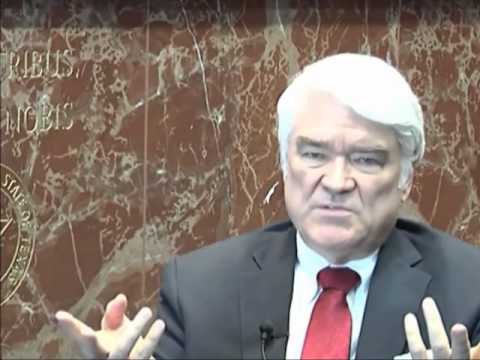
http://i.ytimg.com/vi/YznlSthrT2M/hqdefault.jpgNathan Hecht negotiated a settlement with the Texas Ethics Commission over his 2008, $29,000 fine for excepting and failing to report over $100,000 in donated legal services.  TPJ director Craig McDonald commented, "Hecht's fine is 7 years late and $28,000 short."

Last October, TPJ filed suit to require the Attorney General to pursue Hecht's lingering fine.  Details on TPJ's filing are here.

Wednesday, October 22, 2014

Statesman Challenges Abbott Position on Hecht Ethic's Fine

In his response to the lawsuit filed by TPJ urging the Travis County District Court to take action to compel Attorney General Abbott to pursue the $29,000 Ethic's fine levied against Supreme Court Justice Nathan Hecht, Abbott claims it's not his legal responsibility to pursue the case. Today's article by Chuck Lindell exposes Abbott's response for the BS it is.

Read today's American-Statesman article by Chuck Lindell.

Read TPJ's press release on it's October 15 lawsuit.

Wednesday, October 15, 2014

TPJ Files Suit to Force Abbott to
Pursue Ethics Case Against Justice Hecht

TPJ has filed a motion in Travis County court to compel Attorney General Abbott- or a court-ordered replacement-to pursue a long-slumbering case involving a $29,000 ethics fine against Supreme Court Chief Justice Nathan Hecht.

Read TPJ's media release.
Read TPJ's court filing.
View a Abbott-Hecht case timeline.
View Ethics Commission Dec. 2008 order against Justice Hecht.

Monday, December 2, 2013

Money and Justice Forum

The Texans for Fair Courts Network of which TPJ is a member, organized a successful November 21 forum at the University of Texas to explore the need and possibility for judicial selection reform in Texas. Below are links to news coverage and related resource materials.

Money and Justice: Is Texas Ripe for Judicial Reform? Texas Fair Courts Network policy paper.
Austin American-Statesman news coverage by Chuck Lindell.
Texas Needs Judicial Reform. November 29 editorial from the Austin American Statesman.
Texas Tribune interview with Bert Brandenburg and David Lyle.
YNN Capitol Tonight interview with TPJ Director Craig McDonald.
The New Politics of Judicial Elections. Latest report from Justice at Stake.
Justice at Risk. Report from the American Constitution Society.

Friday, November 2, 2012

Lobby Watch:
Ethnicity and Lawyer Cash Shape Supreme Races

Candidates for three Texas Supreme Court seats raised $2.8 million through the eve of Tuesday's election. Viable candidates include incumbent GOP Justices Don Willett and Nathan Hecht (who confronts a poorly funded Democrat). Incumbent Justice David Medina looks like the latest victim of the racial profiling that too many GOP primary voters inflict on candidates with Spanish surnames. Despite a huge cash advantage, Medina lost a Republican runoff to John Devine, whose top supporters now include a plaintiff attorney and a strip-club mogul.

The latest Lobby Watch delves into money, ethnicity and the Supremes here .

Monday, August 20, 2012

NY Times: Judicial Elections and the Bottom Line

Editorial cites Texas as one of 6 states where special interest money in court elections harms justice. Points to new report on judicial fundraising by the Center for American Progress.

Read the NY Times editorial.
Read the Center for American Progress report.

Thursday, May 26, 2011

Supreme Court Justice Lehrmann
Fined Over TPJ Ethics Complaint

Texas Supreme Court Justice Debra Lehrmann was fined $1,500 by the Texas Ethics Commission this week for accepting an illegal campaign contribution during her 2010 primary election campaign. The Ethics Commission action followed a complaint filed by TPJ in April 2010. The illegal contribution came in the form of a $20,000 loan from Justice Lehrmann's mother-in law. Such loans are deemed contributions and limited by law to $5,000. Lehrmann advanced to a runoff by a margin of only 941 votes. Lehrmann repaid the excess contribution on May 12, 2010 and defeated Rick Green in the May 13 runoff.

Read the Ethics Commission order.
Read the TPJ April 2010 complaint news release.

Tuesday, February 15, 2011

TPJ Lauds New York’s Move to Get
Campaign Money Out of Its Courts

TPJ today commended New York State’s decision to bar that state’s elected judges from hearing cases involving significant campaign contributors (lawyers or parties who have given the judge at least $2,500 over the previous two-years). The new rule by New York’s Administrative Board of the Courts is thought to be the most restrictive measure of its kind. Recently Michigan, Washington and Oklahoma have adopted judicial-recusal standards.
TPJ Lauds New York's Move to Get Money Out of Courts

TPJ today commended New York State’s decision to bar that state’s elected judges from hearing cases involving significant campaign contributors (lawyers or parties who have given the judge at least $2,500 over the previous two-years). The new rule by New York’s Administrative Board of the Courts is thought to be the most restrictive measure of its kind. Recently Michigan, Washington and Oklahoma have adopted judicial-recusal standards.

“Texas needs to take the ‘for sale’ sign off its courtrooms and adopt its own recusal standard,” said Craig McDonald, director of the non-partisan, research and advocacy organization. “The public doesn’t believe that judges who take money from people in their courtroom are impartial.”

TPJ supports legislation filed by Rep. Richard Raymond (H.B. 156). It would require Supreme Court and Texas Court of Criminal Appeals justices to recuse themselves from cases involving significant campaign contributors (lawyers, law firms or parties who gave a judge at least $2,500 over the previous four years).

Thursday, June 3, 2010

Radio-Activist Judges:
TPJ calls for recusal in nuke dump case.

To avoid judicial radio-activism, TPJ called today on all nine Texas Supreme Court justices to recuse themselves from an appeal filed yesterday involving nuclear dump company Waste Control Specialists. Waste Control's billionaire owner has given the justices $90,500 in campaign cash. Geiger counter readings reveal that Harold Simmons has given every justice amounts ranging from $5,000 up to $18,500 in the case of Chief Justice Wallace Jefferson.

Read the full press release.

Tuesday, April 27, 2010

High Court Candidate Lehrmann Violated Campaign Contribution Limits, TPJ Alleges

Texans for Public Justice filed a complaint with the Texas Ethics Commission today alleging that Supreme Court candidate Debra Lehrmann appears to have violated state election laws by accepting contributions that exceeded the legal limits.

Read the full press release.
Read the complaint filed with the TEC.

Friday, March 12, 2010

TPJ Weighs In on Open-Records Suit at Texas Supreme Court

Texans for Public Justice, Public Citizen and the Freedom of Information Foundation of Texas told the Texas Supreme Court today that a labor coalition seeking documents under the open records law should not be forced to disclose information about itself and its associates. In a "friend of the court" brief the groups urged the high court to overturn a lower court ruling that threatens access to public documents.

Read the full media release.
Read the groups' brief filed with the Supreme Court.

Wednesday, February 17, 2010

Lobby Watch:
Bob the Builder Invests in Judges
As Lemon-Home Trial Begins

As a new round of litigation in the decade-old Cull v. Perry Homes case heats up in a Fort Worth district court, TPJ revisits Bob Perry's judicial influence.

Read the full Lobby Watch.

Thursday, October 8, 2009

Interested Parties:
Report Details Supreme Court Donors


Three incumbent Texas Supreme Court justices were re-elected in 2008 with the help of $2.8 million in campaign money -- half of it from lawyers, law firms and lobbyists.

Read the TPJ report and download a complete list of donors to each of the winning justices.

Wednesday, June 10, 2009

Wall Street Journal: Ruling on 'Probable Bias' Spotlights Political Reality

The U.S. Supreme Court's decision this week calling for judges to stay out of cases involving big political donors confronts the growing role of money in the U.S. judicial system. Read the article at the Wall Street Journal

Ruling on 'Probable Bias' Spotlights Political Reality

By NATHAN KOPPEL/ Wall Street Journal
June 10, 2009

The U.S. Supreme Court's decision this week calling for judges to stay out of cases involving big political donors confronts the growing role of money in the U.S. judicial system.

Political donations to judicial candidates at the highest state courts have soared in recent years, creating concerns that money is eroding public confidence in the system.

Critics say states should enact such reforms as requiring taxpayers to underwrite judicial races. Another possible reform is to scrap contested elections in favor of appointing judges to the bench, which is the practice of some states.

The Nevada legislature recently approved a 2010 ballot initiative that will ask voters to adopt an appointment system for judges. Legislation is pending in Wisconsin to allow as much as $1.2 million in public financing for state supreme court candidates.

Monday's high court ruling involved allegations by Hugh Caperton, a mining executive who claimed he was run out of business by Massey Energy Co. His case ended up before a supreme court judge in West Virginia who benefited from $3 million in campaign contributions from a Massey executive.

The Supreme Court held that judges should disqualify themselves when a party's campaign contributions are large enough to raise "the probability of actual bias." Monday's decision didn't specify a dollar amount for judges to consider.

"The massive amount of money flowing into judicial races certainly impacts the perception of whether courts can be fair," said Sue Bell Cobb, chief justice of the Alabama Supreme Court.

Judge Cobb was elected to her current post in a 2006 race in which she and her opponent raised more than $7.5 million -- one of the highest campaign totals in any state supreme court race, she said. Campaign contributions have not skewed results in Alabama, she said, but it has eroded trust in the court.
From 1999 to 2008, state supreme court candidates raised $200 million nationwide, more than double the amount they raised in the previous nine years, according to Justice at Stake, a Washington, D.C. organization that opposes campaign spending in judicial races.

Much of that funding comes from constituencies with vested interests in cases before the courts, including business organizations and plaintiffs' lawyers.

Last year in Ohio, where two supreme court seats were up for grabs, insurance companies and corporate-defense law firms were among the largest contributors to the victorious Republican candidates, while labor unions gave heavily to the Democratic candidates, according to a study by Ohio Citizen Action, a government watchdog group.
Recently, Ohio business groups have donated more than their pro-consumer counterparts, one reason the state's supreme court is all Republican, said Catherine Turcer, the director of Ohio Citizen's Money In Politics project.

"We don't have a problem of actual bias, but there is a problem of perceived bias," said Chris Davey, a spokesman for Ohio State Supreme Court Chief Justice Thomas Moyer. Mr. Moyer has long favored a system of appointing state supreme court judges and then later requiring them to stand for a retention election, Mr. Davey said.

The six major-party candidates for the Texas Supreme Court in elections last year received $2.3 million combined from lawyers and parties who had cases in the court from 2005 to 2008, according to a report by Texans for Public Justice, a nonprofit organization that tracks campaign contributions. The organization studied campaign contributions from January 2007 to June 2008.

Wallace Jefferson, chief justice of the all-Republican Texas Supreme Court, said, "Retention elections are far less costly than partisan elections and that would get judges out of th e business of soliciting huge amounts form lawyers and litigants."

Tuesday, June 9, 2009

El Paso Times: Supreme Court limits cases for elected judges

Elected judges like those in Texas will likely come under greater scrutiny because of a Supreme Court ruling Monday involving a West Virginia case. The high court said elected judges must remove themselves from cases involving parties who gave them large campaign contributions to avoid bias or the appearance of it. Read the article at the El Paso Times

Supreme Court limits cases for elected judges


By Diana Washington Valdez / El Paso Times
06/08/2009

EL PASO -- Elected judges like those in Texas will likely come under greater scrutiny because of a Supreme Court ruling Monday involving a West Virginia case.

The high court said elected judges must remove themselves from cases involving parties who gave them large campaign contributions to avoid bias or the appearance of it.

The 5-4 decision came down Monday in the case of Don Blankenship, a coal company executive who spent $3 million to oust one West Virginia Supreme Court justice and elect his replacement, according to a McClatchy-Tribune news wire story.

At the time, Blankenship and his Massey Coal Co. were appealing a $50 million jury verdict for having driven a small competitor into bankruptcy. After the election, new Justice Brent Benjamin twice cast the deciding vote to throw out the verdict against Massey.

Although the West Virginia case put a spotlight on the impact of money in state high-court races, Texas experts said the ruling is not likely to have an immediate impact on court cases.

By ruling on campaign contributions of elected judges, the court indirectly raised the issue of how judges are selected.

"I've been a lawyer for almost 30 years, and I can say our judges are fair and even-handed," said Carlos Cardenas, the new president of the El Paso Bar Association. "I also don't see Texas, a pretty independent state, changing its system for selecting judges.

"The Legislature has tried to change it before, but the proposals never get anywhere.Personally, I prefer the election system we have right now."

Craig McDonald, a spokes man for Texans for Public Justice in Austin, a nonprofit organization that advocates for judicial integrity, said Monday's court decision set a precedent.

"(The) court invites greater scrutiny, and more federal challenges, to determine when the corrupting influence of judicial campaign money violates the U.S. Constitution. Texas judges should stop raising campaign money from lawyers and litigants with business before their courts," McDonald said in a statement.

The Supreme Court did not set a hard or clear rule for when a judge must step aside. The four dissenters called the ruling hazy. But speaking for the majority, Anthony Kennedy said the principle of fairness requires that a judge not decide cases for a favored benefactor.

Professor Anthony Champagne, who teaches at the University of Texas-Dallas, said the ruling "is very important because it is the first time the court has ever said judicial campaign contributions can involve violations of due process."

"However, we can't tell yet how many other cases the decision might affect, or what the court means by a large campaign contribution," Champagne said. "The justices said this was an exceptional case, and it was. It will take a while for it to work its way through the trial courts, and appeals courts and so on."

Champagne said he has studied the issue of judge selections for 25 years, and tentatively leans toward a merit system, in which the governor selects judges who are recommended, and who then run later in "retention" elections.

In Texas, practically all nonfederal judges are elected, mostly in partisan races. El Paso municipal judges are elected in nonpartisan races. Partisan races include justices of the peace, county court judges, district judges, appeals court judges and high appellate court justices.

Champagne said Texas and six other states select their judges through partisan elections.

A few other states, including Ohio and Michigan, conduct nonpartisan elections, "that actually are very partisan," he said.

In the late 1980s, the Texas Supreme Court was rocked by a scandal featured on CBS TV's "60 Minutes" investigative report. The "Justice for Sale" TV program highlighted conflicts of interest among the Texas justices.

John Hill, then chief justice of the Texas Supreme Court, resigned to lead the charge to end partisan elections in Texas.

Houston Chronicle: High court ruling may stir debate in Texas

Judges should withdraw from cases involving major campaign contributors to avoid the appearance of bias, the U.S. Supreme Court ruled Monday in an opinion that focuses light on a persistent problem in Texas politics. Read the article at the Houston Chronicle

High court ruling may stir debate in Texas

State's one of seven with partisan elections for judges

By MARY FLOOD Copyright 2009 Houston Chronicle
June 9, 2009

Judges should withdraw from cases involving major campaign contributors to avoid the appearance of bias, the U.S. Supreme Court ruled Monday in an opinion that focuses light on a persistent problem in Texas politics.

Texas, sometimes a center of controversy over judicial campaign contributions, is one of only seven states that elect judges in partisan elections.

“The greater value of this case is to cause a national debate on choosing judges the same way we choose legislators,” said Tom Phillips, a former Harris County judge and chief justice of the Texas Supreme Court and a long-time advocate for merit selection of judges.

Phillips and others said Monday’s court decision in Caperton vs. A.T. Massey Coal is so narrowly drawn to cover an extreme case that it won’t in itself spark great change. But the many advocates for a change in the Texas judicial selection system, which come from both parties and both sides of civil disputes, say discussion of this case and future litigation to further define the boundaries may help the state move toward change. (Read the opinion here in a pdf file.)

By a 5-to-4 vote, the high court found that due process rights were violated when a West Virginia judge refused to take himself off a case involving a mining company whose executive had contributed $3 million to the judge’s campaign. The majority opinion by Justice Anthony Kennedy said this was an extreme case in which someone with a personal stake in an ongoing case had a significant disproportionate influence through contributions.

Ruling called a challenge

The dissent said the decision didn’t explain the line where a judge should be recused and opens the door to further allegations of judicial bias and an erosion in public confidence in judicial impartiality.

“The Caperton decision challenges us to do more to remove the perception that judicial campaign contributions influence decisions in Texas courts. Caperton identified a core problem that exists in Texas even with expenditure limits,” said Texas Supreme Court Chief Justice Wallace Jefferson in a news release referring to voluntary caps on spending that are generally followed by judicial candidates.

The voluntary rules limit statewide candidates to $5,000 from any lawyer or $30,000 from lawyers in any one law firm, but don’t govern special interest groups’ contributions and spending that favors judicial candidates.

Gerry Birnberg, chairman of the Harris County Democratic Party, said the court decision could cause people to give more money to parties and special interest groups.

“I think we can expect some litigation over contributions to specific judges too,” said Birnberg.

‘The can of worms’

Anthony Champagne, a University of Texas-Dallas professor who writes about Texas judicial campaigns, said he’s heard of requests for recusals for campaign contributions in Texas appellate courts, not in local trial courts.

He said a recusal request over contributions could hypothetically come up in a criminal court if a defense attorney made large contributions to the judge or in a family or juvenile court case.

“I can see this case as being the can of worms the dissenters are talking about,” Champagne said. He said he expects case after case to go to federal appellate courts.

Texans for Public Justice Director Craig McDonald said this case sets a precedent.

“Texas need not overhaul its troubled judicial-selection system immediately. Nonetheless, the court invites greater scrutiny — and more federal challenges — to determine when the corrupting influence of judicial campaign money violates the U.S. Constitution,” McDonald said.

Dallas Morning News: Supreme Court backs judges' recusals in big donors' cases

The U.S. Supreme Court ruled Monday that judges must step aside in cases involving their large political contributors, prompting renewed calls for Texas to change a system in which judges raise money to run in partisan elections. Read the article at the Dallas Morning News

Supreme Court backs judges' recusals in big donors' cases


Tuesday, June 9, 2009
By CHRISTY HOPPE / The Dallas Morning News
choppe@dallasnews.com

AUSTIN – The U.S. Supreme Court ruled Monday that judges must step aside in cases involving their large political contributors, prompting renewed calls for Texas to change a system in which judges raise money to run in partisan elections.

Experts and lawmakers said the decision, which was narrowly drawn and did not set a standard for what is impermissible influence, might not force immediate change in Texas, where contributions to judges are limited. But advocates of reform, including Texas Supreme Court Justice Wallace Jefferson, said they hoped it would focus the debate on how to improve the system.

The 5-4 ruling in a West Virginia case "challenges us to do more to remove the perception that judicial campaign contributions influence decisions in Texas courts," said Jefferson, a Republican who won re-election in November after spending more than $842,000.

Months ago, speaking before the Legislature, he was blunt about the problem, saying: "This is an area where perception itself destroys public confidence."

Since 1995, Texas has had contribution limits in judicial races: Individual families can donate $5,000, and political action committees are limited to $300,000.

Most experts said that those limits could prevent a conflict as significant as the one in the West Virginia case, Caperton vs. Massey Coal Co., in which the chief justice of the West Virginia Supreme Court must now recuse himself from a $50 million suit because he accepted $3 million in campaign contributions from the top executive of the coal plant.

But criticism is not unprecedented. The question of influence over the Texas Supreme Court arose last year when the court overturned an $800,000 arbitration award to Bob and Jane Cull of Mansfield, who had sued Houston homebuilder Bob Perry, the largest GOP contributor in the state.

The Culls had lodged a 10-year fight over a house with cracked foundations and walls, but their court victories were set aside by the state's highest court, where all nine of the justices had received contributions from Perry totaling $260,000. The contributions were directly from him and through a political action committee.

Texans for Public Justice, which has fought to rid judicial campaigns of political money, said the U.S. Supreme Court ruling shows that Texas judges should stop raising money from those who have business before the court.

"The court invites greater scrutiny – and more federal challenges – to determine when the corrupting influence of judicial campaign money violates the U.S. Constitution," said the group's director, Craig McDonald.

Texas is one of four states where all general jurisdictional judges are selected in partisan elections, along with Louisiana, Alabama and West Virginia.

The system works just fine, said Kirsten Gray, a spokeswoman for the Texas Democratic Party. Both the Republican and Democratic parties have fought legislation that would change how the state elects its judges, saying Texans are fiercely protective of the opportunity to vote for judges.

Partisan labels are helpful for voters, and appointing judges doesn't remove the politics, Gray said.

"Whether chosen by voters or appointed by the governor, ideology will be taken into account, so it's better to have those people who live in that area chose their own judges," Gray said.

Sen. Robert Duncan, R-Lubbock, and former Chief Justice Tom Phillips have both worked for a system in which judges are appointed and then the voters decide whether to retain them in office.

"The most useful thing the opinion might do is give further background to the debate on how we select judges," Phillips said.

With partisan labels and money-raising pressures, "the whole system is bad," he said.

Duncan said he doubts the court decision will be much of an impetus to change Texas' ways because "there are just too many stakeholders who have an interest in keeping it the way we have it."

But it could cause more judges to be asked to step aside in cases where their campaign donors have an interest.

"In Texas, we need to take some time and scratch our heads and ask, 'Do we have sufficient safeguards to keep these situations from happening,' " Duncan said. "We've attempted to address some of those kinds of abuses, but if it is enough, I don't know."


AT A GLANCE: JUDICIAL ELECTIONS

The case decided Monday has drawn a spotlight on the skyrocketing costs of judicial elections:

ELECTED HIGH COURTS: Supreme court justices are elected in 21 states, including Texas.

OTHER JUDICIAL VOTES: Eighteen other states hold elections for other judicial positions.

MONEY RAISED: A judicial reform group has found that state supreme court candidates raised almost $168 million from 2000 to 2007, nearly double the amount raised in the 1990s.

AT A GLANCE: THE RULING

The decision: The Supreme Court ruled 5-4 that elected judges must recuse themselves in "extreme" cases where huge campaign contributions create the perception that they will be biased in favor of their campaign benefactors.

Case reviewed: The court decided a West Virginia Supreme Court justice erred in participating in a case overturning a $50 million verdict against a company headed by a man who spent $3 million on the justice's election.

Swing vote: The decision reinforced the pivotal role of Justice Anthony Kennedy, who often is in position to decide controversial cases. He sided with Justices John Paul Stevens, David Souter, Ruth Bader Ginsburg and Stephen Breyer.

Dissenting judges: They predicted that the decision would generate groundless litigation and undermine confidence in the judiciary. "It is an old cliché," Chief Justice John Roberts wrote, "but sometimes the cure is worse than the disease." He was joined by Justices Antonin Scalia, Clarence Thomas and Samuel Alito.

Monday, June 8, 2009

TPJ Statement On Caperton v. Massey

"Setting an important precedent, a majority of the U.S. Supreme Court ruled for the first time today that state judges can violate constitutional due-process guarantees by failing to recuse themselves from cases involving major campaign funders. Given the narrow wording of this 5-4 decision, and the extreme nature of West Virginia’s Caperton case, Texas need not overhaul its troubled judicial-selection system immediately. Nonetheless, the court invites greater scrutiny--and more federal challenges--to determine when the corrupting influence of judicial campaign money violates the U.S. constitution. Texas judges should stop raising campaign money from lawyers and litigants with business before their courts. We welcome greater federal oversight of this objectionable practice." --Texans for Public Justice Director Craig McDonald

Read the statement in PDF

Tuesday, May 5, 2009

Austin American-Statesman: Texas Supreme Court judges should disclose votes

Because the elected Supreme Court justices in Texas are heavily dependent on money from attorneys and businesses with cases before the court, voters should know as much as possible about their records. That includes knowing how they voted when accepting and rejecting cases. Read the article at the Austin American-Statesman

EDITORIAL

Texas Supreme Court judges should disclose votes

Sen. Kirk Watson's bill would reveal justices' votes on petitions.

Tuesday, May 05, 2009

Because the elected Supreme Court justices in Texas are heavily dependent on money from attorneys and businesses with cases before the court, voters should know as much as possible about their records. That includes knowing how they voted when accepting and rejecting cases.

In states like Texas that elect judges, disclosure should be the rule. Texans should know their judges' political contributions, judicial philosophies and records — and for the Supreme Court that should include how they voted in reviewing petitions.

A bill by Austin state Sen. Kirk Watson would require Supreme Court justices to disclose how they voted on every petition that comes before the court. That might seem like basic information because the court denies 87 percent of the requests that come before it. Voting on petitions is where most of the action is.

But the all-Republican court doesn't like Democrat Watson's bill at all. The justices fear their votes could give ammunition to opponents in judicial races, force them to spend time defending their positions on cases, and slow the already glacial pace of the court.

Too bad. Candidates for the Supreme Court run partisan, political races and therefore ought to have to defend their records. They accept millions of dollars in campaign contributions from the most controversial sources — lawyers and businesses with cases before the court — so their impartiality is always in question.

They absolutely should have to reveal how they voted in rejecting or accepting a case. If they feel a vote needs explaining, they can offer one. That's hardly onerous for a court that already takes about 14 months to decide a case.

Watson is right to insist that such transparency is basic good government, and that extra work is no argument against public accountability for elected officials. If it were, Texas would have no open government because the public's right to know is always something of a necessary burden.

Every poll taken in recent years finds the public's respect for the judiciary declining. A huge and growing number of Americans believe that money influences justice in this country. And Texas is a poster child for that sentiment because its elected judges accept money from clients with cases before it, a system tailor-made for bias or worse.

It isn't surprising that the justices prefer to keep voters ignorant about the petitions they consider. Most are elected because of the party label after their names and their televised campaign ads, which cost a lot of money. So the less the public knows about their records, the happier they are.

Watson's bill would at least give the public a deeper look at our state's system of justice and more information about the judges elected to administer it. His bill is languishing in the GOP-led Legislature, but it should become law because the public has every right to know how their elected judges voted on cases before them.

Monday, May 4, 2009

Austin American-Statesman: Watson bill mandates more openness in Texas Supreme Court decision-making

In a dark-paneled conference room in Austin, nine Texas Supreme Court justices meet at least once a month to decide whether the next batch of appeals will be accepted or declined...That would change under a bill by state Sen. Kirk Watson, D-Austin. Read the article at the Austin American-Statesman

Watson bill mandates more openness in Texas Supreme Court decision-making


By Chuck Lindell, AMERICAN-STATESMAN STAFF
Monday, May 04, 2009

In a dark-paneled conference room in Austin, nine Texas Supreme Court justices meet at least once a month to decide whether the next batch of appeals will be accepted or declined.

Each decision carries the potential to change Texas civil law or maintain the status quo for decades to come, but nobody outside the court will know how each justice voted.

That would change under a bill by state Sen. Kirk Watson, D-Austin.

"I believe the public ought to know how those elected officials are voting," Watson said. "My bias tends to be for giving the voters as much information as you can and letting people make their decisions."

The court routinely receives appeals that could limit or expand patients' ability to sue doctors, cause million-dollar swings in insurance company profits by changing coverage requirements, or affect earnings for businesses, big and small, from the oil and gas industry to auto repair shops.

It takes four votes to accept a case, though most are denied — including 87 percent of last year's petitions for review.

Watson said the votes should be disclosed because most of the court's decisions are on whether to accept petitions for review and because justices receive a large portion of campaign contributions from lawyers and litigants with business before the court.

"It's pretty simple Government 101, if you ask me," Watson said. According to Watson's office, high courts in 11 states disclose such votes.

Watson's bill passed the Senate Judiciary Committee unchanged, but it has languished for more than a month awaiting a floor vote. Only one pending bill has waited longer, and the session ends in less than one month.

Former Texas Supreme Court justices offer mixed reviews of Watson's measure, Senate Bill 780.

Alberto Gonzales, the former U.S. attorney general who served as a justice for two years starting in 1999, said he worries about holding justices accountable for a preliminary vote that could mean almost anything — or nothing.

"They may not like the work of the lawyers; the briefs may be sloppy; they may think it's appropriate for case law to mature or any number of reasons," Gonzales said.

Austin lawyer Tom Phillips, chief justice from 1988 to 2004, said he thinks justices would feel pressured to file statements explaining their votes in anticipation of election-time attacks.

The paperwork, he said, could slow down a court that is already criticized for typically taking 14 months to render an opinion after oral arguments.

"Plus, that vote really says nothing about our legal philosophy or anything else that would cause the public to be able to cast a more intelligent vote," Phillips said. "The work of lasting importance is in the opinions the court writes, not in the cases it chooses to take or not take. We don't cite that 30 years ago the court refused to take Case X."

Michael Schneider, a federal judge in Tyler, and Austin lawyers Craig Enoch and Rose Spector — all former justices on the state's highest civil court — also oppose publicizing the votes, as does the current chief justice, Wallace Jefferson.

"If you are forced to disclose your vote, then I think it would be incumbent upon you to explain in a written opinion the vote you cast. And we have, depending on the year, 1,200 to 1,500 petitions that come through," Jefferson said. "I think that would harm efficiency."

But Bob Gammage, who served on the Supreme Court from 1991 to 1995, testified in favor of the bill at a Senate hearing. "Until we change the way we pick justices, the people need all the information they can get so they can make an intelligent selection," he said.

U.S. Rep. Lloyd Doggett, D-Austin, a justice from 1989 to 1994, said Watson's bill fits into his philosophy of increasing transparency of government functions.

Watson dismisses arguments about adding to the court's workload.

"Time and extra work should never be an excuse for not being accountable to the public that elects you," he said. "You should not become a Supreme Court justice and fear that people should know what your votes are."

clindell@statesman.com, 912-2569