Lieutenant Governor David Dewhurst announced senate committee chair assignments in late 2012--months earlier than usual. The early announcement allowed the anointed chairs (including one now gunning for Dewhurst's job) to grab special-interest money before the start of the fundraising blackout for the 2013 legislative session.
Lobby Watch parses fundraising differences between senate chairs and non-chairs both before and after Dewhurst's announcement.
 |
 |
 |
 |
 |
Showing posts with label David Dewhurst. Show all posts
Showing posts with label David Dewhurst. Show all posts
Monday, April 8, 2013
Lobby Watch:
Big 3 Bag Millions from TEF Recipients
The three GOP officials who oversee the Texas Enterprise Fund have collected $3.6 million in campaign cash tied to recipients of $307 million in Enterprise Fund awards. The Republican Party of Texas collected another $1.7 million from Enterprise Fund contributors.
Lobby Watch explores how the taxpayer-funded Enterprise Fund protects the three most important jobs in Texas.
Lobby Watch explores how the taxpayer-funded Enterprise Fund protects the three most important jobs in Texas.


Wednesday, January 19, 2011
Lobby Watch: Reality Check on the "Texas Century"
With heads of state declaring "the Texas Century" and proclaiming
Texans "the greatest people on this planet," Lobby Watch looks up
"Texas" in a bestselling almanac for a desperately needed reality check.
Read the latest Lobby Watch.
Texans "the greatest people on this planet," Lobby Watch looks up
"Texas" in a bestselling almanac for a desperately needed reality check.
Read the latest Lobby Watch.
Monday, May 24, 2010
TPJ Calls on Perry, Dewhurst & Straus
To Investigate State Grant to Sematech
Did Sematech Cheat on Texas By Loving New York
in the Middle of its $40 Million Subsidy Deal?
TPJ today urged Texas’ top three officials who oversee the Texas Enterprise Fund to investigate if Sematech violated the 2004 contract it signed to obtain $40 million in state funds. TPJ urged the officials to either “enforce compliance or recover the funds that failed to deliver the promised benefits.”
Read the press release.
Read the letter to Perry, Dewhurst & Straus.
Friday, July 17, 2009
Houston Chronicle: Lt. Gov. Dewhurst amends financial disclosures
Multimillionaire Lt. Gov. David Dewhurst, who has drawn criticism for revealing scant details about his vast wealth, amended past financial filings Friday and disclosed information including his stake in several investment funds. The lack of detail prompted a complaint by Texans for Public Justice, a liberal watchdog group based in Austin. Director Craig McDonald applauded Escamilla's review but said the ethics commission should levy civil penalties for the lieutenant governor's "noncompliance with the disclosure laws over the past years."Read the full post at the Houston Chronicle
Houston Chronicle
July 17, 2009
AUSTIN, Texas — Multimillionaire Lt. Gov. David Dewhurst, who has drawn criticism for revealing scant details about his vast wealth, amended past financial filings Friday and disclosed information including his stake in several investment funds.
The Republican sent the Texas Ethics Commission two corrected financial statements covering 2007 and 2008 filings. The new disclosures show Dewhurst holds a stake in several funds, including assets managed by Goldman Sachs, Lehman Brothers and the TCP Investment Fund II LP.
A watchdog group filed a formal complaint with Travis County prosecutors in September after The Associated Press raised questions about the lack of detail in his personal financial statements. Travis County Attorney David Escamilla, a Democrat who investigates allegations of misdemeanor offenses by public officials, said his probe is finished.
"By them agreeing to move forward and file the amended reports, we believe there is no question that they're in compliance," Escamilla said.
Escamilla said he hired a forensic accountant to pore over Dewhurst's tax returns to determine whether he had violated the law. Escamilla said he found no "intent to deceive" on Dewhurst's part but called on the ethics commission or Legislature to clarify often vague legal requirements.
Dewhurst said his failure to disclose the information was "inadvertent" and stressed he had carefully followed lawyers' advice of in filing his financial disclosures.
"I appreciate the professional and thorough manner in which the County Attorney conducted his review," Dewhurst said in a written statement.
Earlier disclosure documents did not reveal that the former CIA agent, through a privately held trust, was a major shareholder in a Houston energy and investment company. There also was no mention of Dewhurst's far-flung cattle ranches, private bank investments or luxury condo. Nor was there any word of the hedge funds, stocks and bonds or publicly traded fuel distribution company he acknowledges are or have been part of a trust fund estimated to be worth up to $200 million.
It just said the David Dewhurst Trust is valued at "$25,000 or more."
As lieutenant governor, Dewhurst presides over the state Senate and wields tremendous influence over legislation. He is considering a run for higher office next year. He has for years kept most of his wealth hidden in a trust whose major assets were not disclosed.
The lack of detail prompted a complaint by Texans for Public Justice, a liberal watchdog group based in Austin. Director Craig McDonald applauded Escamilla's review but said the ethics commission should levy civil penalties for the lieutenant governor's "noncompliance with the disclosure laws over the past years."
"(Lt.) Governor Dewhurst's financial disclosures fall under the category of better late than never — and better something rather than nothing," McDonald said.
The fresh disclosures mark the second time this year Dewhurst has changed how he reported wealth. In April, Dewhurst announced he was forming a blind trust. Though previous statements had revealed existence of the David Dewhurst Trust, it wasn't a blind trust — an investment tool designed to create a legal firewall between public service and personal business dealings.
Dewhurst's brother Eugene and longtime business associate Martin Young were installed as trustees of the newly created David Dewhurst Blind Trust. Both have signed sworn affidavits saying they would not reveal detailed information about the blind trust to Dewhurst.
In the corrected financial statements released Friday, Dewhurst revealed he owns a stake in several "blind-pool funds" managed by professional investment firms. Among them were funds managed by Goldman Sachs, including GS Global Alpha Fund; GS Global Equity Opportunities Fund, LLC; GS GMS Alpha Plus Portfolio; GS Capital Partners V Institutional, LP; Archon Core Plus Real Estate Fund 2005, LP; and Caribbean Real Estate Opportunity Fund 2005, LP.
Dewhurst earlier this year disclosed a stake in Falcon Seaboard Investment Company, LP.
Lt. Gov. Dewhurst amends financial disclosures
By Jay RootHouston Chronicle
July 17, 2009
AUSTIN, Texas — Multimillionaire Lt. Gov. David Dewhurst, who has drawn criticism for revealing scant details about his vast wealth, amended past financial filings Friday and disclosed information including his stake in several investment funds.
The Republican sent the Texas Ethics Commission two corrected financial statements covering 2007 and 2008 filings. The new disclosures show Dewhurst holds a stake in several funds, including assets managed by Goldman Sachs, Lehman Brothers and the TCP Investment Fund II LP.
A watchdog group filed a formal complaint with Travis County prosecutors in September after The Associated Press raised questions about the lack of detail in his personal financial statements. Travis County Attorney David Escamilla, a Democrat who investigates allegations of misdemeanor offenses by public officials, said his probe is finished.
"By them agreeing to move forward and file the amended reports, we believe there is no question that they're in compliance," Escamilla said.
Escamilla said he hired a forensic accountant to pore over Dewhurst's tax returns to determine whether he had violated the law. Escamilla said he found no "intent to deceive" on Dewhurst's part but called on the ethics commission or Legislature to clarify often vague legal requirements.
Dewhurst said his failure to disclose the information was "inadvertent" and stressed he had carefully followed lawyers' advice of in filing his financial disclosures.
"I appreciate the professional and thorough manner in which the County Attorney conducted his review," Dewhurst said in a written statement.
Earlier disclosure documents did not reveal that the former CIA agent, through a privately held trust, was a major shareholder in a Houston energy and investment company. There also was no mention of Dewhurst's far-flung cattle ranches, private bank investments or luxury condo. Nor was there any word of the hedge funds, stocks and bonds or publicly traded fuel distribution company he acknowledges are or have been part of a trust fund estimated to be worth up to $200 million.
It just said the David Dewhurst Trust is valued at "$25,000 or more."
As lieutenant governor, Dewhurst presides over the state Senate and wields tremendous influence over legislation. He is considering a run for higher office next year. He has for years kept most of his wealth hidden in a trust whose major assets were not disclosed.
The lack of detail prompted a complaint by Texans for Public Justice, a liberal watchdog group based in Austin. Director Craig McDonald applauded Escamilla's review but said the ethics commission should levy civil penalties for the lieutenant governor's "noncompliance with the disclosure laws over the past years."
"(Lt.) Governor Dewhurst's financial disclosures fall under the category of better late than never — and better something rather than nothing," McDonald said.
The fresh disclosures mark the second time this year Dewhurst has changed how he reported wealth. In April, Dewhurst announced he was forming a blind trust. Though previous statements had revealed existence of the David Dewhurst Trust, it wasn't a blind trust — an investment tool designed to create a legal firewall between public service and personal business dealings.
Dewhurst's brother Eugene and longtime business associate Martin Young were installed as trustees of the newly created David Dewhurst Blind Trust. Both have signed sworn affidavits saying they would not reveal detailed information about the blind trust to Dewhurst.
In the corrected financial statements released Friday, Dewhurst revealed he owns a stake in several "blind-pool funds" managed by professional investment firms. Among them were funds managed by Goldman Sachs, including GS Global Alpha Fund; GS Global Equity Opportunities Fund, LLC; GS GMS Alpha Plus Portfolio; GS Capital Partners V Institutional, LP; Archon Core Plus Real Estate Fund 2005, LP; and Caribbean Real Estate Opportunity Fund 2005, LP.
Dewhurst earlier this year disclosed a stake in Falcon Seaboard Investment Company, LP.
Thursday, April 30, 2009
Associated Press: Dewhurst forms blind trust; review nears end
Lt. Gov. David Dewhurst, subject of a probe into whether he has revealed enough information about his vast wealth, has put some of his holdings into a blind trust while finally disclosing his stake in a Houston investment company, records filed Thursday show. Read the article at the Houston Chronicle
© 2009 The Associated Press
April 30, 2009
Dewhurst forms blind trust; review nears end
By JAY ROOT Associated Press Writer© 2009 The Associated Press
April 30, 2009
AUSTIN, Texas — Lt. Gov. David Dewhurst, subject of a probe into whether he has revealed enough information about his vast wealth, has put some of his holdings into a blind trust while finally disclosing his stake in a Houston investment company, records filed Thursday show.
The fresh disclosure filings come as prosecutors near completion of a months-long review of Dewhurst's previous personal financial disclosures. Dewhurst publicly revealed creation of the blind trust at the Texas Ethics Commission on Thursday afternoon, about an hour before the deadline for elected officials to turn in 2009 personal financial statements.
Travis County Attorney David Escamilla, a Democrat who investigates allegations of misdemeanor offenses by public officials, is still reviewing a formal complaint lodged against Dewhurst — about past disclosure filings — by Texans for Public Justice, a liberal watchdog group.
"My office received a complaint regarding the lieutenant governor's (disclosure) filings for 2007 and 2008," Escamilla said. "We have been reviewing that complaint and we hope to complete that review very shortly."
Dewhurst spokesman Rich Parsons said Dewhurst had carefully followed his lawyer's advice and he downplayed the significance of the new disclosures — which change the way Dewhurst has been describing his holdings for the past decade.
"The only change is the removal of one asset from the trust which was not required to be disclosed by any third party or state law," Parsons said.
Watchdog groups said they were glad Dewhurst finally acknowledged he needed to alter the way he discloses his wealth but said more information is still needed.
"I'm happy he's made a concession here, but it ain't good enough," said Trent Seibert of the non-partisan group Texas Watchdog. "To read the lieutenant governor's ethics forms, you practically need a Rosetta stone. You still don't know what's going on at the end of the day."
Dewhurst is said to be the richest man in Texas politics, but most of his wealth has been contained in a trust whose major assets are not disclosed. But it wasn't a blind trust — an investment tool designed to create a legal firewall between public service and personal business dealings. Former President Bush, for example, had placed most of his family's wealth in a blind trust.
Dewhurst previously told The Associated Press he had decided against forming a blind trust because he would take a big tax hit — a "huge penalty," as he put it in August. He reversed course Thursday and created the David Dewhurst Blind Trust, installing his brother Eugene and longtime business associate Martin Young as trustees.
Both signed a sworn affidavit saying they would not reveal detailed information about the blind trust to Dewhurst.
Dewhurst also revealed Thursday that he holds a major stake in Falcon Seaboard Diversified, Inc. and that one of the major assets of the company is an "airplane." The AP has previously reported that Dewhurst frequently uses the company's executive Gulfstream 3 jet — whose tail numbers include his initials, "DD."
The new disclosure papers reveal a few categories of Falcon Seaboard's assets, but with little detail, including "ranching and land investments," and "marketable investments." The longtime Republican leader has acknowledged losing money in the declining stock market, but he won't say how much.
As lieutenant governor, Dewhurst presides over the state Senate and wields tremendous influence over legislation. He is said to be considering a run for higher office, possibly the U.S. Senate, next year.
Craig McDonald, head of the watchdog group that filed the complaint against Dewhurst, said the disclosures Thursday were "welcome but frankly years overdue."
"He now has an obligation to fully disclose the assets he hid from the public that were in his non-blind, peekaboo trust," McDonald said.
Wednesday, March 25, 2009
Lobby Watch:
Did Aggie Contributions Grease $50 Million Enterprise Fund Deal?
Perry, Dewhurst & Craddick took $1.4 million from Texas A&M PAC and supporters before approving a controversial taxpayer grant to that university.
Read the Lobby Watch
Read the Lobby Watch
Thursday, November 13, 2008
Houston Chronicle: Dewhurst gives prosecutors files related to finances
Travis County Attorney David Escamilla is investigating a complaint that Dewhurst is using a trust to illegally hide details of his assets and business ties from public disclosure. Dewhurst, in an interview, said he hasn't been subpoenaed but has given the county attorney documents "to prove that I have followed the law and there is no substance to the complaint."Read the article at the Houston Chronicle
By CLAY ROBISON
Copyright 2008 Houston Chronicle Austin Bureau
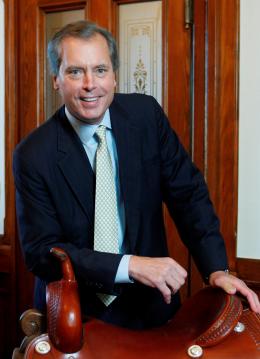
AUSTIN — Lt. Gov. David Dewhurst said Wednesday he has voluntarily provided Travis County prosecutors with documents showing that the way he reports his personal wealth complies with state law.
Travis County Attorney David Escamilla is investigating a complaint that Dewhurst is using a trust to illegally hide details of his assets and business ties from public disclosure.
Dewhurst, in an interview, said he hasn't been subpoenaed but has given the county attorney documents "to prove that I have followed the law and there is no substance to the complaint."
At issue is Dewhurst's identification of most of his assets, which are worth millions, as the David Dewhurst Trust in his state filings rather than individually listing them.
Texans for Public Justice, a watchdog group that frequently criticizes the current state leadership, filed a criminal complaint against the lieutenant governor with the county attorney in September.
"The Dewhurst Trust is blind to the public, but not to the lieutenant governor," TPJ Director Craig McDonald said. "One of the most powerful state officials should not be allowed to hide his assets from the public."
Escamilla has said he is reviewing the complaint.
State law requires an officeholder or candidate to disclose the source of any income worth more than $500 a year. Failure to do so is a Class B misdemeanor, punishable by a $2,000 fine and 180 days in jail.
Dewhurst said his income sources in the trust are commingled. So he doesn't know how much income each is producing.
"I have filled out my ethics (financial disclosure) form for 10 years exactly the way my lawyer recommended. I have no knowledge of assets in the trust earning more than $500 in income," he said. "I have shown the county attorney documentation to prove that."
Dewhurst formed his trust after reporters and political opponents researched his finances during his 1998 race for land commissioner. Aides at that time described it as a blind trust. Dewhurst's ownership in Falcon Seaboard Holding Co., which he founded before seeking public office, isn't mentioned in his statements.
The reports also have never disclosed that the holding company has owned Falcon Seaboard Ranches, which in turn owned the Snaffle Bit Ranch near Fredericksburg. The ranch was sold in 2006.
Dewhurst's trust is listed on his reports under the category, Trust Income of $25,000 or more. He has checked the "Unknown" box for "assets from which over $500 was received.
clay.robison@chron.com
Dewhurst gives prosecutors files related to finances
He says records show his reports on wealth comply with state lawBy CLAY ROBISON
Copyright 2008 Houston Chronicle Austin Bureau
A complaint filed in Travis County says
Lt. Gov. David Dewhurst is illegally hiding personal financial information.
Lt. Gov. David Dewhurst is illegally hiding personal financial information.
AUSTIN — Lt. Gov. David Dewhurst said Wednesday he has voluntarily provided Travis County prosecutors with documents showing that the way he reports his personal wealth complies with state law.
Travis County Attorney David Escamilla is investigating a complaint that Dewhurst is using a trust to illegally hide details of his assets and business ties from public disclosure.
Dewhurst, in an interview, said he hasn't been subpoenaed but has given the county attorney documents "to prove that I have followed the law and there is no substance to the complaint."
At issue is Dewhurst's identification of most of his assets, which are worth millions, as the David Dewhurst Trust in his state filings rather than individually listing them.
Texans for Public Justice, a watchdog group that frequently criticizes the current state leadership, filed a criminal complaint against the lieutenant governor with the county attorney in September.
"The Dewhurst Trust is blind to the public, but not to the lieutenant governor," TPJ Director Craig McDonald said. "One of the most powerful state officials should not be allowed to hide his assets from the public."
Escamilla has said he is reviewing the complaint.
State law requires an officeholder or candidate to disclose the source of any income worth more than $500 a year. Failure to do so is a Class B misdemeanor, punishable by a $2,000 fine and 180 days in jail.
Dewhurst said his income sources in the trust are commingled. So he doesn't know how much income each is producing.
"I have filled out my ethics (financial disclosure) form for 10 years exactly the way my lawyer recommended. I have no knowledge of assets in the trust earning more than $500 in income," he said. "I have shown the county attorney documentation to prove that."
Dewhurst formed his trust after reporters and political opponents researched his finances during his 1998 race for land commissioner. Aides at that time described it as a blind trust. Dewhurst's ownership in Falcon Seaboard Holding Co., which he founded before seeking public office, isn't mentioned in his statements.
The reports also have never disclosed that the holding company has owned Falcon Seaboard Ranches, which in turn owned the Snaffle Bit Ranch near Fredericksburg. The ranch was sold in 2006.
Dewhurst's trust is listed on his reports under the category, Trust Income of $25,000 or more. He has checked the "Unknown" box for "assets from which over $500 was received.
clay.robison@chron.com
Sunday, September 7, 2008
New Braunfels Herald-Zeitung: Dewhurst should disclose specific holdings
There are ways to avoid complete disclosure and Texas Lt. Gov. David Dewhurst - whose fortune is assigned to the David Dewhurst Trust - takes advantage of them. Campaign watchdog group Texans for Public Justice this week called on prosecutors to investigate whether Dewhurst not disclosing his wealth complies with state law.Read the editorial at the New Braunfels Herald-Zeitung
By Editorial Board
The New Braunfels Herald-Zeitung
September 7, 2008
Transparency in government is the only way that the public can know for sure their elected representatives are doing the right thing. That means politicians are obliged by law to disclose details of their financial interests.
There are ways to avoid complete disclosure and Texas Lt. Gov. David Dewhurst - whose fortune is assigned to the David Dewhurst Trust - takes advantage of them. Campaign watchdog group Texans for Public Justice this week called on prosecutors to investigate whether Dewhurst not disclosing his wealth complies with state law.
As lieutenant governor, Dewhurst is presiding officer of the Texas Senate and holder of enormous influence. It is vital for him to assure Texans that his position has not benefited him financially. The way for him to do that is to publish clear financial reports, not hide his wealth by simply declaring the Dewhurst Trust has assets of more than $25,000.
According to an Associated Press report, Dewhurst acknowledges the trust's assets include cattle ranches, private bank investments, bank investments, stocks, bonds, hedge funds and a major shareholding in a Houston Energy and Investment Firm with an estimated value of as much as $200 million.
Certainly, there could be political motivation in TPJ asking the Democratic Travis County Attorney to investigate Dewhurst. But that can't excuse that Dewhurst's financial statements are far from transparent and hardly can comply with the spirit of the law, as the lieutenant governor insists.
The Texas Ethics Commission Chapter 572, Government Code, defines the legislative intent of the personal financial disclosure:
It is the policy of this state that a state officer or state employee may not have a direct or indirect interest, including financial and other interests, or engage in a business transaction or professional activity, or incur any obligation of any nature that is in substantial conflict with the proper discharge of the officer's or employee's duties in the public interest. (ethics.state.tx.us/statutes/07ch572.htm)
How can Dewhurst prove he is, in his words, "squeaky clean" if an estimated $200 million fortune is described only as assets of more than $25,000. That's a lot of non-disclosure.
This past spring, Texas Ethics Commission filings show Dewhurst's Political Action Committee received more than $800,000 in interest-free loans from the lieutenant governor. His political influence is wide and his pockets are extremely deep.
If we don't know - and he said he doesn't know the extent of his assets - then how can he be sure that his political influence in creating legislation and state spending doesn't benefit him personally. Dewhurst's position is too powerful for him to sidestep the public's right-to-know where his wealth is amassed.
Dewhurst should disclose specific holdings
By Editorial Board
The New Braunfels Herald-Zeitung
September 7, 2008
Transparency in government is the only way that the public can know for sure their elected representatives are doing the right thing. That means politicians are obliged by law to disclose details of their financial interests.
There are ways to avoid complete disclosure and Texas Lt. Gov. David Dewhurst - whose fortune is assigned to the David Dewhurst Trust - takes advantage of them. Campaign watchdog group Texans for Public Justice this week called on prosecutors to investigate whether Dewhurst not disclosing his wealth complies with state law.
As lieutenant governor, Dewhurst is presiding officer of the Texas Senate and holder of enormous influence. It is vital for him to assure Texans that his position has not benefited him financially. The way for him to do that is to publish clear financial reports, not hide his wealth by simply declaring the Dewhurst Trust has assets of more than $25,000.
According to an Associated Press report, Dewhurst acknowledges the trust's assets include cattle ranches, private bank investments, bank investments, stocks, bonds, hedge funds and a major shareholding in a Houston Energy and Investment Firm with an estimated value of as much as $200 million.
Certainly, there could be political motivation in TPJ asking the Democratic Travis County Attorney to investigate Dewhurst. But that can't excuse that Dewhurst's financial statements are far from transparent and hardly can comply with the spirit of the law, as the lieutenant governor insists.
The Texas Ethics Commission Chapter 572, Government Code, defines the legislative intent of the personal financial disclosure:
It is the policy of this state that a state officer or state employee may not have a direct or indirect interest, including financial and other interests, or engage in a business transaction or professional activity, or incur any obligation of any nature that is in substantial conflict with the proper discharge of the officer's or employee's duties in the public interest. (ethics.state.tx.us/statutes/07ch572.htm)
How can Dewhurst prove he is, in his words, "squeaky clean" if an estimated $200 million fortune is described only as assets of more than $25,000. That's a lot of non-disclosure.
This past spring, Texas Ethics Commission filings show Dewhurst's Political Action Committee received more than $800,000 in interest-free loans from the lieutenant governor. His political influence is wide and his pockets are extremely deep.
If we don't know - and he said he doesn't know the extent of his assets - then how can he be sure that his political influence in creating legislation and state spending doesn't benefit him personally. Dewhurst's position is too powerful for him to sidestep the public's right-to-know where his wealth is amassed.
Friday, September 5, 2008
Houston Chronicle: Reform group's criminal complaint alleges Dewhurst concealing assets
Millionaire Dewhurst lists the majority of his assets as the David Dewhurst Trust in his state filings. That prompted a government reform group Wednesday to file a criminal complaint against Dewhurst with Travis County Attorney David Escamilla alleging he failed to properly disclose assets."The Dewhurst Trust is blind to the public, but not to the lieutenant governor," said Craig McDonald, director of Texans for Public Justice. "One of the most powerful state officials should not be allowed to hide his assets from the public."
R.G. Ratcliffe - Houston Chronicle
AUSTIN - Lt. Gov. David Dewhurst for four years rode the range on his 1,800-acre Snaffle Bit Ranch near Fredericksburg, but a reform group complains that isn't made clear in the personal financial disclosure statements he files with the Texas Ethics Commission.
Millionaire Dewhurst lists the majority of his assets as the David Dewhurst Trust in his state filings.
And that prompted a government reform group Wednesday to file a criminal complaint against Dewhurst with Travis County Attorney David Escamilla alleging he failed to properly disclose assets.
"The Dewhurst Trust is blind to the public, but not to the lieutenant governor," said Craig McDonald, director of Texans for Public Justice, a government reform group. "One of the most powerful state officials should not be allowed to hide his assets from the public."
State law requires a filing candidate or officeholder to disclose the source of any income of more than $500 a year. Failure to do so is a Class B misdemeanor, punishable by a maximum of a $2,000 fine and 180 days in jail.
Dewhurst has claimed that the various sources of his income are co-mingled, so he does not know the source of his money.
"The people of Texas deserve to know whether elected officials are performing their duties with integrity and in the people's best interest," Dewhurst said in a statement Wednesday.
"Since I was first elected to public office, for the past 10 years I have consistently followed the advice of my expert legal counsel in filling out and filing my political financial statement to fully comply with the letter and spirit of the law, and it is a fact I do not know the assets in my trust from which I have received income in excess of $500," Dewhurst said.
Escamilla said Wednesday he has begun a review of the complaint.
The Houston Chronicle first raised the issue of Dewhurst's nondisclosure in 2002 and then again in 2007.
Dewhurst formed his trust after reporters and opposition researchers dug into his finances during his 1998 race for land commissioner. Aides at that time described it as a blind trust.
After the 2007 legislative session, Dewhurst's trust was an issue because a utility company hired former Public Utility Commission Chairman Dennis Thomas to lobby Dewhurst on electricity deregulation.
Thomas had worked as a consultant for Falcon Seaboard Holding Co. several years before. Dewhurst founded Falcon, but his ownership of the company is not mentioned in his financial disclosures. Because Falcon is a privately held company, little information can be found about the company directly.
Dewhurst reports also have never disclosed that the holding company has owned Falcon Seaboard Ranches, which in turn owned the Snaffle Bit Ranch. Dewhurst often was photographed at the ranch and did some media interviews there.
Dewhurst spokesman Rich Parsons said the ranch was broken up and sold in 2006. Gillespie County records show the sale occurred in November 2006.
The Web site for the ranch on Wednesday still showed it in the Falcon Seaboard Ranches family and featured a photograph of Dewhurst in cowboy gear saddling a horse.
Tax records in Bastrop County show Falcon Seaboard purchased 411 acres about the time of the Snaffle Bit sale. The property had an agricultural market value of $5.5 million. The Bastrop property also is not included in Dewhurst's financial disclosure statements.
A new controversy over Dewhurst's trust was prompted by a recent Associated Press report detailing some of Dewhurst's other holdings that have gone unreported.
State law was changed in 2003 to require greater disclosure of both blind trusts and regular trusts held by candidates and officeholders.
Dewhurst's trust is now listed on his reports under trust income of $25,000 or more. He has checked the box that says "unknown" for "assets from which over $500 was received."
Reform group's criminal complaint alleges Dewhurst concealing assets
R.G. Ratcliffe - Houston Chronicle
AUSTIN - Lt. Gov. David Dewhurst for four years rode the range on his 1,800-acre Snaffle Bit Ranch near Fredericksburg, but a reform group complains that isn't made clear in the personal financial disclosure statements he files with the Texas Ethics Commission.
Millionaire Dewhurst lists the majority of his assets as the David Dewhurst Trust in his state filings.
And that prompted a government reform group Wednesday to file a criminal complaint against Dewhurst with Travis County Attorney David Escamilla alleging he failed to properly disclose assets.
"The Dewhurst Trust is blind to the public, but not to the lieutenant governor," said Craig McDonald, director of Texans for Public Justice, a government reform group. "One of the most powerful state officials should not be allowed to hide his assets from the public."
State law requires a filing candidate or officeholder to disclose the source of any income of more than $500 a year. Failure to do so is a Class B misdemeanor, punishable by a maximum of a $2,000 fine and 180 days in jail.
Dewhurst has claimed that the various sources of his income are co-mingled, so he does not know the source of his money.
"The people of Texas deserve to know whether elected officials are performing their duties with integrity and in the people's best interest," Dewhurst said in a statement Wednesday.
"Since I was first elected to public office, for the past 10 years I have consistently followed the advice of my expert legal counsel in filling out and filing my political financial statement to fully comply with the letter and spirit of the law, and it is a fact I do not know the assets in my trust from which I have received income in excess of $500," Dewhurst said.
Escamilla said Wednesday he has begun a review of the complaint.
The Houston Chronicle first raised the issue of Dewhurst's nondisclosure in 2002 and then again in 2007.
Dewhurst formed his trust after reporters and opposition researchers dug into his finances during his 1998 race for land commissioner. Aides at that time described it as a blind trust.
After the 2007 legislative session, Dewhurst's trust was an issue because a utility company hired former Public Utility Commission Chairman Dennis Thomas to lobby Dewhurst on electricity deregulation.
Thomas had worked as a consultant for Falcon Seaboard Holding Co. several years before. Dewhurst founded Falcon, but his ownership of the company is not mentioned in his financial disclosures. Because Falcon is a privately held company, little information can be found about the company directly.
Dewhurst reports also have never disclosed that the holding company has owned Falcon Seaboard Ranches, which in turn owned the Snaffle Bit Ranch. Dewhurst often was photographed at the ranch and did some media interviews there.
Dewhurst spokesman Rich Parsons said the ranch was broken up and sold in 2006. Gillespie County records show the sale occurred in November 2006.
The Web site for the ranch on Wednesday still showed it in the Falcon Seaboard Ranches family and featured a photograph of Dewhurst in cowboy gear saddling a horse.
Tax records in Bastrop County show Falcon Seaboard purchased 411 acres about the time of the Snaffle Bit sale. The property had an agricultural market value of $5.5 million. The Bastrop property also is not included in Dewhurst's financial disclosure statements.
A new controversy over Dewhurst's trust was prompted by a recent Associated Press report detailing some of Dewhurst's other holdings that have gone unreported.
State law was changed in 2003 to require greater disclosure of both blind trusts and regular trusts held by candidates and officeholders.
Dewhurst's trust is now listed on his reports under trust income of $25,000 or more. He has checked the box that says "unknown" for "assets from which over $500 was received."
Wednesday, September 3, 2008
Associated Press: Liberal group urges Dewhurst investigation
Texans for Public Justice, a liberal group, called for the probe in a written complaint to Travis County Attorney David Escamilla. The group said Dewhurst, who wields tremendous influence as presiding officer of the state Senate, apparently violated disclosure laws by allegedly filing incomplete and misleading reports at the Texas Ethics Commission.
© 2008 The Associated Press
Sept. 3, 2008
AUSTIN — A campaign watchdog group urged local prosecutors Wednesday to launch a formal criminal investigation of Lt. Gov. David Dewhurst, saying his failure to disclose details of his vast wealth likely violates state law.
The complaint follows an Associated Press report about the lack of transparency in Dewhurst's personal financial statements. Said to be the richest man in Texas politics, most of his wealth is contained in a trust whose major assets are not disclosed.
Texans for Public Justice, a liberal group, called for the probe in a written complaint to Travis County Attorney David Escamilla. The group said Dewhurst, who wields tremendous influence as presiding officer of the state Senate, apparently violated disclosure laws by allegedly filing incomplete and misleading reports at the Texas Ethics Commission.
"The lieutenant governor should fulfill his disclosure obligations under the law," said TPJ Director Craig McDonald. "One of the most powerful state officials should not be allowed to hide his assets from the public."
Dewhurst, a Republican, said in a written statement that his disclosures "fully comply with the letter and spirit of the law."
Escamilla, a Democrat who investigates allegations of misdemeanor offenses by public officials, said he couldn't comment until he'd seen the letter from Texans for Public Justice.
Nowhere in Dewhurst's financial disclosure forms does it say the former CIA agent, through a privately held trust, is a major shareholder in a Houston energy and investment company. There's no mention of his far-flung cattle ranches, private bank investments or luxury condo. Nor is there any word of the hedge funds, stocks and bonds or publicly traded fuel distribution company he acknowledges are or have been part of a trust fund estimated to be worth up to $200 million.
It just says the David Dewhurst Trust is valued at "$25,000 or more."
Dewhurst told the AP last month that he had disclosed everything required under state law and that he never mixes his public duties with his private business. He bristled when asked how much he was worth, saying, "In Texas, we have a long tradition of not talking about the number of cattle you own or your net worth."
The disclosure statement Dewhurst files annually with the Texas Ethics Commission does not itemize holdings contained within his trust. The law requires the "identification of each trust asset, if known to the beneficiary, from which income was received by the beneficiary in excess of $500."
In a statement sent to reporters Wednesday, Dewhurst said he had followed "the advice of my expert legal counsel in filling out and filing my political financial statement to fully comply with the letter and spirit of the law, and it is a fact I do not know the assets in my trust from which I have received in excess of $500."
Dewhurst's lawyer, Ed Shack, has said Dewhurst can't identify which assets are producing more than that because the proceeds get "mixed up all together with all the other income."
Texans for Public Justice called that explanation "ludicrous" and said the alleged failure to meet disclosure amounts to a Class B Misdemeanor, punishable by a fine of $2,000 and up to 180 days in jail.
Exceptions to the disclosure requirements are made for politicians who create blind trusts, an investment tool designed to create a firewall between public service and personal business dealings. But Dewhurst told the AP he decided against a blind trust years ago because doing so would mean he'd pay more taxes.
Dewhurst said he has been "squeaky clean" in his personal dealings. But the lack of disclosure makes it impossible to know if any of the actions he takes a government official might impact his own bottom line.
"When you're the lieutenant governor, the public has an absolute right to know how many cattle or other assets you own," McDonald said. "It's time for Lt. Gov. Dewhurst to drive his cattle out of the shadows and into the sunlight."
Liberal group urges Dewhurst investigation
© 2008 The Associated Press
Sept. 3, 2008
AUSTIN — A campaign watchdog group urged local prosecutors Wednesday to launch a formal criminal investigation of Lt. Gov. David Dewhurst, saying his failure to disclose details of his vast wealth likely violates state law.
The complaint follows an Associated Press report about the lack of transparency in Dewhurst's personal financial statements. Said to be the richest man in Texas politics, most of his wealth is contained in a trust whose major assets are not disclosed.
Texans for Public Justice, a liberal group, called for the probe in a written complaint to Travis County Attorney David Escamilla. The group said Dewhurst, who wields tremendous influence as presiding officer of the state Senate, apparently violated disclosure laws by allegedly filing incomplete and misleading reports at the Texas Ethics Commission.
"The lieutenant governor should fulfill his disclosure obligations under the law," said TPJ Director Craig McDonald. "One of the most powerful state officials should not be allowed to hide his assets from the public."
Dewhurst, a Republican, said in a written statement that his disclosures "fully comply with the letter and spirit of the law."
Escamilla, a Democrat who investigates allegations of misdemeanor offenses by public officials, said he couldn't comment until he'd seen the letter from Texans for Public Justice.
Nowhere in Dewhurst's financial disclosure forms does it say the former CIA agent, through a privately held trust, is a major shareholder in a Houston energy and investment company. There's no mention of his far-flung cattle ranches, private bank investments or luxury condo. Nor is there any word of the hedge funds, stocks and bonds or publicly traded fuel distribution company he acknowledges are or have been part of a trust fund estimated to be worth up to $200 million.
It just says the David Dewhurst Trust is valued at "$25,000 or more."
Dewhurst told the AP last month that he had disclosed everything required under state law and that he never mixes his public duties with his private business. He bristled when asked how much he was worth, saying, "In Texas, we have a long tradition of not talking about the number of cattle you own or your net worth."
The disclosure statement Dewhurst files annually with the Texas Ethics Commission does not itemize holdings contained within his trust. The law requires the "identification of each trust asset, if known to the beneficiary, from which income was received by the beneficiary in excess of $500."
In a statement sent to reporters Wednesday, Dewhurst said he had followed "the advice of my expert legal counsel in filling out and filing my political financial statement to fully comply with the letter and spirit of the law, and it is a fact I do not know the assets in my trust from which I have received in excess of $500."
Dewhurst's lawyer, Ed Shack, has said Dewhurst can't identify which assets are producing more than that because the proceeds get "mixed up all together with all the other income."
Texans for Public Justice called that explanation "ludicrous" and said the alleged failure to meet disclosure amounts to a Class B Misdemeanor, punishable by a fine of $2,000 and up to 180 days in jail.
Exceptions to the disclosure requirements are made for politicians who create blind trusts, an investment tool designed to create a firewall between public service and personal business dealings. But Dewhurst told the AP he decided against a blind trust years ago because doing so would mean he'd pay more taxes.
Dewhurst said he has been "squeaky clean" in his personal dealings. But the lack of disclosure makes it impossible to know if any of the actions he takes a government official might impact his own bottom line.
"When you're the lieutenant governor, the public has an absolute right to know how many cattle or other assets you own," McDonald said. "It's time for Lt. Gov. Dewhurst to drive his cattle out of the shadows and into the sunlight."
TPJ Urges County Attorney to Compel Dewhurst to Disclose Trust Assets
Texans for Public Justice filed a complaint today with Travis County Attorney David Escamilla. The complaint urges the prosecutor to determine if Lt. Governor David Dewhurst violated state disclosure laws by failing to publicly disclose assets held in the David Dewhurst Trust. TPJ believes that Dewhurst’s trust, which is a non-blind trust earning more than $25,000 per year, likely contains assets that are earning more than the disclosure threshold of $500 per year. 
TPJ Urges County Attorney
Download PDF
Austin: Texans for Public Justice filed a complaint today with Travis County Attorney David Escamilla. The complaint urges the prosecutor to determine if Lt. Governor David Dewhurst violated state disclosure laws by failing to publicly disclose assets held in the David Dewhurst Trust.
Under Texas law public officials with non-blind trusts have certain disclosure obligations. Namely, they must list in their personal financial statement every asset in the trust that earns more than $500 a year. TPJ believes that Dewhurst’s trust, which is a non-blind trust earning more than $25,000 per year, likely contains assets that are earning more than the disclosure threshold of $500 per year.
Dewhurst, whose wealth has been estimated at several hundred million dollars, has filed 11 annual disclosure statements since 1998. *In his first three filings covering 1997 through 1999, he listed Falcon Seaboard Investment Co. as the only asset in the David Dewhurst Trust that earned in excess of $500. In his four filings covering 2000 through 2003 Dewhurst listed no assets earning more than $500. In his four most recent filings covering 2004 through 2007 Dewhurst reports that he does not know if any asset in the trust earned more than $500.
According to press accounts, Dewhurst’s attorney said that the Lt. Governor can’t identify which assets are producing more than $500 because the proceeds are “mixed up all together.” TPJ believes such a defense is ludicrous. Income generated by assets in a non-blind trust are readily knowable to the trust beneficiary.
“The Dewhurst Trust is blind to the public but not to the Lt. Governor,” said Craig McDonald, director of Texans for Public Justice. “The Lt. Governor should fulfill his disclosure obligations under the law. One of the most powerful state officials should not be allowed to hide his assets from the public. When you’re the Lt. Governor, the public has an absolute right to know how many cattle or other assets you own. It’s time for Lt. Governor Dewhurst to drive his cattle out of the shadows and into the sunlight.”
TPJ asked Mr. Escamilla to review Governor Dewhurst’s disclosure filings and take any action appropriate under the law. The penalty for failing to properly disclose assets on a personal financial statement is a Class B misdemeanor.
Access a copy of TPJ’s letter to County Attorney Escamilla.
*Personal financial statements for a given calendar year are filed in April of the following year. Disclosures filed in April 2008 cover financial information for calendar year 2007.
TPJ Urges County Attorney
To Compel Dewhurst To Disclose Trust Assets
Lt. Governor Apparently Violated Disclosure Law
| For Immediate Release: | For More Information Contact: |
| September 3, 2008 | Craig McDonald, 512-472-9770 |
Austin: Texans for Public Justice filed a complaint today with Travis County Attorney David Escamilla. The complaint urges the prosecutor to determine if Lt. Governor David Dewhurst violated state disclosure laws by failing to publicly disclose assets held in the David Dewhurst Trust.
Under Texas law public officials with non-blind trusts have certain disclosure obligations. Namely, they must list in their personal financial statement every asset in the trust that earns more than $500 a year. TPJ believes that Dewhurst’s trust, which is a non-blind trust earning more than $25,000 per year, likely contains assets that are earning more than the disclosure threshold of $500 per year.
Dewhurst, whose wealth has been estimated at several hundred million dollars, has filed 11 annual disclosure statements since 1998. *In his first three filings covering 1997 through 1999, he listed Falcon Seaboard Investment Co. as the only asset in the David Dewhurst Trust that earned in excess of $500. In his four filings covering 2000 through 2003 Dewhurst listed no assets earning more than $500. In his four most recent filings covering 2004 through 2007 Dewhurst reports that he does not know if any asset in the trust earned more than $500.
According to press accounts, Dewhurst’s attorney said that the Lt. Governor can’t identify which assets are producing more than $500 because the proceeds are “mixed up all together.” TPJ believes such a defense is ludicrous. Income generated by assets in a non-blind trust are readily knowable to the trust beneficiary.
“The Dewhurst Trust is blind to the public but not to the Lt. Governor,” said Craig McDonald, director of Texans for Public Justice. “The Lt. Governor should fulfill his disclosure obligations under the law. One of the most powerful state officials should not be allowed to hide his assets from the public. When you’re the Lt. Governor, the public has an absolute right to know how many cattle or other assets you own. It’s time for Lt. Governor Dewhurst to drive his cattle out of the shadows and into the sunlight.”
TPJ asked Mr. Escamilla to review Governor Dewhurst’s disclosure filings and take any action appropriate under the law. The penalty for failing to properly disclose assets on a personal financial statement is a Class B misdemeanor.
Access a copy of TPJ’s letter to County Attorney Escamilla.
*Personal financial statements for a given calendar year are filed in April of the following year. Disclosures filed in April 2008 cover financial information for calendar year 2007.
Thursday, March 22, 2007
Fort Worth Star Telegram: Dewhurst’s TXU ties are criticized
A recent report by Texans for Public Justice said TXU spends more on lobby contracts than any company except AT&T. The group reports that TXU has spent up to $24 million on 674 state lobby contracts since 1993. It also said that the company spent up to $3.3 million on 60 lobbyists by late February 2007, which already exceeded what it spent in any previous year. The organization said that after Gov. Rick Perry, Dewhurst received the most campaign cash from the company, $62,250, during the most recent election cycle.
By R.A. DYER
STAR-TELEGRAM AUSTIN BUREAU
March 22, 2007
AUSTIN — Over the last four years as his chief of staff, Bruce Gibson worked at the right hand of Lt. Gov. David Dewhurst advising him on all manner of policy.
Now Gibson has gone directly from the lieutenant governor’s office to a job as a legislative consultant for TXU, a company seeking big favors from Dewhurst and other Texas lawmakers.
And while Gibson insists he does not lobby on behalf of the North Texas utility, the opposite is true of another former associate of the lieutenant governor.
Dennis Thomas, a former Public Utility Commission chairman, was once a consultant to Dewhurst’s Falcon Seaboard company and also teamed up with Dewhurst during the 1990s on the sale of cogeneration facilities in Florida and New York.
Thomas is listed as one of TXU’s highest-paid independent lobbyists. He was in Dewhurst’s office last week lobbying on behalf of Texas Pacific Group and Kohlberg Kravis Roberts, the investment firms proposing to acquire TXU in a $45 billion buyout.
Public advocacy groups are crying foul over the coziness of the relations between the lieutenant governor and top company representatives. They note that TXU has major business before the Texas Legislature, much of it dealing with the controversial buyout.
Insider knowledge
“Mr. Thomas and Mr. Gibson are being paid by TXU, at least in part, for their insider knowledge and personal ties with government officials,” said Andrew Wheat, a policy analyst for Texans for Public Justice, a political watchdog group. “This undermines the public’s confidence in their government. The public starts to wonder whose interests are being served.”
Dewhurst, a Republican, said that he has not been lobbied by Gibson. He said that Gibson recently came by his office on personal business, and that Gibson declined his request to discuss utility matters.
Dewhurst does acknowledge speaking with Thomas about utility legislation. But he insists that he has maintained his independence.
He described both men as good friends.
“I have a well-deserved reputation for doing what I think is best,” he said. “I’m friends with all the senators, and I treat everybody with respect. At the end of the day, I do what I think and the majority of the senators think is in the best interest of all Texas.”
Although a TXU spokeswoman said Gibson’s contract began on Jan. 1, 2007, records show he was a state employee until Jan. 5. The spokeswoman also said the company’s top lobbyist, Curt Seidlits, approached Gibson in December with a suggestion that he come to work for TXU.
Nonetheless, Gibson and the company said there was no overlap between his state employment and his TXU work. Neither he nor TXU would disclose the value of his contract, which they say is for consulting and not for lobbying.
Help with connections
“We brought someone in who knows Austin politics and knows the right people and to help with the connections we need to have — but he has not been asked to talk to legislators about the transaction or any of the legislation that is pending,” said TXU spokeswoman Lisa Singleton.
Records show that Gibson, 53, made $13,390 per month as Dewhurst’s chief of staff. The lieutenant governor also said he used his own money to supplement Gibson’s state salary with bonuses totaling between $200,000 and $300,000 over Gibson’s four years in his office.
Before working for Dewhurst, Gibson was a top official at Reliant Energy of Houston. He said he does not discount the possibility of eventually lobbying for TXU or other companies but does not do so now.
“I help them with strategy — it’s for messaging, what is the right thing to say, and how to position the company for the best,” said Gibson. “The lieutenant governor wasn’t involved at all [in his getting a job at TXU]. . . . This is just a way to make a little money.”
Tom “Smitty” Smith, director of the Texas office of the advocacy group Public Citizen, said the public should be concerned whether he works as a consultant or a lobbyist.
In either case, “The former chief of staff to an elected official is going to know how to move the elected official in ways that no outsider will understand,” said Smith. “If TXU didn’t think it would pay off, they wouldn’t have hired Gibson as soon as he walked out the door.”
As for Thomas, the former Public Utility Commission chairman says he worked for several years as a consultant to Dewhurst’s oil industry company, Falcon Seaboard. He also acknowledges partnering with Dewhurst on a deal involving cogeneration plants in New York and Florida.
Falcon Seaboard paid Thomas about $10,000 annually until January 2003 for consulting work, according to Dewhurst. But the lieutenant governor says he has no involvement in the operations of Falcon Seaboard and that his ownership interests are held in an arm’s-length trust.
He says he now has no business relationship with Thomas.
“I consider Dennis Thomas a friend,” said Dewhurst. “Dennis knows that I’m not going to do anything for anybody that I don’t think is in the best interest of Texans. I will tell you that I always found Dennis Thomas to be squeaky clean and brutally honest.”
For his part, Thomas acknowledges meeting with Dewhurst last week to discuss several bills by state Sen. Troy Fraser, R-Horseshoe Bay, which have drawn opposition from TXU. “Right now, as a lobbyist, I’m engaged to help clients, and I advise clients about what they need,” he said.
Highly paid lobbyist
According to Texans for Public Justice, Thomas is one of highest-paid independent lobbyists contracted by TXU, with a contract worth between $100,000 and $150,000. Thomas also has a lobby contract with the partnership formed to purchase the utility.
TXU’s other top independent lobby contract is with former Dallas Mayor Ron Kirk, who also reports payment of between $100,000 and $150,000 from TXU, according to the watchdog group.
A recent report by Texans for Public Justice said TXU spends more on lobby contracts than any company except AT&T. The group reports that TXU has spent up to $24 million on 674 state lobby contracts since 1993. It also said that the company spent up to $3.3 million on 60 lobbyists by late February 2007, which already exceeded what it spent in any previous year.
The organization said that after Gov. Rick Perry, Dewhurst received the most campaign cash from the company, $62,250, during the most recent election cycle.
Dewhurst’s TXU ties are criticized
By R.A. DYER
STAR-TELEGRAM AUSTIN BUREAU
March 22, 2007
AUSTIN — Over the last four years as his chief of staff, Bruce Gibson worked at the right hand of Lt. Gov. David Dewhurst advising him on all manner of policy.
Now Gibson has gone directly from the lieutenant governor’s office to a job as a legislative consultant for TXU, a company seeking big favors from Dewhurst and other Texas lawmakers.
And while Gibson insists he does not lobby on behalf of the North Texas utility, the opposite is true of another former associate of the lieutenant governor.
Dennis Thomas, a former Public Utility Commission chairman, was once a consultant to Dewhurst’s Falcon Seaboard company and also teamed up with Dewhurst during the 1990s on the sale of cogeneration facilities in Florida and New York.
Thomas is listed as one of TXU’s highest-paid independent lobbyists. He was in Dewhurst’s office last week lobbying on behalf of Texas Pacific Group and Kohlberg Kravis Roberts, the investment firms proposing to acquire TXU in a $45 billion buyout.
Public advocacy groups are crying foul over the coziness of the relations between the lieutenant governor and top company representatives. They note that TXU has major business before the Texas Legislature, much of it dealing with the controversial buyout.
Insider knowledge
“Mr. Thomas and Mr. Gibson are being paid by TXU, at least in part, for their insider knowledge and personal ties with government officials,” said Andrew Wheat, a policy analyst for Texans for Public Justice, a political watchdog group. “This undermines the public’s confidence in their government. The public starts to wonder whose interests are being served.”
Dewhurst, a Republican, said that he has not been lobbied by Gibson. He said that Gibson recently came by his office on personal business, and that Gibson declined his request to discuss utility matters.
Dewhurst does acknowledge speaking with Thomas about utility legislation. But he insists that he has maintained his independence.
He described both men as good friends.
“I have a well-deserved reputation for doing what I think is best,” he said. “I’m friends with all the senators, and I treat everybody with respect. At the end of the day, I do what I think and the majority of the senators think is in the best interest of all Texas.”
Although a TXU spokeswoman said Gibson’s contract began on Jan. 1, 2007, records show he was a state employee until Jan. 5. The spokeswoman also said the company’s top lobbyist, Curt Seidlits, approached Gibson in December with a suggestion that he come to work for TXU.
Nonetheless, Gibson and the company said there was no overlap between his state employment and his TXU work. Neither he nor TXU would disclose the value of his contract, which they say is for consulting and not for lobbying.
Help with connections
“We brought someone in who knows Austin politics and knows the right people and to help with the connections we need to have — but he has not been asked to talk to legislators about the transaction or any of the legislation that is pending,” said TXU spokeswoman Lisa Singleton.
Records show that Gibson, 53, made $13,390 per month as Dewhurst’s chief of staff. The lieutenant governor also said he used his own money to supplement Gibson’s state salary with bonuses totaling between $200,000 and $300,000 over Gibson’s four years in his office.
Before working for Dewhurst, Gibson was a top official at Reliant Energy of Houston. He said he does not discount the possibility of eventually lobbying for TXU or other companies but does not do so now.
“I help them with strategy — it’s for messaging, what is the right thing to say, and how to position the company for the best,” said Gibson. “The lieutenant governor wasn’t involved at all [in his getting a job at TXU]. . . . This is just a way to make a little money.”
Tom “Smitty” Smith, director of the Texas office of the advocacy group Public Citizen, said the public should be concerned whether he works as a consultant or a lobbyist.
In either case, “The former chief of staff to an elected official is going to know how to move the elected official in ways that no outsider will understand,” said Smith. “If TXU didn’t think it would pay off, they wouldn’t have hired Gibson as soon as he walked out the door.”
As for Thomas, the former Public Utility Commission chairman says he worked for several years as a consultant to Dewhurst’s oil industry company, Falcon Seaboard. He also acknowledges partnering with Dewhurst on a deal involving cogeneration plants in New York and Florida.
Falcon Seaboard paid Thomas about $10,000 annually until January 2003 for consulting work, according to Dewhurst. But the lieutenant governor says he has no involvement in the operations of Falcon Seaboard and that his ownership interests are held in an arm’s-length trust.
He says he now has no business relationship with Thomas.
“I consider Dennis Thomas a friend,” said Dewhurst. “Dennis knows that I’m not going to do anything for anybody that I don’t think is in the best interest of Texans. I will tell you that I always found Dennis Thomas to be squeaky clean and brutally honest.”
For his part, Thomas acknowledges meeting with Dewhurst last week to discuss several bills by state Sen. Troy Fraser, R-Horseshoe Bay, which have drawn opposition from TXU. “Right now, as a lobbyist, I’m engaged to help clients, and I advise clients about what they need,” he said.
Highly paid lobbyist
According to Texans for Public Justice, Thomas is one of highest-paid independent lobbyists contracted by TXU, with a contract worth between $100,000 and $150,000. Thomas also has a lobby contract with the partnership formed to purchase the utility.
TXU’s other top independent lobby contract is with former Dallas Mayor Ron Kirk, who also reports payment of between $100,000 and $150,000 from TXU, according to the watchdog group.
A recent report by Texans for Public Justice said TXU spends more on lobby contracts than any company except AT&T. The group reports that TXU has spent up to $24 million on 674 state lobby contracts since 1993. It also said that the company spent up to $3.3 million on 60 lobbyists by late February 2007, which already exceeded what it spent in any previous year.
The organization said that after Gov. Rick Perry, Dewhurst received the most campaign cash from the company, $62,250, during the most recent election cycle.
Saturday, October 21, 2006
Houston Chronicle: Dewhurst has big fundraising lead over rivals
Lt. Gov. David Dewhurst has raised more than $3.4 million this year against two underfunded re-election opponents given little chance of unseating him on Nov. 7. Add that to the $3 million he collected during the final six months of 2005, and you get an idea of the value that special-interest donors place on what many consider the most powerful office in state government.
Copyright 2006 Houston Chronicle Austin Bureau
AUSTIN — Lt. Gov. David Dewhurst has raised more than $3.4 million this year against two underfunded re-election opponents given little chance of unseating him on Nov. 7.
Add that to the $3 million he collected during the final six months of 2005, and you get an idea of the value that special-interest donors place on what many consider the most powerful office in state government.
The lieutenant governor's main job is to preside over the state Senate, making the officeholder a major player in the life or death of legislation. And if he also is eyeing a future race for governor, as Dewhurst is, the political stakes can get even higher.
Dewhurst's challengers are Democrat Maria Luisa Alvarado of San Antonio, who had only $391 in her campaign account at last report, and Libertarian Judy Baker of Houston, who was tapped out.
The multimillionaire Republican incumbent has spent most of what he has received. He had $905,000 left on Sept. 28 but may have raised more since.
Much of it has gone for such predictable political expenses as consultants, travel, campaign staffers and advertising — including about $4 million on television ads for the campaign's closing weeks.
Dewhurst also has been paying interest on and reducing the debt he incurred winning his first race for lieutenant governor against Democrat John Sharp in 2002.
Dewhurst ended that race $13 million in debt, including bank loans and money he had lent his own campaign. He had reduced the debt to about $5.2 million by the end of last year, and it is now down to about $4.7 million.
"We're always a little surprised at the amount of money spent by statewide candidates who have no viable opposition," said Andrew Wheat, research director for Texans for Public Justice, a group critical of the role that large donations play in state political races.
The money, Wheat pointed out, does more than help Dewhurst buy down his debt and assure his re-election.
It also helps him improve his name identification for a future race, perhaps a gubernatorial campaign.
Touts bipartisanship
"There are a lot of Texans out there who, if asked, could not tell you the name of the lieutenant governor," he said, adding that Dewhurst was now "in debt to special interests."
Texas law doesn't limit political donations from individuals and political action committees, except in judicial races.
"It's important to our success for the next four years that people know who I am and appreciate our accomplishments and are favorable to me," Dewhurst said. "The future will take care of itself."
He believes the Senate has had "great success" during his term, dealing in a bipartisan manner with budget shortfalls, school finance, civil justice changes and other difficult issues.
During his first year as lieutenant governor, the Senate also exploded in a bitter, partisan fight over a Republican-backed congressional redistricting map. Eleven Democratic senators even fled to Albuquerque, N.M., to shut down work for one month.
Dewhurst has spent much time since then mending fences and has been largely successful.
The lieutenant governor is emphasizing children's issues in his re-election campaign.
He has proposed the death penalty for repeat sex offenders who attack children younger than 14, tougher penalties for online solicitation of minors, steroid testing for high school athletes and a requirement that all public schools have automated external defibrillators on campus.
The latter proposal followed the recent deaths of four Houston-area student athletes during or just after physical drills.
Alvarado, a retired Texas Air National Guard master sergeant, has held research positions on social and health projects at several institutions, including the University of Texas Health Science Center in San Antonio, UT-San Antonio, UT-Austin, the University of Chicago and the University of Memphis.
Running what she calls a "One Texas for All" campaign, she said it is clear that "current (state) leaders have not yet grasped the gravity and depth of the needs of the people of Texas."
She has called for raising teacher pay in Texas to a level "equal to the best-paid teachers in the country" and wants to expand healthcare for low-income and underserved Texans.
Border security, she said, is a federal responsibility, and if members of Congress can't accomplish that task, "they must be removed and replaced with stronger advocates."
Backs vouchers
Like other Libertarians, Baker, a retired utility information systems specialist, believes the role of government should be reduced. But she said the Legislature didn't go far enough in cutting school property tax rates last spring.
If lawmakers were really serious about lowering property taxes, they also would have imposed tighter limits on appraisal increases, she added.
"I think we need to watch how we spend our (education) money better. We're not spending our money the right way," Baker said.
She also supports a tax-paid voucher program to give parents a choice between public and private schools. She said it needed to include "strict restrictions" to assure that state government didn't impose its will on private schools.
clay.robison@chron.com
The lieutenant governor's race is drawing special interest from the special interests
By CLAY ROBISONCopyright 2006 Houston Chronicle Austin Bureau
AUSTIN — Lt. Gov. David Dewhurst has raised more than $3.4 million this year against two underfunded re-election opponents given little chance of unseating him on Nov. 7.
Add that to the $3 million he collected during the final six months of 2005, and you get an idea of the value that special-interest donors place on what many consider the most powerful office in state government.
The lieutenant governor's main job is to preside over the state Senate, making the officeholder a major player in the life or death of legislation. And if he also is eyeing a future race for governor, as Dewhurst is, the political stakes can get even higher.
Dewhurst's challengers are Democrat Maria Luisa Alvarado of San Antonio, who had only $391 in her campaign account at last report, and Libertarian Judy Baker of Houston, who was tapped out.
The multimillionaire Republican incumbent has spent most of what he has received. He had $905,000 left on Sept. 28 but may have raised more since.
Much of it has gone for such predictable political expenses as consultants, travel, campaign staffers and advertising — including about $4 million on television ads for the campaign's closing weeks.
Dewhurst also has been paying interest on and reducing the debt he incurred winning his first race for lieutenant governor against Democrat John Sharp in 2002.
Dewhurst ended that race $13 million in debt, including bank loans and money he had lent his own campaign. He had reduced the debt to about $5.2 million by the end of last year, and it is now down to about $4.7 million.
"We're always a little surprised at the amount of money spent by statewide candidates who have no viable opposition," said Andrew Wheat, research director for Texans for Public Justice, a group critical of the role that large donations play in state political races.
The money, Wheat pointed out, does more than help Dewhurst buy down his debt and assure his re-election.
It also helps him improve his name identification for a future race, perhaps a gubernatorial campaign.
Touts bipartisanship
"There are a lot of Texans out there who, if asked, could not tell you the name of the lieutenant governor," he said, adding that Dewhurst was now "in debt to special interests."
Texas law doesn't limit political donations from individuals and political action committees, except in judicial races.
"It's important to our success for the next four years that people know who I am and appreciate our accomplishments and are favorable to me," Dewhurst said. "The future will take care of itself."
He believes the Senate has had "great success" during his term, dealing in a bipartisan manner with budget shortfalls, school finance, civil justice changes and other difficult issues.
During his first year as lieutenant governor, the Senate also exploded in a bitter, partisan fight over a Republican-backed congressional redistricting map. Eleven Democratic senators even fled to Albuquerque, N.M., to shut down work for one month.
Dewhurst has spent much time since then mending fences and has been largely successful.
The lieutenant governor is emphasizing children's issues in his re-election campaign.
He has proposed the death penalty for repeat sex offenders who attack children younger than 14, tougher penalties for online solicitation of minors, steroid testing for high school athletes and a requirement that all public schools have automated external defibrillators on campus.
The latter proposal followed the recent deaths of four Houston-area student athletes during or just after physical drills.
Alvarado, a retired Texas Air National Guard master sergeant, has held research positions on social and health projects at several institutions, including the University of Texas Health Science Center in San Antonio, UT-San Antonio, UT-Austin, the University of Chicago and the University of Memphis.
Running what she calls a "One Texas for All" campaign, she said it is clear that "current (state) leaders have not yet grasped the gravity and depth of the needs of the people of Texas."
She has called for raising teacher pay in Texas to a level "equal to the best-paid teachers in the country" and wants to expand healthcare for low-income and underserved Texans.
Border security, she said, is a federal responsibility, and if members of Congress can't accomplish that task, "they must be removed and replaced with stronger advocates."
Backs vouchers
Like other Libertarians, Baker, a retired utility information systems specialist, believes the role of government should be reduced. But she said the Legislature didn't go far enough in cutting school property tax rates last spring.
If lawmakers were really serious about lowering property taxes, they also would have imposed tighter limits on appraisal increases, she added.
"I think we need to watch how we spend our (education) money better. We're not spending our money the right way," Baker said.
She also supports a tax-paid voucher program to give parents a choice between public and private schools. She said it needed to include "strict restrictions" to assure that state government didn't impose its will on private schools.
clay.robison@chron.com
Thursday, June 30, 2005
Lobby Watch:
Slots Interests Fed $4.6 Million into Texas Political Coffers in 2004
The army of one-armed bandits that converged upon the 2005 legislative session went home empty-handed—despite having inundated Texas politicos with more than $4.6 million dollars in the preceding election cycle. Odds are that these bandidos will return, given the vast gambling spoils that lie locked within the Capitol’s vulnerable gates.
Read the Lobby Watch
Read the Lobby Watch
Wednesday, September 24, 2003
Lobby Watch:
Big Bets Cast In Texas' GOP Elephant Fight
As mapmaking pens—wielded like swords—clove a bipartisanship legislature in two, Texas’ top GOP officials mustered their collective leadership to embrace one another--with steely knives. Ostensibly, Comptroller Carole Keeton Strayhorn has spent the year clashing with Governor Rick Perry and Lieutenant Governor David Dewhurst over bean-counting disputes. But such theatrics fail to hide the fact that these politicians are less interested in cutting budgets than they are in cutting up each other.
Read the Lobby Watch
Read the Lobby Watch
Thursday, November 14, 2002
Lobby Watch:
Texas Loan Stars Incurred $48 Million in Political Debts
Texas elections loopholes are allowing many of the 124 state candidates who borrowed $48 million for their 2002 campaigns to hop the post-election “late train” by pressuring rich interests to repay their debts. Many of these loans would otherwise have to be repaid by the candidates themselves.
Read the Lobby Watch
Read the Lobby Watch
Friday, October 4, 2002
Lobby Watch:
50 People, 30 Institutions Supply 26% of TX Political Money
By the end of June, 50 powerful Texas families and 30 institutional donors already had spent $35.6 million to influence this November’s state elections. By one measure, these 80 sources account for 26 percent of the state’s total political funding.
Read the Lobby Watch
Read the Lobby Watch
Thursday, March 28, 2002
Lobby Watch:
Loans Fuel 37 Percent of Texas Campaign Spending
The campaigns of 104 Texas candidates reported borrowing an extraordinary $24,238,614 by the March 2 primary reporting deadline. This borrowed money accounted for 37 percent of the $66 million spent by all Texas candidates filing electronic disclosures.
Read the Lobby Watch
Read the Lobby Watch
Subscribe to:
Posts (Atom)