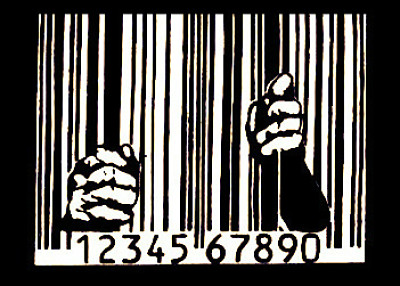
 Orwellian Texas lawmakers are working on legislation to license
immigrant detention centers as child-care facilities. Many testified
against the idea, but the prison industry is paying ten Texas lobbyists
up to $480,000 and has doled out $225,000 in political contributions in
recent years.
Orwellian Texas lawmakers are working on legislation to license
immigrant detention centers as child-care facilities. Many testified
against the idea, but the prison industry is paying ten Texas lobbyists
up to $480,000 and has doled out $225,000 in political contributions in
recent years.  |
 |
 |
 |
 |
Showing posts with label Privatization. Show all posts
Showing posts with label Privatization. Show all posts
Friday, April 21, 2017
Lobby Watch: Locking Up Immigrant Families
Orwellian Texas lawmakers are working on legislation to license
immigrant detention centers as child-care facilities. Many testified
against the idea, but the prison industry is paying ten Texas lobbyists
up to $480,000 and has doled out $225,000 in political contributions in
recent years. 

Wednesday, January 7, 2009
Trans Texas Corridor: Politicians Get Burned Paving Texas Backwards, From the Top Down
 The Texas Department of Transportation declared Governor Rick Perry’s controversial vision for the $175 billion Trans Texas Corridor (TTC) officially dead. While the governor's grand dream has vanished as a political target, some of the toll roads will live on. The path to these roads was paved with $3.4 million in campaign contributions and up to $6 million in lobby expenditures. While the rush to toll roads creates windfalls for some contractors, the benefits for Texas motorists and taxpayers are unclear.
Read the report
Monday, January 5, 2009
Dallas Morning News: Outsourcing enriches contractors, ex-legislators
Texas will pay private companies billions of dollars this year to provide health and human services to its neediest residents. Contractors will coordinate care and process benefits, operate call centers for welfare applicants and cut checks for state health workers. The national economy may be collapsing, but it's another boom year in the state's effort to outsource functions it once performed. Read the article at the Dallas Morning News
By GREGG JONES / The Dallas Morning News
gjones@dallasnews.com
Monday, January 5, 2009
For the weak and the vulnerable, Texas has long been an especially hard place. Year after year, national surveys place the state at or near the bottom in such categories as assistance to poor children and the malnourished, treatment of the mentally ill and care of the disabled. This story is part of The Dallas Morning News' 'State of Neglect' series examining how the state determines whom it protects and whom it excludes– and how special interests and their lobbyists strongly influence the writing of laws and the workings of state government.
Texas will pay private companies billions of dollars this year to provide health and human services to its neediest residents. Contractors will coordinate care and process benefits, operate call centers for welfare applicants and cut checks for state health workers.
The national economy may be collapsing, but it's another boom year in the state's effort to outsource functions it once performed.
Government outsourcing in Texas expanded dramatically with 2003 legislation that crunched 12 health and human services agencies into five, negotiated lower prices with drug companies and replaced state workers with private contractors to screen and administer welfare benefits. It has since grown to include such functions as data management across state agencies and payroll processing for state employees.
"Anytime state government can provide the same or better services more efficiently and cost-effectively, the citizens benefit," said Allison Castle, spokeswoman for Gov. Rick Perry.
Some have benefited more than others: Former Perry aides, state agency staff and legislators have gone to work for private companies that have profited from the outsourcing.
The architect of the landmark legislation, for example, has earned between $1 million and $2 million as a lobbyist specializing in health care over the past four years.
Former state Rep. Arlene Wohlgemuth said the result of her legislation, known as House Bill 2292, has been smaller government that still served the needs of vulnerable Texans.
"By reducing administrative costs, more money was available for social services programs, the benefits of the poor were protected and funding for foster-care programs actually increased," Wohlgemuth said.
The revolving door from public to private sector does more than enrich former public officials, critics contend.
"It undermines public faith in government when they see that kind of thing happening," said Andrew Wheat of Texans for Public Justice, a liberal group that tracks lobbying and campaign contributions. "It reconfirms the sense that these people are operating on the take and not in the public's best interest."
Policies and profits
The state Health and Human Services Commission reported more than $15.5 billion in contracts in fiscal year 2007, according to the most recent figures available from the Legislative Budget Board, the Legislature's fiscal and budgetary office. That was 58 percent of overall state spending on health and human services and an 11 percentage-point increase over fiscal year 2003 contracting.
This year's health and human services budget is $29.3 billion. Commission spokeswoman Stephanie Goodman said nearly $25 billion was for contracts, including payments to doctors, pharmacies, hospitals and private companies.
The belief that outsourcing promotes efficiency and cost savings is one that conservative activists and corporate interests have promoted in Austin over the last decade. It shaped HB 2292.
Gregg Phillips had a foot in both the corporate and political worlds that produced the legislation. He was hired as a senior official at the Health and Human Services Commission just as Wohlgemuth was introducing the first draft of HB 2292.
As a deputy executive commissioner at Health and Human Services, Phillips played a leading role in shaping the legislation and promoting some of its more controversial elements. When state Rep. Brian McCall, a Plano Republican, expressed concerns about the plan to replace state welfare administrators with privately run call centers, Wohlgemuth arranged for him to tour an Austin call center that was handling applications for another state program. Phillips was his guide, McCall said.
Later, Phillips directed the agency's business case analysis, which predicted that the call centers would be cost-effective. (The call center program has cost taxpayers more than $250 million and is still not fully functional three years after its launch.)
Phillips was a former Republican Party fundraiser who presided over privatization initiatives as Mississippi's human services chief in the 1990s. A Mississippi legislative committee concluded in 1995 that Phillips had created "an appearance of impropriety" by going to work for a company after awarding it a $557,000 contract while in his state job.
From 1997 until August 2002, Phillips worked on health-care contracts for Deloitte Consulting LLP, a major government outsourcing firm, according to his state personnel file.
Chris Britton, a former Republican legislative aide who had worked for Wohlgemuth and had advised Perry on health and human service issues when he was lieutenant governor and governor, was also heavily involved in the legislation.
Just weeks after leaving the governor's staff in late 2002, Britton was hired by Wohlgemuth to perform budget and legislative policy analysis, Britton said in an e-mail response. State campaign finance records show Wohlgemuth paid him $10,000 from campaign funds in 2003. Britton now works for Accenture LLP, another big outsourcing firm that along with Deloitte won contracts with the state after the passage of HB 2292.
Deloitte and Accenture also may have been involved in discussions about the outsourcing legislation. Phillips' office calendar shows that he met repeatedly with representatives of the two companies during the time he was working on the legislation. The Houston Chronicle first reported those meetings in 2005.
In a recent telephone interview, Phillips told The Dallas Morning News that he had "a lot of interaction with a lot of folks" but could not remember whether he met with Deloitte and Accenture while working on the bill.
Deloitte spokeswoman Melissa Norcross Wolf said the company "had no involvement in the drafting of HB 2292."
Health and Human Services Executive Commissioner Albert Hawkins said Accenture and Deloitte were among many parties interested in HB 2292. He defended the involvement of private contractors in discussions regarding the legislation.
"There's all kind of input that is provided into the legislative process from people who have expertise or those that might be interested in some business opportunity down the road," he said.
Hawkins said he was confident that Deloitte and Accenture did not improperly influence the legislation.
"The drafting process is under the control of the Legislature," Hawkins said. "While we share information about it, it's up to the author and the legislative committees as to what to include in their bills."
In this case, Wohlgemuth and her colleagues included the prevailing orthodoxy on outsourcing state health services, including the use of call centers to process applications for Medicaid, food stamps and cash assistance.
Supporters said that would save time and millions of dollars by eliminating the jobs of thousands of state workers who accepted benefit applications in offices around Texas.
From March 11, 2003, when Wohlgemuth filed HB 2292 in the Texas House, until it was signed three months later, the bill grew from 20 pages to 300 pages, including more than 150 amendments.
Wohlgemuth told colleagues the bill would "cut out inefficient bureaucracy, streamline programs that belong together, delete the duplication of services provided by the state and make government more user-friendly to the citizens of Texas." It would also save the state $1.1 billion, she said.
That was an irresistible pitch for lawmakers facing a $10 billion budget shortfall.
Landing contracts
Once signed, the law set in motion another high-stakes competition as companies vied for contracts, drawing on well-established ties to key lawmakers.
Texas law bans contributions to lawmakers while the Legislature is in session and generally prohibits corporations and labor unions from directly contributing to politicians. But they are allowed to give money through political action committees, or PACs, registered groups set up by corporations, labor unions, professionals and others to accept and make campaign contributions.
The money given to officeholders by the Deloitte & Touche Texas Political Action Committee typifies the sort of targeted contributions made to advance a corporation's interests in Austin.
Since 2002, the Deloitte PAC has contributed more than $270,000 to political candidates and causes in Texas, according to state records. The largest contributions typically go to top officeholders – it has contributed more than $30,000 to Perry since 2004 and $17,500 to House Speaker Tom Craddick, who wields vast influence over legislation. Dozens of other contributions have gone to lawmakers on committees that deal with issues and legislation of interest to Deloitte.
In July 2003, the first month that Deloitte could resume contributions to lawmakers following the end of the legislative session, the Deloitte PAC made only one donation: $1,000 to Wohlgemuth, at the time a member of the powerful House Appropriations Committee and chairwoman of its subcommittee on health and human services.
In September 2003, the Deloitte PAC contributed $1,000 to Rep. Dianne Delisi, then chairwoman of the State Health Care Expenditures Select Committee. She is also the mother-in-law of Deirdre Delisi, the governor's then-deputy chief of staff.
The next month, Deloitte Consulting won the first contract resulting from Wohlgemuth's legislation. The Health and Human Services Commission chose Deloitte as the lead consultant in the consolidation of agencies, a contract worth more than $1.8 million. A $1.2 million consulting contract went to Accenture. And Virginia-based Maximus Inc., another outsourcing firm that has since become a major player in Austin, won a $712,000 contract.
HB 2292's grand prize, however, was a contract to outsource the screening process for welfare benefits and to create call centers for accepting applications. The competition pitted outsourcing rivals Accenture and IBM, both of which hired a well-connected cast of lobbyists that included former legislators or executive branch staff.
In 2005, Health and Human Services awarded the $899 million call center contract to Accenture. IBM formally protested and later sued the state, alleging contract irregularities.
IBM later withdrew the lawsuit. It declined to discuss its decision with The News, and Hawkins said IBM's complaints "were unfounded."
About 16 months later, IBM won an $863 million contract to manage state data for Texas. Supporters said the contract would save the state $159 million over seven years. (In October, after the state had already fined IBM $900,000 for failing to complete timely backups, Perry suspended further data transfers to IBM.)
Delayed care
When Accenture's four call centers began taking social services applications in January 2006, delays immediately plagued the system. Thousands of applications piled up, and by May the state halted further rollout of the call centers.
In 2007, the state canceled the contract at Accenture's request. A report by the Health and Human Services inspector general later criticized the agency for a flawed bid evaluation and inadequate contract oversight. It also found the Deloitte-designed software was significantly slower than the old state-run system.
Hawkins had supported the call centers as a way to save $600 million over five years. But problems have indefinitely delayed the system's statewide rollout, and so "we didn't achieve the savings," agency spokeswoman Goodman said.
Instead, Texas spent $30 million dealing with various problems with the Accenture contract and another $10 million on retention bonuses to keep experienced staff from leaving. For less than two years of work on the project, Accenture and its subcontractors were paid about $210 million.
The state paid Deloitte $116.6 million before the company turned the new computer system over to Accenture in 2005, even though there were still more than 500 defects, the inspector general's office later noted. After Accenture gave up the call centers contract, the state hired Deloitte back and is paying the company $115.6 million to help maintain the system through 2010.
Texas hired Maximus to take over operation of the four call centers and to perform other health and human services work. It has paid Maximus $141.2 million over the last two years.
Those who rely on health and human services programs, and their advocates, say the state has saved money through outsourcing but in a way that is seldom discussed: by delaying or denying care to people in need, inadvertently or by design.
Roxanne Anderson, 39, a part-time library aide for the city of Grand Prairie, said she couldn't afford to take her three children – ages 7, 9 and 11 – to the doctor if they weren't covered through the subsidized Children's Health Insurance Program for working-poor families. Anderson said she liked the convenience of a call center in applying for benefits, but lost paperwork at one of the centers resulted in her children losing their coverage for a month in early 2008. Front-line staff at the call centers also don't know much about the program, she said.
"It takes them a long time to find out answers to questions, and quite often I have to get transferred to a second layer," Anderson said.
Celia Hagert, an expert on state social programs at the nonpartisan Center for Public Policy Priorities in Austin, said these are common complaints since the state began outsourcing applicant screening.
Outsourcing this work raises a potential conflict between a private company's need to maximize profits and the state's emphasis on providing benefits to qualified applicants, regardless of the time or effort required, she said.
Whether that conflict has cost Texas taxpayers is not fully known. Government oversight agencies – particularly the state comptroller and auditor – have analyzed only a few troubled contracts to determine what, if anything, was saved by shifting government functions to private contractors.
A 2006 federal review found that Accenture's call center workers performed so badly that a "high percentage of cases" had to be returned because of missing information and other errors.
A Texas comptroller's office review that same year said the call center project was a case study in poorly executed outsourcing.
"Successful outsourcing relies on two things: well-written contracts that base payment on the contractor's good performance, and strong contract management practices to oversee the contractor's work," the review concluded. "The Accenture arrangement has neither of these. HHSC's lack of proper contracting practices has led directly to project delays, cost overruns and failed service to Texans."
Last month, after 20 months of negotiations, the Health and Human Services Commission announced that the Accenture team had agreed to forgo $70.9 million in payments it was seeking from the state. The team also agreed to repay $20 million and provide a $10 million credit against future work performed by Maximus.
Winners and losers
Health and human services officials said taxpayers have profited from HB 2292, specifically $962 million in savings from the consolidation of state agencies and workforce reductions, as well as the introduction of a preferred drug list for Medicaid patients.
"More importantly, I think, for the long run, we have put in place a more rational structure and way of providing those services that will be cost-effective over years to come," Hawkins said.
Lawmakers, lobbyists, former health and human services staff and former Perry aides have profited in various ways, as well.
Craddick, who became House speaker after the 2003 Republican takeover of the Legislature, secured a call center and a document processing center for the entire system for his hometown, Midland.
Britton, the former Perry aide who now works for Accenture, got part of a state contract awarded to a company founded by Phillips, the former Health and Human Services official.
Britton's wife, Tiffiny, a former Texas House and Senate staffer, works for Wohlgemuth's Austin lobbying and consulting firm, Three Point Strategies, according to the firm's Web site. Like Wolhgemuth, her clients are mainly in the health-care sector, Texas Ethics Commission records show.
Since leaving his Health and Human Services Commission position in 2004, Phillips has won government outsourcing contracts from Texas and other states. In 2007, he hired Wohlgemuth for up to $25,000 to lobby for one of his firms, GHT Development Corp.
Wohlgemuth, in turn, persuaded a former House colleague to insert an amendment in a bill that would have steered a state contract to GHT Development. That former colleague was Appropriations Committee Chairman Warren Chisum, who 18 months earlier had received a $9,000 contribution from a Wohlgemuth campaign fund, according to Texas Ethics Commission records.
After questions were raised by lawmakers, the amendment was stripped from the final budget legislation.
Phillips denied any attempt to steer a contract to his firm.
"I guess I don't understand what's inappropriate about a private business person hiring someone who's able to help them in the Legislature," he said. "Neither we nor she have violated any rules, laws or anything else."
Wohlgemuth didn't respond when asked about the amendment recently, but in 2007 she told The News: "I was trying to advantage my client."
GHT Development won a $275,000 no-bid contract in 2007 to supply the Texas Youth Commission with an automated placement system for juvenile inmates, state records show. Wohlgemuth had recommended Phillips, according to Jay Kimbrough, who was brought in to reform TYC and now serves as Perry's chief of staff.
A staff report in November by the Legislature's Sunset Advisory Commission found that Phillips' system had experienced such "significant problems" that TYC was still operating its old system.
Wohlgemuth ran unsuccessfully for a seat in the U.S. Congress in 2004 and resurfaced two months later as a lobbyist. One of her first clients was the Texas Optometric Association. Two years earlier, while still a legislator, Wohlgemuth had voted to cut optometry benefits for the children of working poor. The 2005 Legislature restored them.
Wohlgemuth's daughter, Cristen, a former lobbyist, served on the governor's staff from January 2007 until June 2008 when, the governor's office said, she went to work for Chisum.
"Former legislators who lobby do not violate either the spirit or the letter of Texas ethics laws," Arlene Wohlgemuth told The News in an e-mail. "People ... know that when I talk with them on behalf of a client they can rely on two things: first that what I tell them is absolutely truthful, and second that I bring to them only those ideas I believe are in the best interests of the State and her citizens."
Texans for Public Justice, which is critical of lobbyists and the influence of corporate money in state politics, said former lawmakers who use their legislative contacts and expertise for later profit erode confidence.
"Not many of these lawmakers remain there for life, and a shocking number of them wind up in the lobby," Wheat said. "If you have that in the back of your mind, you don't want to offend the biggest lobby interests in the state."
Staff writer Ryan McNeill contributed to this report.
Texas campaign finance facts
• Texas does not limit the size of campaign contributions to nonjudicial candidates.
• Corporations and labor unions may not give to candidates. They can give to political parties for administrative costs, spend on ballot measures and pay overhead of political action committees, which collect donations and give to candidates.
• Legislators and top state officials cannot take contributions during the Legislature and for 30 days before and after, or inside the Capitol or its annex. Both restrictions came from a 1989 incident in which poultry magnate Lonnie "Bo" Pilgrim passed out $10,000 checks on the Senate floor during a workers' compensation debate.
• Limits on judicial candidate contributions vary by office. For a Texas Supreme Court candidate, limits are $5,000 from an individual and $30,000 total from a law firm or its members. A Supreme Court candidate can take a total of $300,000 from all general-purpose political action committees. Judicial candidates may raise money from seven months before they file until four months after election day.
Campaign contributions to House Human Services Committee members
State of Neglect: Outsourcing enriches contractors, ex-legislators
By GREGG JONES / The Dallas Morning News
gjones@dallasnews.com
Monday, January 5, 2009
For the weak and the vulnerable, Texas has long been an especially hard place. Year after year, national surveys place the state at or near the bottom in such categories as assistance to poor children and the malnourished, treatment of the mentally ill and care of the disabled. This story is part of The Dallas Morning News' 'State of Neglect' series examining how the state determines whom it protects and whom it excludes– and how special interests and their lobbyists strongly influence the writing of laws and the workings of state government.
Texas will pay private companies billions of dollars this year to provide health and human services to its neediest residents. Contractors will coordinate care and process benefits, operate call centers for welfare applicants and cut checks for state health workers.
The national economy may be collapsing, but it's another boom year in the state's effort to outsource functions it once performed.
Government outsourcing in Texas expanded dramatically with 2003 legislation that crunched 12 health and human services agencies into five, negotiated lower prices with drug companies and replaced state workers with private contractors to screen and administer welfare benefits. It has since grown to include such functions as data management across state agencies and payroll processing for state employees.
"Anytime state government can provide the same or better services more efficiently and cost-effectively, the citizens benefit," said Allison Castle, spokeswoman for Gov. Rick Perry.
Some have benefited more than others: Former Perry aides, state agency staff and legislators have gone to work for private companies that have profited from the outsourcing.
The architect of the landmark legislation, for example, has earned between $1 million and $2 million as a lobbyist specializing in health care over the past four years.
Former state Rep. Arlene Wohlgemuth said the result of her legislation, known as House Bill 2292, has been smaller government that still served the needs of vulnerable Texans.
"By reducing administrative costs, more money was available for social services programs, the benefits of the poor were protected and funding for foster-care programs actually increased," Wohlgemuth said.
The revolving door from public to private sector does more than enrich former public officials, critics contend.
"It undermines public faith in government when they see that kind of thing happening," said Andrew Wheat of Texans for Public Justice, a liberal group that tracks lobbying and campaign contributions. "It reconfirms the sense that these people are operating on the take and not in the public's best interest."
Policies and profits
The state Health and Human Services Commission reported more than $15.5 billion in contracts in fiscal year 2007, according to the most recent figures available from the Legislative Budget Board, the Legislature's fiscal and budgetary office. That was 58 percent of overall state spending on health and human services and an 11 percentage-point increase over fiscal year 2003 contracting.
This year's health and human services budget is $29.3 billion. Commission spokeswoman Stephanie Goodman said nearly $25 billion was for contracts, including payments to doctors, pharmacies, hospitals and private companies.
The belief that outsourcing promotes efficiency and cost savings is one that conservative activists and corporate interests have promoted in Austin over the last decade. It shaped HB 2292.
Gregg Phillips had a foot in both the corporate and political worlds that produced the legislation. He was hired as a senior official at the Health and Human Services Commission just as Wohlgemuth was introducing the first draft of HB 2292.
As a deputy executive commissioner at Health and Human Services, Phillips played a leading role in shaping the legislation and promoting some of its more controversial elements. When state Rep. Brian McCall, a Plano Republican, expressed concerns about the plan to replace state welfare administrators with privately run call centers, Wohlgemuth arranged for him to tour an Austin call center that was handling applications for another state program. Phillips was his guide, McCall said.
Later, Phillips directed the agency's business case analysis, which predicted that the call centers would be cost-effective. (The call center program has cost taxpayers more than $250 million and is still not fully functional three years after its launch.)
Phillips was a former Republican Party fundraiser who presided over privatization initiatives as Mississippi's human services chief in the 1990s. A Mississippi legislative committee concluded in 1995 that Phillips had created "an appearance of impropriety" by going to work for a company after awarding it a $557,000 contract while in his state job.
From 1997 until August 2002, Phillips worked on health-care contracts for Deloitte Consulting LLP, a major government outsourcing firm, according to his state personnel file.
Chris Britton, a former Republican legislative aide who had worked for Wohlgemuth and had advised Perry on health and human service issues when he was lieutenant governor and governor, was also heavily involved in the legislation.
Just weeks after leaving the governor's staff in late 2002, Britton was hired by Wohlgemuth to perform budget and legislative policy analysis, Britton said in an e-mail response. State campaign finance records show Wohlgemuth paid him $10,000 from campaign funds in 2003. Britton now works for Accenture LLP, another big outsourcing firm that along with Deloitte won contracts with the state after the passage of HB 2292.
Deloitte and Accenture also may have been involved in discussions about the outsourcing legislation. Phillips' office calendar shows that he met repeatedly with representatives of the two companies during the time he was working on the legislation. The Houston Chronicle first reported those meetings in 2005.
In a recent telephone interview, Phillips told The Dallas Morning News that he had "a lot of interaction with a lot of folks" but could not remember whether he met with Deloitte and Accenture while working on the bill.
Deloitte spokeswoman Melissa Norcross Wolf said the company "had no involvement in the drafting of HB 2292."
Health and Human Services Executive Commissioner Albert Hawkins said Accenture and Deloitte were among many parties interested in HB 2292. He defended the involvement of private contractors in discussions regarding the legislation.
"There's all kind of input that is provided into the legislative process from people who have expertise or those that might be interested in some business opportunity down the road," he said.
Hawkins said he was confident that Deloitte and Accenture did not improperly influence the legislation.
"The drafting process is under the control of the Legislature," Hawkins said. "While we share information about it, it's up to the author and the legislative committees as to what to include in their bills."
In this case, Wohlgemuth and her colleagues included the prevailing orthodoxy on outsourcing state health services, including the use of call centers to process applications for Medicaid, food stamps and cash assistance.
Supporters said that would save time and millions of dollars by eliminating the jobs of thousands of state workers who accepted benefit applications in offices around Texas.
From March 11, 2003, when Wohlgemuth filed HB 2292 in the Texas House, until it was signed three months later, the bill grew from 20 pages to 300 pages, including more than 150 amendments.
Wohlgemuth told colleagues the bill would "cut out inefficient bureaucracy, streamline programs that belong together, delete the duplication of services provided by the state and make government more user-friendly to the citizens of Texas." It would also save the state $1.1 billion, she said.
That was an irresistible pitch for lawmakers facing a $10 billion budget shortfall.
Landing contracts
Once signed, the law set in motion another high-stakes competition as companies vied for contracts, drawing on well-established ties to key lawmakers.
Texas law bans contributions to lawmakers while the Legislature is in session and generally prohibits corporations and labor unions from directly contributing to politicians. But they are allowed to give money through political action committees, or PACs, registered groups set up by corporations, labor unions, professionals and others to accept and make campaign contributions.
The money given to officeholders by the Deloitte & Touche Texas Political Action Committee typifies the sort of targeted contributions made to advance a corporation's interests in Austin.
Since 2002, the Deloitte PAC has contributed more than $270,000 to political candidates and causes in Texas, according to state records. The largest contributions typically go to top officeholders – it has contributed more than $30,000 to Perry since 2004 and $17,500 to House Speaker Tom Craddick, who wields vast influence over legislation. Dozens of other contributions have gone to lawmakers on committees that deal with issues and legislation of interest to Deloitte.
In July 2003, the first month that Deloitte could resume contributions to lawmakers following the end of the legislative session, the Deloitte PAC made only one donation: $1,000 to Wohlgemuth, at the time a member of the powerful House Appropriations Committee and chairwoman of its subcommittee on health and human services.
In September 2003, the Deloitte PAC contributed $1,000 to Rep. Dianne Delisi, then chairwoman of the State Health Care Expenditures Select Committee. She is also the mother-in-law of Deirdre Delisi, the governor's then-deputy chief of staff.
The next month, Deloitte Consulting won the first contract resulting from Wohlgemuth's legislation. The Health and Human Services Commission chose Deloitte as the lead consultant in the consolidation of agencies, a contract worth more than $1.8 million. A $1.2 million consulting contract went to Accenture. And Virginia-based Maximus Inc., another outsourcing firm that has since become a major player in Austin, won a $712,000 contract.
HB 2292's grand prize, however, was a contract to outsource the screening process for welfare benefits and to create call centers for accepting applications. The competition pitted outsourcing rivals Accenture and IBM, both of which hired a well-connected cast of lobbyists that included former legislators or executive branch staff.
In 2005, Health and Human Services awarded the $899 million call center contract to Accenture. IBM formally protested and later sued the state, alleging contract irregularities.
IBM later withdrew the lawsuit. It declined to discuss its decision with The News, and Hawkins said IBM's complaints "were unfounded."
About 16 months later, IBM won an $863 million contract to manage state data for Texas. Supporters said the contract would save the state $159 million over seven years. (In October, after the state had already fined IBM $900,000 for failing to complete timely backups, Perry suspended further data transfers to IBM.)
Delayed care
When Accenture's four call centers began taking social services applications in January 2006, delays immediately plagued the system. Thousands of applications piled up, and by May the state halted further rollout of the call centers.
In 2007, the state canceled the contract at Accenture's request. A report by the Health and Human Services inspector general later criticized the agency for a flawed bid evaluation and inadequate contract oversight. It also found the Deloitte-designed software was significantly slower than the old state-run system.
Hawkins had supported the call centers as a way to save $600 million over five years. But problems have indefinitely delayed the system's statewide rollout, and so "we didn't achieve the savings," agency spokeswoman Goodman said.
Instead, Texas spent $30 million dealing with various problems with the Accenture contract and another $10 million on retention bonuses to keep experienced staff from leaving. For less than two years of work on the project, Accenture and its subcontractors were paid about $210 million.
The state paid Deloitte $116.6 million before the company turned the new computer system over to Accenture in 2005, even though there were still more than 500 defects, the inspector general's office later noted. After Accenture gave up the call centers contract, the state hired Deloitte back and is paying the company $115.6 million to help maintain the system through 2010.
Texas hired Maximus to take over operation of the four call centers and to perform other health and human services work. It has paid Maximus $141.2 million over the last two years.
Those who rely on health and human services programs, and their advocates, say the state has saved money through outsourcing but in a way that is seldom discussed: by delaying or denying care to people in need, inadvertently or by design.
Roxanne Anderson, 39, a part-time library aide for the city of Grand Prairie, said she couldn't afford to take her three children – ages 7, 9 and 11 – to the doctor if they weren't covered through the subsidized Children's Health Insurance Program for working-poor families. Anderson said she liked the convenience of a call center in applying for benefits, but lost paperwork at one of the centers resulted in her children losing their coverage for a month in early 2008. Front-line staff at the call centers also don't know much about the program, she said.
"It takes them a long time to find out answers to questions, and quite often I have to get transferred to a second layer," Anderson said.
Celia Hagert, an expert on state social programs at the nonpartisan Center for Public Policy Priorities in Austin, said these are common complaints since the state began outsourcing applicant screening.
Outsourcing this work raises a potential conflict between a private company's need to maximize profits and the state's emphasis on providing benefits to qualified applicants, regardless of the time or effort required, she said.
Whether that conflict has cost Texas taxpayers is not fully known. Government oversight agencies – particularly the state comptroller and auditor – have analyzed only a few troubled contracts to determine what, if anything, was saved by shifting government functions to private contractors.
A 2006 federal review found that Accenture's call center workers performed so badly that a "high percentage of cases" had to be returned because of missing information and other errors.
A Texas comptroller's office review that same year said the call center project was a case study in poorly executed outsourcing.
"Successful outsourcing relies on two things: well-written contracts that base payment on the contractor's good performance, and strong contract management practices to oversee the contractor's work," the review concluded. "The Accenture arrangement has neither of these. HHSC's lack of proper contracting practices has led directly to project delays, cost overruns and failed service to Texans."
Last month, after 20 months of negotiations, the Health and Human Services Commission announced that the Accenture team had agreed to forgo $70.9 million in payments it was seeking from the state. The team also agreed to repay $20 million and provide a $10 million credit against future work performed by Maximus.
Winners and losers
Health and human services officials said taxpayers have profited from HB 2292, specifically $962 million in savings from the consolidation of state agencies and workforce reductions, as well as the introduction of a preferred drug list for Medicaid patients.
"More importantly, I think, for the long run, we have put in place a more rational structure and way of providing those services that will be cost-effective over years to come," Hawkins said.
Lawmakers, lobbyists, former health and human services staff and former Perry aides have profited in various ways, as well.
Craddick, who became House speaker after the 2003 Republican takeover of the Legislature, secured a call center and a document processing center for the entire system for his hometown, Midland.
Britton, the former Perry aide who now works for Accenture, got part of a state contract awarded to a company founded by Phillips, the former Health and Human Services official.
Britton's wife, Tiffiny, a former Texas House and Senate staffer, works for Wohlgemuth's Austin lobbying and consulting firm, Three Point Strategies, according to the firm's Web site. Like Wolhgemuth, her clients are mainly in the health-care sector, Texas Ethics Commission records show.
Since leaving his Health and Human Services Commission position in 2004, Phillips has won government outsourcing contracts from Texas and other states. In 2007, he hired Wohlgemuth for up to $25,000 to lobby for one of his firms, GHT Development Corp.
Wohlgemuth, in turn, persuaded a former House colleague to insert an amendment in a bill that would have steered a state contract to GHT Development. That former colleague was Appropriations Committee Chairman Warren Chisum, who 18 months earlier had received a $9,000 contribution from a Wohlgemuth campaign fund, according to Texas Ethics Commission records.
After questions were raised by lawmakers, the amendment was stripped from the final budget legislation.
Phillips denied any attempt to steer a contract to his firm.
"I guess I don't understand what's inappropriate about a private business person hiring someone who's able to help them in the Legislature," he said. "Neither we nor she have violated any rules, laws or anything else."
Wohlgemuth didn't respond when asked about the amendment recently, but in 2007 she told The News: "I was trying to advantage my client."
GHT Development won a $275,000 no-bid contract in 2007 to supply the Texas Youth Commission with an automated placement system for juvenile inmates, state records show. Wohlgemuth had recommended Phillips, according to Jay Kimbrough, who was brought in to reform TYC and now serves as Perry's chief of staff.
A staff report in November by the Legislature's Sunset Advisory Commission found that Phillips' system had experienced such "significant problems" that TYC was still operating its old system.
Wohlgemuth ran unsuccessfully for a seat in the U.S. Congress in 2004 and resurfaced two months later as a lobbyist. One of her first clients was the Texas Optometric Association. Two years earlier, while still a legislator, Wohlgemuth had voted to cut optometry benefits for the children of working poor. The 2005 Legislature restored them.
Wohlgemuth's daughter, Cristen, a former lobbyist, served on the governor's staff from January 2007 until June 2008 when, the governor's office said, she went to work for Chisum.
"Former legislators who lobby do not violate either the spirit or the letter of Texas ethics laws," Arlene Wohlgemuth told The News in an e-mail. "People ... know that when I talk with them on behalf of a client they can rely on two things: first that what I tell them is absolutely truthful, and second that I bring to them only those ideas I believe are in the best interests of the State and her citizens."
Texans for Public Justice, which is critical of lobbyists and the influence of corporate money in state politics, said former lawmakers who use their legislative contacts and expertise for later profit erode confidence.
"Not many of these lawmakers remain there for life, and a shocking number of them wind up in the lobby," Wheat said. "If you have that in the back of your mind, you don't want to offend the biggest lobby interests in the state."
Staff writer Ryan McNeill contributed to this report.
Texas campaign finance facts
• Texas does not limit the size of campaign contributions to nonjudicial candidates.
• Corporations and labor unions may not give to candidates. They can give to political parties for administrative costs, spend on ballot measures and pay overhead of political action committees, which collect donations and give to candidates.
• Legislators and top state officials cannot take contributions during the Legislature and for 30 days before and after, or inside the Capitol or its annex. Both restrictions came from a 1989 incident in which poultry magnate Lonnie "Bo" Pilgrim passed out $10,000 checks on the Senate floor during a workers' compensation debate.
• Limits on judicial candidate contributions vary by office. For a Texas Supreme Court candidate, limits are $5,000 from an individual and $30,000 total from a law firm or its members. A Supreme Court candidate can take a total of $300,000 from all general-purpose political action committees. Judicial candidates may raise money from seven months before they file until four months after election day.
Campaign contributions to House Human Services Committee members
| |||||||||||||||||||||||||||||||||
Campaign contributions to Senate Health and Human Services Committee members
| |||||||||||||||||||||||||||||||||
* The Texas Ethics Commission does not require filers to report the names of donors with uniformity or consistency. Nor does it routinely monitor reports for accuracy. Consequently, misspellings are common and contributors' names can be presented inconsistently. The variations in information make it impossible to know with absolute certainty the total amount of money received by a lawmaker.
SOURCES: Texas Ethics Commission, Texas Legislature
Analysis: Staff writer Ryan McNeill
Friday, May 30, 2008
The Texas Observer: John McCain's Gramm Gamble
While the nation's investment bankers are paying a heavy price for their unbridled greed, former Sen. Phil Gramm has fared quite nicely. He currently serves as a vice president at UBS AG, a colossal, Swiss-owned investment bank, the post, no doubt, a thank you for assiduously looking out for Wall Street interests during his 23 years in public office. UBS has shown interest in the governor's lottery privatization proposition, which - according to a recent report by campaign watchdog Texans for Public Justice - would require a huge expansion of gambling operations. While convincing the Legislature to expand gambling is an enormous crapshoot, if anyone is connected enough to do it, it's Gramm. No one can tout a free market ideology that happens to benefit friends and family better than he. Read the article at the Texas Observer
By Patricia Kilday Hart
TEXAS OBSERVER
May 30, 2008
In the early evening of Friday, December 15, 2000, with Christmas break only hours away, the U.S. Senate rushed to pass an essential, 11,000-page government reauthorization bill. In what one legal textbook would later call "a stunning departure from normal legislative practice," the Senate tacked on a complex, 262-page amendment at the urging of Texas Sen. Phil Gramm.
There was little debate on the floor. According to the Congressional Record, Gramm promised that the amendment-also known as the Commodity Futures Modernization Act-along with other landmark legislation he had authored, would usher in a new era for the U.S. financial services industry.
"The work of this Congress will be seen as a watershed where we turned away from an outmoded Depression-era approach to financial regulation and adopted a framework that will position our financial services industry to be world leaders into the new century," Gramm said.
Watershed indeed. With the U.S. economy now battered by a tsunami of mortgage foreclosures, the $30-billion Bear Stearns Companies bailout and spiking food and energy prices, many congressional leaders and Wall Street analysts are questioning the wisdom of the radical deregulation launched by Gramm's legislative package. Financial wizard Warren Buffett has labeled the risky new investment instruments Gramm unleashed "financial weapons of mass destruction." They have fed the subprime mortgage crisis like an accelerant. While his distracted peers probably finalized their Christmas gift lists, Gramm created what Wall Street analysts now refer to as the "shadow banking system," an industry that operates outside any government oversight, but, as witnessed by the Bear Stearns debacle, requiring rescue by taxpayers to avert a national economic catastrophe.
While the nation's investment bankers are paying a heavy price for their unbridled greed (in billions of dollars of write-offs), Gramm has fared quite nicely. He currently serves as a vice president at UBS AG, a colossal, Swiss-owned investment bank, the post, no doubt, a thank you for assiduously looking out for Wall Street interests during his 23 years in public office. Now, with the aid of his longtime friend Arizona Sen. John McCain, Gramm may be looking at a quantum leap in power and influence.
Gramm serves as co-chair of the McCain 2008 presidential campaign. As one of the candidate's chief economic advisers, he is mentioned as a possible secretary of the treasury in a McCain administration. Their friendship was forged in the Senate as they worked against the Clinton health care proposal, and cemented when McCain served as national chairman of Gramm's own (ill-fated) 1996 presidential bid.
During McCain's rocky road to the nomination, it was Gramm as much as anyone who helped smooth the way. Last July, when it looked as though McCain's campaign would go bankrupt, Gramm, who once called money "the mother's milk of politics," advised him to slash his costs and assisted him with fundraising. Throughout the marathon primary season, Gramm has made numerous appearances with McCain and served as an ambassador to conservative groups. This spring, when conservative commentators attacked McCain as too liberal, McCain shored up his conservative bona fides by (according to The Huffington Post) bringing Gramm to a meeting with the editorial board of The Wall Street Journal.
But ask Gramm about his influence with McCain and it's clear that the former senator has not lost his talent for political spin. "My position [with the campaign] is, I am the senator's friend," he aw-shuckses in a telephone interview. "It would be a mistake to call me an economic adviser." Calling himself "a private citizen," Gramm claims ignorance of McCain's appearance two days earlier on Jon Stewart's The Daily Show.
"I'm so out of it, I don't even know who Jon Stewart is," he says in his trademark Georgia drawl.
It's hard to imagine that anyone remotely connected to politics is unaware of Stewart, but the remark fits well with the homespun persona that Gramm has carefully crafted for public consumption. Despite his false modesty, Phil Gramm remains a powerful force in Republican politics. Here in Texas, his many protégés-most notably Gov. Rick Perry, the beneficiary of a whopping $612,000 in campaign donations from Gramm's Senate campaign reserves-give him significant reach in Lone Star public policy.
Gramm might be interested in downplaying his role with the McCain campaign because, while the alliance might help with conservatives, it's at odds with the maverick image McCain has worked so hard to project. Gramm is more closely aligned with the kind of influence-peddling represented by the Keating Five scandal, in which McCain intervened with federal regulators on behalf of a campaign contributor with a failing savings and loan. The scandal shredded McCain's reputation and convinced him of the efficacy of reform.
In Gramm, McCain has chosen for a campaign adviser a former senator who espouses free market, conservative principles, but whose actions in public office served wealthy contributors and even himself. Exhibit A: Gramm's cozy Enron Corp. connections. Not only did CEO Ken Lay chair Gramm's 1992 re-election campaign, but Gramm's wife, Wendy, earned $50,000 a year as an Enron director from 1993 to 2001 (not counting perks that included stock options). Meanwhile Gramm pushed the company's aggressive-and ultimately self-defeating-political agenda to escape government scrutiny.
That Gramm is now advising the Republican nominee for president on economic matters "shouldn't give people a lot of comfort," says University of Maryland law professor Michael Greenberger, a senior official at the Commodity Futures Trading Commission in the late 1990s. "Gramm has been a central player in two major economic crises-the credit crisis and the incredibly high price of energy. ... He's got his fingerprints all over legislative efforts that led to this."
Nonetheless, Gramm holds fast to his ideology. "I've never seen any evidence that opening up competition among banks and insurance companies in any way contributed to this," he says with the patience of the college prof he once was."You've got a lot of people trying to rewrite history. You've got people with an ax to grind. They always wanted more government regulation, and when you have a problem, they want the government to regulate more."
His critics say that Gramm's anti-regulatory rhetoric failed the bulk of his constituents-which included thousands of hapless Enron employees who lost their life savings-but lavishly rewarded a few wealthy pals, like Ken Lay. University of Texas economist James Galbraith says Gramm is "not against government at all. His career has been finding ways to make money for his friends. It's a predator relationship. [Government] is his food supply."
When Gramm retired from the U.S. Senate in 2002, Texas Democrats celebrated that a powerful nemesis would no longer be a force on the national scene. Wrote Molly Ivins: "Gramm both looks like a snapping turtle and has the personality of one. When he ran for president in 1996 and finished fifth in Iowa, all the profiles written of him included the line 'Even his friends don't like him.'" She concluded: "We'll sure miss that sweet style." Clearly Molly's jubilation was premature.
It's easy to understand why Democrats were so eager to say goodbye to Gramm, who began his political career when he was elected to Congress in 1978 as a Democrat-and then quickly broke ranks with his party.
Gramm often jokes that he "didn't go to Washington to be loved, and was not disappointed." In his telling, his lack of popularity stemmed from his uncompromising stand on issues. Democrats who served with him, however, felt deeply betrayed by his actions as co-author of Ronald Reagan's austere first budget.
Former House Speaker Jim Wright recalls in his memoir, Balance of Power, that he learned to his "chagrin and sorrow" that Reagan sought counsel from a fellow Democrat who "was the beneficiary of my help and recipient of my naïve faith. His name was Phil Gramm."
In 1981, Gramm pleaded with fellow Texan Wright to help him win a seat on the powerful House Budget Committee, a privilege he had been denied by his Democratic peers, who found him unreliable. "Phil Gramm promised me ... that if he were favored by a Budget Committee assignment, he would make his arguments within the committee and then would close ranks and back whatever budget resolution the committee majority approved," the former speaker wrote. "That sounded fair enough." Later, Wright would be "flabbergasted" to learn that Gramm met clandestinely with Reagan budget guru David Stockman to strategize and defeat a Democratic budget plan. Reagan's "Gramm-Latta" budget would prevail.
Having led the charge for a Republican president's budget plan that, among many other things, drastically cut Social Security benefits, Gramm resigned in 1983 and forced an election for his House seat, which he won as a Republican. In a 1984 special election hastily called by then-Gov. Bill Clements, he waltzed to victory in the contest for longtime Republican John Tower's seat in the U.S. Senate.
When his new party won control of the Senate, Gramm rose to chairman of the Senate Banking Committee, where he was able to put his anti-regulation views into law. The Gramm-Leach-Bliley Act of 1999 repealed laws put in place after the Great Depression setting up protective barriers between commercial banks, investment banking firms, and insurance companies.
Consumer groups strenuously opposed the landmark legislation. "It was strongly deregulatory and ... did not address safety and soundness," says lobbyist Ed Mierzwinski of the public interest group U.S. PIRG.
But more powerful interests were pushing for the law, and they had a deadline. In 1998, Citicorp Inc. purchased Traveler's Insurance Group. Under the old law, the new company had a two-year grace period to divest either its insurance or banking functions. Instead, it went to Washington, D.C., and got the law changed-with Gramm's help.
"Some people jokingly refer to it as the Citigroup Relief Act," says University of North Carolina law professor Lisa Broome. "Normally, they would have had to spin off their insurance activities."
Another beneficiary: Gramm's future employer, UBS, which was able to absorb the brokerage house Paine Webber. (As of March 31, UBS employees and company-related PACs have given the McCain campaign $82,865, according to the Center for Responsive Politics.)
Banks had been chipping away at the barriers through Federal Reserve rules for decades. But Gramm's sweeping deregulation "stripped away restraint," says Broome.
While Gramm denies any link between the current subprime mortgage crisis and his legislative efforts, Mierzwinski, Broome, and even some Wall Street analysts trace a direct connection.
Michael Panzner, a Wall Street veteran and author of Financial Armageddon, says the massive deregulation encouraged "aggressive, swashbuckling, high-risk practices that might have been frowned upon in the banking industry, but which were viewed as typical, say, on Wall Street." Eventually, those practices "became the modus operandi throughout the financial services industry."
Panzner also believes that Gramm-Leach-Bliley "may have even set the stage for both the collapse and the subsequent 'rescue' of Bear Stearns by the Federal Reserve." The deregulated financial services industries were "encouraged to push the envelope in terms of risk-taking, and were not entirely dissuaded from thinking that the public purse would be available if things went horribly wrong."
Still others blame Gramm's Commodity Futures Modernization Act. Prior to its passage, they say, banks underwrote mortgages and were responsible for the risks involved. Now, through the use of credit default swaps-which in theory insure the banks against bad debts-those risks are passed along to insurance companies and other investors.
Maryland law professor Greenberger believes credit default swaps "were a key factor in encouraging lenders to feel they could make loans without knowing the risks or whether the loan would be paid back. The Commodity Futures Modernization Act freed them of federal oversight."
Before passage of the modernization act, the Commodity Futures Trading Commission was attempting to regulate the swaps market through rule-making. The modernization act, Gramm noted in his remarks on the Senate floor, provided "legal certainty" for the growing swaps market. That was necessary, Greenberger says, because at the time, "banks were doing these trades in direct violation of federal law."
Greenberger has also been critical of former Clinton Treasury Secretary Robert Rubin, who supported Gramm's banking deregulation. But Greenberger insists that it was Gramm's slick legislative move that prevented government regulators from halting the spread of the risky financial instruments.
"Without Phil Gramm adding that 262-page bill onto an 11,000 page appropriations bill in 2000, it never would have seen the light of day," Greenberger says. "It was a lame duck Congress ... racing off to Christmas recess. It was not an orderly process."
A more notorious feature of the modernization act was the "Enron loophole," which allowed energy trading to escape federal oversight. It was Enron's electronic trading that led to the California electricity crisis of 2000 and 2001, as well as Enron's own demise.
The issue of regulating electronically traded energy futures had been a pitched battle at the Commodity Futures Trading Commission throughout the '90s. One chairman advocated so passionately for deregulating energy futures that she persuaded her fellow commissioners to agree to a rule exempting them from oversight. Who was that? Wendy Gramm, the senator's wife, who served on the commission from 1988 to 1993. Shortly after her resignation, she was welcomed onto the Enron board of directors, where she would ensconce herself on the happily deaf-blind-and-mute audit committee.
The exemption received broad criticism from an array of sources-including the President's Working Group on Futures Markets, and then-chairman of the Federal Reserve, Alan Greenspan, who believed it contributed to market volatility.
Efforts to reverse the policy became moot when Gramm's amendment on that December evening gave the exemption the force of law-at a time when his wife served on the board of the one company that would ultimately most abuse it.
The impact of the "Enron loophole" has been enormous. Since its passage, the Senate Permanent Subcommittee on Investigations has concluded that the loophole contributed to inflated energy prices for American consumers. In 2006, its report found credible expert estimates that the loophole-by encouraging speculation-accounted for $20 of the price of a barrel of oil, then at $70. In 2007, the same committee blamed the loophole for price manipulation of the natural gas market by a single hedge fund, Amaranth Advisors.
After Enron's demise, Wendy Gramm ultimately participated in a $13-million settlement personally paid by Enron directors for insider trading, when they collectively sold some $276,000 worth of stock early in the company's decline. Consumer advocacy group Public Citizen has reported that Enron paid Wendy Gramm between $915,000 and $1.85 million from 1993 to 2001 in salary, attendance fees, and stock options.
Last September, Michigan Democratic Sen. Carl Levin introduced legislation to close the loophole, citing two congressional reports blaming it for excessive speculation that has "unfairly increased the cost of energy in the United States."
In announcing his legislation on the Senate floor, Levin noted that the Enron loophole was "inserted at the last minute, without any opportunity for debate, into commodity legislation that was attached to an omnibus appropriations bill ... in the waning hours of the 106th Congress."
"The loophole has helped foster the explosive growth of trading on unregulated electronic energy exchanges," Levin said. "It also rendered the U.S. energy markets more vulnerable to price manipulation and excessive speculation with resulting price distortions."
Asked about Levin's legislation, Phil Gramm expresses ignorance. "I don't know what provision in the law he's talking about."
Gramm apparently has long been touchy about the subject. When Enron collapsed, law professor Greenberger remarked to an interviewer that "all that [unregulated electronic energy trading] was made permissible by Gramm." A few days later, the phone rang.
"He called me up at my home to tell me I was wrong," Greenberger says. "I was sitting in my study preparing for classes. He started arguing with me that I was wrong. I said, if you insist on believing that, then you don't know what your own legislation did. I had to terminate the call because he would have kept me on the phone forever."
Similarly, Gramm today denies any linkage between the subprime crisis and his deregulatory legislation. "I wouldn't blame [swaps] for the problem. You could make the argument that without them, things would have been worse," he says. Congress should ?"look at the lessons of the subprime problem and learn what we can learn-loan generators and how they are compensated, what banks ought to be required to find to lend a variable rate," he says. "I'd be open to look at those things."
Says Greenberger, "I am quite confident Phil Gramm didn't understand what his legislation did. It was written by the banks and hedge funds."
Increasingly, many Wall Street titans agree that Gramm's efforts should be reversed. In May, Richard C. Griffin, founder of the $20 billion hedge fund Citadel Investment Group, told The New York Times that "fixing" Wall Street would require more regulation.
"Investment banks should either choose to be regulated as banks or should arrange to conduct their affairs to not require the stopgap support of the Federal Reserve," Griffin said. He also told the Times he sees a need for "new government oversight of the arcane world of credit default swaps, a business with a notional value and risk of $50 trillion."
Said the Times: "It was the interlocking relationships between thousands of investors and banks over credit default swaps that pushed the Fed to help rescue Bear Stearns."
Gramm isn't one to engage in mea culpas, regardless of the evidence against him. Take for example, his reaction when California was plunged into an energy crisis in 2001 by Enron traders manipulating the energy markets. Mimi Swartz recounts in her book, Power Failure, that Gramm exploded to the Los Angeles Times: "As [Californians] suffer the consequences of their own feckless policies, political leaders in California blame the power companies, deregulation and everyone but themselves, the inevitable call is now being heard for a federal bailout. I intend to do everything in my power to require those who valued environmental extremism and interstate protectionism more than common sense and market freedom to solve their electricity crisis without short circuiting taxpayers in other states."
Greenberger predicts that the fallout from Gramm's legislation will continue to grow, with capital drying up for all kinds of borrowing, including student loans. Meanwhile, Wall Street firms have begun considering a voluntary clearinghouse system for swaps and derivatives, an acknowledgement, Greenberger says, that some sort of policing is lacking.
Ironically, one of the big losers in the subprime mortgage crisis has been UBS, Gramm?s new employer, which has announced losses of $19 billion and acknowledged that number could grow.
Gramm was recently quoted in The Washington Post as saying he was unaware that the company had invested in subprime mortgage instruments. "That's like Claude Rains [in Casablanca] saying he was 'shocked, shocked' to find out gambling was occurring in his establishment," says UT's Galbraith.
Perhaps Gramm has been distracted by politics. Since last July, of course, he has been investing considerable time in another enterprise?the McCain campaign.
Crony capitalism is not the only arena in which Gramm's record might tarnish McCain's campaign. While McCain has promised to end congressional earmarks, Gramm, the legislator, once bragged, "I'm carrying so much pork, I'm beginning to get trichinosis." And there's the question of whether McCain, who wants to appeal to moderates and independents, needs political coaching from a man who once told The Dallas Morning News, "I know a political zealot when I see one. I am one."
Yet ideologically the two largely agree, whether it's on free trade or slashing government services. Given Gramm's free market philosophy, in a McCain administration he can be expected to continue his push for privatization of important government functions, particularly Social Security. McCain now says he would favor "maybe giving people the option" of personal retirement accounts, opting out of the Social Security system.
If a federal appointment fails to materialize for Gramm, there is always Texas. Much like the late Lt. Gov. Bob Bullock, Gramm has nurtured a "farm team" of younger Republican elected officials with whom he confers frequently.
Says Texas Secretary of State Phil Wilson, who served as state director of Gramm's Senate office, "Gramm in many ways really built the Republican Party in this state. He would actively recruit candidates to run. He would go to a fundraiser for anybody who would ask. He would do endorsements for people who were elected officials or who wanted to be elected officials, from county commissioner to state rep. to state senator."
More importantly, he showed them how to raise money. "By being there to help them raise the money, that spoke in volumes about credibility, because you can't run an effective campaign without being able to do television advertising," Wilson notes. Republican U.S. Rep. Jeb Hensarling of Athens is another former Gramm staffer, as is Republican nominee for Congress Pete Olson, who is challenging Rep. Nick Lampson for Tom DeLay's old seat.
Still, Gramm's first foray into lobbying at the state level bombed: His efforts to sell so-called "dead peasants" insurance to the Teacher Retirement System of Texas went nowhere. Under the dead peasants scheme, UBS would have sold TRS annuities and life insurance policies on retired teachers and kept the proceeds when teachers died.
His company's proposal to sell the Texas Lottery is still alive. His protégé Perry (Aggies Gramm and Perry became close when both bolted the Democratic Party in the early 1980s) startled legislative leaders in 2007 when the governor proposed selling the lottery to private investors for between $14 billion and $20 billion. By investing that money, UBS argues, the state could earn hundreds of millions more in interest than the $1 billion earned annually now.
Perry first learned of the idea from Wilson, who, according to The Dallas Morning News, passed along Gramm's interest in the subject. There are other UBS connections as well: The investment bank employs Perry's son, Griffin, and retains former Perry spokesman Ray Sullivan as a lobbyist.
In 2007, lawmakers ignored the lottery sale idea. But Lt. Gov. David Dewhurst gave interim charges to both the State Affairs and Finance committees to study the proposal. And Texas House Appropriations Chair Warren Chisum, a Republican from Pampa, has told reporters "[proponents of the sale] are already here visiting with folks to lay out their case." Senate State Affairs Chairman Robert Duncan, the Lubbock Republican who plans to hold hearings in August, confirmed this, saying lobbyists are "circling their wagons since the issue is in play."
A huge obstacle will be making the numbers work-which, according to a recent report by campaign watchdog Texans for Public Justice-would require a huge expansion of gambling operations.
UBS estimated that the Texas Lottery could be worth between $10 billion and $16 billion if per capita sales increased 2 percent a year; a 7 percent annual growth would make the lottery's value as high as $24 billion. But the group's report noted, "These projections assume that Texas could match the per capita sales rates of lotteries in Maryland, Georgia, and Virginia. Yet part of what drives higher sales in those states are games now prohibited in Texas. ... The UBS proposal also suggests the Texas Lottery could boost sales by moving into interactive television and the Internet." In short, the Wall Street consensus is that maximizing the value of the Texas Lottery requires an expansion of gambling into new games and new venues, and even into cyberspace.
While convincing the Legislature to expand gambling is an enormous crapshoot, if anyone is connected enough to do it, it's Gramm. No one can tout a free market ideology that happens to benefit friends and family better than he.
On January 10, Gramm introduced Perry at the annual banquet of the Texas Public Policy Foundation, a conservative think tank.
At first blush, Gramm?s homage might seem to be the obligatory appearance of a dutiful husband (Gramm's wife, Wendy, serves as the foundation's board chair), or a loyal Perry friend.
Gramm's remarks at Austin's Sheraton Hotel to a friendly crowd of 500 loyal conservatives revealed just how deeply involved and powerful the former senator remains in the Perry administration and the Republican Party, both in Texas and nationwide. Pronouncing Perry the "greatest governor" of his lifetime, Gramm ticked off a list of reasons that spoke volumes about not only his subject, but himself.
Predictably, he praised Perry for no new taxes and passage of the Republican redistricting bill.
More revealing was his praise of Perry for seeking "private sector solutions" to government problems. Translation: cha-ching.
Perry was equally effusive about Gramm when he responded to his old friend's introduction. "Americans made a huge mistake in 1996," he declared. "I can't fathom where we would be ... had Phil Gramm led this country for eight years."
When it comes to the economy, a McCain victory in November might make that dream come true.
Patricia Kilday Hart has written about Texas politics since 1981, as a staff writer in the Capitol bureau of the Dallas Times Herald and as writer-at-large for Texas Monthly. Since 1989, she has co-authored Texas Monthly's "Ten Best, Ten Worst Legislators."
John McCain's Gramm Gamble
The GOP presidential nominee is relying on the ex-senator who helped bring you the mortgage crisis and Rick Perry.By Patricia Kilday Hart
TEXAS OBSERVER
May 30, 2008
In the early evening of Friday, December 15, 2000, with Christmas break only hours away, the U.S. Senate rushed to pass an essential, 11,000-page government reauthorization bill. In what one legal textbook would later call "a stunning departure from normal legislative practice," the Senate tacked on a complex, 262-page amendment at the urging of Texas Sen. Phil Gramm.
There was little debate on the floor. According to the Congressional Record, Gramm promised that the amendment-also known as the Commodity Futures Modernization Act-along with other landmark legislation he had authored, would usher in a new era for the U.S. financial services industry.
"The work of this Congress will be seen as a watershed where we turned away from an outmoded Depression-era approach to financial regulation and adopted a framework that will position our financial services industry to be world leaders into the new century," Gramm said.
Watershed indeed. With the U.S. economy now battered by a tsunami of mortgage foreclosures, the $30-billion Bear Stearns Companies bailout and spiking food and energy prices, many congressional leaders and Wall Street analysts are questioning the wisdom of the radical deregulation launched by Gramm's legislative package. Financial wizard Warren Buffett has labeled the risky new investment instruments Gramm unleashed "financial weapons of mass destruction." They have fed the subprime mortgage crisis like an accelerant. While his distracted peers probably finalized their Christmas gift lists, Gramm created what Wall Street analysts now refer to as the "shadow banking system," an industry that operates outside any government oversight, but, as witnessed by the Bear Stearns debacle, requiring rescue by taxpayers to avert a national economic catastrophe.
While the nation's investment bankers are paying a heavy price for their unbridled greed (in billions of dollars of write-offs), Gramm has fared quite nicely. He currently serves as a vice president at UBS AG, a colossal, Swiss-owned investment bank, the post, no doubt, a thank you for assiduously looking out for Wall Street interests during his 23 years in public office. Now, with the aid of his longtime friend Arizona Sen. John McCain, Gramm may be looking at a quantum leap in power and influence.
Gramm serves as co-chair of the McCain 2008 presidential campaign. As one of the candidate's chief economic advisers, he is mentioned as a possible secretary of the treasury in a McCain administration. Their friendship was forged in the Senate as they worked against the Clinton health care proposal, and cemented when McCain served as national chairman of Gramm's own (ill-fated) 1996 presidential bid.
During McCain's rocky road to the nomination, it was Gramm as much as anyone who helped smooth the way. Last July, when it looked as though McCain's campaign would go bankrupt, Gramm, who once called money "the mother's milk of politics," advised him to slash his costs and assisted him with fundraising. Throughout the marathon primary season, Gramm has made numerous appearances with McCain and served as an ambassador to conservative groups. This spring, when conservative commentators attacked McCain as too liberal, McCain shored up his conservative bona fides by (according to The Huffington Post) bringing Gramm to a meeting with the editorial board of The Wall Street Journal.
But ask Gramm about his influence with McCain and it's clear that the former senator has not lost his talent for political spin. "My position [with the campaign] is, I am the senator's friend," he aw-shuckses in a telephone interview. "It would be a mistake to call me an economic adviser." Calling himself "a private citizen," Gramm claims ignorance of McCain's appearance two days earlier on Jon Stewart's The Daily Show.
"I'm so out of it, I don't even know who Jon Stewart is," he says in his trademark Georgia drawl.
It's hard to imagine that anyone remotely connected to politics is unaware of Stewart, but the remark fits well with the homespun persona that Gramm has carefully crafted for public consumption. Despite his false modesty, Phil Gramm remains a powerful force in Republican politics. Here in Texas, his many protégés-most notably Gov. Rick Perry, the beneficiary of a whopping $612,000 in campaign donations from Gramm's Senate campaign reserves-give him significant reach in Lone Star public policy.
Gramm might be interested in downplaying his role with the McCain campaign because, while the alliance might help with conservatives, it's at odds with the maverick image McCain has worked so hard to project. Gramm is more closely aligned with the kind of influence-peddling represented by the Keating Five scandal, in which McCain intervened with federal regulators on behalf of a campaign contributor with a failing savings and loan. The scandal shredded McCain's reputation and convinced him of the efficacy of reform.
In Gramm, McCain has chosen for a campaign adviser a former senator who espouses free market, conservative principles, but whose actions in public office served wealthy contributors and even himself. Exhibit A: Gramm's cozy Enron Corp. connections. Not only did CEO Ken Lay chair Gramm's 1992 re-election campaign, but Gramm's wife, Wendy, earned $50,000 a year as an Enron director from 1993 to 2001 (not counting perks that included stock options). Meanwhile Gramm pushed the company's aggressive-and ultimately self-defeating-political agenda to escape government scrutiny.
That Gramm is now advising the Republican nominee for president on economic matters "shouldn't give people a lot of comfort," says University of Maryland law professor Michael Greenberger, a senior official at the Commodity Futures Trading Commission in the late 1990s. "Gramm has been a central player in two major economic crises-the credit crisis and the incredibly high price of energy. ... He's got his fingerprints all over legislative efforts that led to this."
Nonetheless, Gramm holds fast to his ideology. "I've never seen any evidence that opening up competition among banks and insurance companies in any way contributed to this," he says with the patience of the college prof he once was."You've got a lot of people trying to rewrite history. You've got people with an ax to grind. They always wanted more government regulation, and when you have a problem, they want the government to regulate more."
His critics say that Gramm's anti-regulatory rhetoric failed the bulk of his constituents-which included thousands of hapless Enron employees who lost their life savings-but lavishly rewarded a few wealthy pals, like Ken Lay. University of Texas economist James Galbraith says Gramm is "not against government at all. His career has been finding ways to make money for his friends. It's a predator relationship. [Government] is his food supply."
When Gramm retired from the U.S. Senate in 2002, Texas Democrats celebrated that a powerful nemesis would no longer be a force on the national scene. Wrote Molly Ivins: "Gramm both looks like a snapping turtle and has the personality of one. When he ran for president in 1996 and finished fifth in Iowa, all the profiles written of him included the line 'Even his friends don't like him.'" She concluded: "We'll sure miss that sweet style." Clearly Molly's jubilation was premature.
It's easy to understand why Democrats were so eager to say goodbye to Gramm, who began his political career when he was elected to Congress in 1978 as a Democrat-and then quickly broke ranks with his party.
Gramm often jokes that he "didn't go to Washington to be loved, and was not disappointed." In his telling, his lack of popularity stemmed from his uncompromising stand on issues. Democrats who served with him, however, felt deeply betrayed by his actions as co-author of Ronald Reagan's austere first budget.
Former House Speaker Jim Wright recalls in his memoir, Balance of Power, that he learned to his "chagrin and sorrow" that Reagan sought counsel from a fellow Democrat who "was the beneficiary of my help and recipient of my naïve faith. His name was Phil Gramm."
In 1981, Gramm pleaded with fellow Texan Wright to help him win a seat on the powerful House Budget Committee, a privilege he had been denied by his Democratic peers, who found him unreliable. "Phil Gramm promised me ... that if he were favored by a Budget Committee assignment, he would make his arguments within the committee and then would close ranks and back whatever budget resolution the committee majority approved," the former speaker wrote. "That sounded fair enough." Later, Wright would be "flabbergasted" to learn that Gramm met clandestinely with Reagan budget guru David Stockman to strategize and defeat a Democratic budget plan. Reagan's "Gramm-Latta" budget would prevail.
Having led the charge for a Republican president's budget plan that, among many other things, drastically cut Social Security benefits, Gramm resigned in 1983 and forced an election for his House seat, which he won as a Republican. In a 1984 special election hastily called by then-Gov. Bill Clements, he waltzed to victory in the contest for longtime Republican John Tower's seat in the U.S. Senate.
When his new party won control of the Senate, Gramm rose to chairman of the Senate Banking Committee, where he was able to put his anti-regulation views into law. The Gramm-Leach-Bliley Act of 1999 repealed laws put in place after the Great Depression setting up protective barriers between commercial banks, investment banking firms, and insurance companies.
Consumer groups strenuously opposed the landmark legislation. "It was strongly deregulatory and ... did not address safety and soundness," says lobbyist Ed Mierzwinski of the public interest group U.S. PIRG.
But more powerful interests were pushing for the law, and they had a deadline. In 1998, Citicorp Inc. purchased Traveler's Insurance Group. Under the old law, the new company had a two-year grace period to divest either its insurance or banking functions. Instead, it went to Washington, D.C., and got the law changed-with Gramm's help.
"Some people jokingly refer to it as the Citigroup Relief Act," says University of North Carolina law professor Lisa Broome. "Normally, they would have had to spin off their insurance activities."
Another beneficiary: Gramm's future employer, UBS, which was able to absorb the brokerage house Paine Webber. (As of March 31, UBS employees and company-related PACs have given the McCain campaign $82,865, according to the Center for Responsive Politics.)
Banks had been chipping away at the barriers through Federal Reserve rules for decades. But Gramm's sweeping deregulation "stripped away restraint," says Broome.
While Gramm denies any link between the current subprime mortgage crisis and his legislative efforts, Mierzwinski, Broome, and even some Wall Street analysts trace a direct connection.
Michael Panzner, a Wall Street veteran and author of Financial Armageddon, says the massive deregulation encouraged "aggressive, swashbuckling, high-risk practices that might have been frowned upon in the banking industry, but which were viewed as typical, say, on Wall Street." Eventually, those practices "became the modus operandi throughout the financial services industry."
Panzner also believes that Gramm-Leach-Bliley "may have even set the stage for both the collapse and the subsequent 'rescue' of Bear Stearns by the Federal Reserve." The deregulated financial services industries were "encouraged to push the envelope in terms of risk-taking, and were not entirely dissuaded from thinking that the public purse would be available if things went horribly wrong."
Still others blame Gramm's Commodity Futures Modernization Act. Prior to its passage, they say, banks underwrote mortgages and were responsible for the risks involved. Now, through the use of credit default swaps-which in theory insure the banks against bad debts-those risks are passed along to insurance companies and other investors.
Maryland law professor Greenberger believes credit default swaps "were a key factor in encouraging lenders to feel they could make loans without knowing the risks or whether the loan would be paid back. The Commodity Futures Modernization Act freed them of federal oversight."
Before passage of the modernization act, the Commodity Futures Trading Commission was attempting to regulate the swaps market through rule-making. The modernization act, Gramm noted in his remarks on the Senate floor, provided "legal certainty" for the growing swaps market. That was necessary, Greenberger says, because at the time, "banks were doing these trades in direct violation of federal law."
Greenberger has also been critical of former Clinton Treasury Secretary Robert Rubin, who supported Gramm's banking deregulation. But Greenberger insists that it was Gramm's slick legislative move that prevented government regulators from halting the spread of the risky financial instruments.
"Without Phil Gramm adding that 262-page bill onto an 11,000 page appropriations bill in 2000, it never would have seen the light of day," Greenberger says. "It was a lame duck Congress ... racing off to Christmas recess. It was not an orderly process."
A more notorious feature of the modernization act was the "Enron loophole," which allowed energy trading to escape federal oversight. It was Enron's electronic trading that led to the California electricity crisis of 2000 and 2001, as well as Enron's own demise.
The issue of regulating electronically traded energy futures had been a pitched battle at the Commodity Futures Trading Commission throughout the '90s. One chairman advocated so passionately for deregulating energy futures that she persuaded her fellow commissioners to agree to a rule exempting them from oversight. Who was that? Wendy Gramm, the senator's wife, who served on the commission from 1988 to 1993. Shortly after her resignation, she was welcomed onto the Enron board of directors, where she would ensconce herself on the happily deaf-blind-and-mute audit committee.
The exemption received broad criticism from an array of sources-including the President's Working Group on Futures Markets, and then-chairman of the Federal Reserve, Alan Greenspan, who believed it contributed to market volatility.
Efforts to reverse the policy became moot when Gramm's amendment on that December evening gave the exemption the force of law-at a time when his wife served on the board of the one company that would ultimately most abuse it.
The impact of the "Enron loophole" has been enormous. Since its passage, the Senate Permanent Subcommittee on Investigations has concluded that the loophole contributed to inflated energy prices for American consumers. In 2006, its report found credible expert estimates that the loophole-by encouraging speculation-accounted for $20 of the price of a barrel of oil, then at $70. In 2007, the same committee blamed the loophole for price manipulation of the natural gas market by a single hedge fund, Amaranth Advisors.
After Enron's demise, Wendy Gramm ultimately participated in a $13-million settlement personally paid by Enron directors for insider trading, when they collectively sold some $276,000 worth of stock early in the company's decline. Consumer advocacy group Public Citizen has reported that Enron paid Wendy Gramm between $915,000 and $1.85 million from 1993 to 2001 in salary, attendance fees, and stock options.
Last September, Michigan Democratic Sen. Carl Levin introduced legislation to close the loophole, citing two congressional reports blaming it for excessive speculation that has "unfairly increased the cost of energy in the United States."
In announcing his legislation on the Senate floor, Levin noted that the Enron loophole was "inserted at the last minute, without any opportunity for debate, into commodity legislation that was attached to an omnibus appropriations bill ... in the waning hours of the 106th Congress."
"The loophole has helped foster the explosive growth of trading on unregulated electronic energy exchanges," Levin said. "It also rendered the U.S. energy markets more vulnerable to price manipulation and excessive speculation with resulting price distortions."
Asked about Levin's legislation, Phil Gramm expresses ignorance. "I don't know what provision in the law he's talking about."
Gramm apparently has long been touchy about the subject. When Enron collapsed, law professor Greenberger remarked to an interviewer that "all that [unregulated electronic energy trading] was made permissible by Gramm." A few days later, the phone rang.
"He called me up at my home to tell me I was wrong," Greenberger says. "I was sitting in my study preparing for classes. He started arguing with me that I was wrong. I said, if you insist on believing that, then you don't know what your own legislation did. I had to terminate the call because he would have kept me on the phone forever."
Similarly, Gramm today denies any linkage between the subprime crisis and his deregulatory legislation. "I wouldn't blame [swaps] for the problem. You could make the argument that without them, things would have been worse," he says. Congress should ?"look at the lessons of the subprime problem and learn what we can learn-loan generators and how they are compensated, what banks ought to be required to find to lend a variable rate," he says. "I'd be open to look at those things."
Says Greenberger, "I am quite confident Phil Gramm didn't understand what his legislation did. It was written by the banks and hedge funds."
Increasingly, many Wall Street titans agree that Gramm's efforts should be reversed. In May, Richard C. Griffin, founder of the $20 billion hedge fund Citadel Investment Group, told The New York Times that "fixing" Wall Street would require more regulation.
"Investment banks should either choose to be regulated as banks or should arrange to conduct their affairs to not require the stopgap support of the Federal Reserve," Griffin said. He also told the Times he sees a need for "new government oversight of the arcane world of credit default swaps, a business with a notional value and risk of $50 trillion."
Said the Times: "It was the interlocking relationships between thousands of investors and banks over credit default swaps that pushed the Fed to help rescue Bear Stearns."
Gramm isn't one to engage in mea culpas, regardless of the evidence against him. Take for example, his reaction when California was plunged into an energy crisis in 2001 by Enron traders manipulating the energy markets. Mimi Swartz recounts in her book, Power Failure, that Gramm exploded to the Los Angeles Times: "As [Californians] suffer the consequences of their own feckless policies, political leaders in California blame the power companies, deregulation and everyone but themselves, the inevitable call is now being heard for a federal bailout. I intend to do everything in my power to require those who valued environmental extremism and interstate protectionism more than common sense and market freedom to solve their electricity crisis without short circuiting taxpayers in other states."
Greenberger predicts that the fallout from Gramm's legislation will continue to grow, with capital drying up for all kinds of borrowing, including student loans. Meanwhile, Wall Street firms have begun considering a voluntary clearinghouse system for swaps and derivatives, an acknowledgement, Greenberger says, that some sort of policing is lacking.
Ironically, one of the big losers in the subprime mortgage crisis has been UBS, Gramm?s new employer, which has announced losses of $19 billion and acknowledged that number could grow.
Gramm was recently quoted in The Washington Post as saying he was unaware that the company had invested in subprime mortgage instruments. "That's like Claude Rains [in Casablanca] saying he was 'shocked, shocked' to find out gambling was occurring in his establishment," says UT's Galbraith.
Perhaps Gramm has been distracted by politics. Since last July, of course, he has been investing considerable time in another enterprise?the McCain campaign.
Crony capitalism is not the only arena in which Gramm's record might tarnish McCain's campaign. While McCain has promised to end congressional earmarks, Gramm, the legislator, once bragged, "I'm carrying so much pork, I'm beginning to get trichinosis." And there's the question of whether McCain, who wants to appeal to moderates and independents, needs political coaching from a man who once told The Dallas Morning News, "I know a political zealot when I see one. I am one."
Yet ideologically the two largely agree, whether it's on free trade or slashing government services. Given Gramm's free market philosophy, in a McCain administration he can be expected to continue his push for privatization of important government functions, particularly Social Security. McCain now says he would favor "maybe giving people the option" of personal retirement accounts, opting out of the Social Security system.
If a federal appointment fails to materialize for Gramm, there is always Texas. Much like the late Lt. Gov. Bob Bullock, Gramm has nurtured a "farm team" of younger Republican elected officials with whom he confers frequently.
Says Texas Secretary of State Phil Wilson, who served as state director of Gramm's Senate office, "Gramm in many ways really built the Republican Party in this state. He would actively recruit candidates to run. He would go to a fundraiser for anybody who would ask. He would do endorsements for people who were elected officials or who wanted to be elected officials, from county commissioner to state rep. to state senator."
More importantly, he showed them how to raise money. "By being there to help them raise the money, that spoke in volumes about credibility, because you can't run an effective campaign without being able to do television advertising," Wilson notes. Republican U.S. Rep. Jeb Hensarling of Athens is another former Gramm staffer, as is Republican nominee for Congress Pete Olson, who is challenging Rep. Nick Lampson for Tom DeLay's old seat.
Still, Gramm's first foray into lobbying at the state level bombed: His efforts to sell so-called "dead peasants" insurance to the Teacher Retirement System of Texas went nowhere. Under the dead peasants scheme, UBS would have sold TRS annuities and life insurance policies on retired teachers and kept the proceeds when teachers died.
His company's proposal to sell the Texas Lottery is still alive. His protégé Perry (Aggies Gramm and Perry became close when both bolted the Democratic Party in the early 1980s) startled legislative leaders in 2007 when the governor proposed selling the lottery to private investors for between $14 billion and $20 billion. By investing that money, UBS argues, the state could earn hundreds of millions more in interest than the $1 billion earned annually now.
Perry first learned of the idea from Wilson, who, according to The Dallas Morning News, passed along Gramm's interest in the subject. There are other UBS connections as well: The investment bank employs Perry's son, Griffin, and retains former Perry spokesman Ray Sullivan as a lobbyist.
In 2007, lawmakers ignored the lottery sale idea. But Lt. Gov. David Dewhurst gave interim charges to both the State Affairs and Finance committees to study the proposal. And Texas House Appropriations Chair Warren Chisum, a Republican from Pampa, has told reporters "[proponents of the sale] are already here visiting with folks to lay out their case." Senate State Affairs Chairman Robert Duncan, the Lubbock Republican who plans to hold hearings in August, confirmed this, saying lobbyists are "circling their wagons since the issue is in play."
A huge obstacle will be making the numbers work-which, according to a recent report by campaign watchdog Texans for Public Justice-would require a huge expansion of gambling operations.
UBS estimated that the Texas Lottery could be worth between $10 billion and $16 billion if per capita sales increased 2 percent a year; a 7 percent annual growth would make the lottery's value as high as $24 billion. But the group's report noted, "These projections assume that Texas could match the per capita sales rates of lotteries in Maryland, Georgia, and Virginia. Yet part of what drives higher sales in those states are games now prohibited in Texas. ... The UBS proposal also suggests the Texas Lottery could boost sales by moving into interactive television and the Internet." In short, the Wall Street consensus is that maximizing the value of the Texas Lottery requires an expansion of gambling into new games and new venues, and even into cyberspace.
While convincing the Legislature to expand gambling is an enormous crapshoot, if anyone is connected enough to do it, it's Gramm. No one can tout a free market ideology that happens to benefit friends and family better than he.
On January 10, Gramm introduced Perry at the annual banquet of the Texas Public Policy Foundation, a conservative think tank.
At first blush, Gramm?s homage might seem to be the obligatory appearance of a dutiful husband (Gramm's wife, Wendy, serves as the foundation's board chair), or a loyal Perry friend.
Gramm's remarks at Austin's Sheraton Hotel to a friendly crowd of 500 loyal conservatives revealed just how deeply involved and powerful the former senator remains in the Perry administration and the Republican Party, both in Texas and nationwide. Pronouncing Perry the "greatest governor" of his lifetime, Gramm ticked off a list of reasons that spoke volumes about not only his subject, but himself.
Predictably, he praised Perry for no new taxes and passage of the Republican redistricting bill.
More revealing was his praise of Perry for seeking "private sector solutions" to government problems. Translation: cha-ching.
Perry was equally effusive about Gramm when he responded to his old friend's introduction. "Americans made a huge mistake in 1996," he declared. "I can't fathom where we would be ... had Phil Gramm led this country for eight years."
When it comes to the economy, a McCain victory in November might make that dream come true.
Patricia Kilday Hart has written about Texas politics since 1981, as a staff writer in the Capitol bureau of the Dallas Times Herald and as writer-at-large for Texas Monthly. Since 1989, she has co-authored Texas Monthly's "Ten Best, Ten Worst Legislators."
Friday, March 28, 2008
Fort Worth Star-Telegram: Perry still backs sale of lottery
Although Gov. Rick Perry's proposal to turn the Texas lottery over to a private contractor fizzled out last year, he still supports the idea because he thinks it could generate billions of additional dollars for health or education programs, his spokesman said Wednesday. Texans for Public Justice issued a report this week suggesting that any company wishing to buy or lease the lottery would probably want more gambling in Texas to maximize the profitability of such a venture.
By JOHN MORITZ
Fort Worth Star-Telegram Staff Writer
AUSTIN--Although Gov. Rick Perry's proposal to turn the Texas lottery over to a private contractor fizzled out last year, he still supports the idea because he thinks it could generate billions of additional dollars for health or education programs, his spokesman said Wednesday.
"We have over 200 years of capitalist history that suggests the private sector can do a better job of running a business than state government can," said Perry press secretary Robert Black. "No matter what you might think of the lottery, it's a very valuable state asset that is not going away. So it would be prudent to take a look at whether it could be used to generate more state dollars for education, healthcare or cancer research."
Black's comments came after an Austin think tank issued a report suggesting that any company wishing to buy or lease the lottery would probably want more gambling in Texas to maximize the profitability of such a venture.
Black said the report, by Texans for Public Justice, was overly speculative because the state has yet to conduct a detailed study of how much the lottery might be worth to a company or how much additional gambling might be needed to generate the desired profit.
The lottery, overseen by a three-member commission appointed by the governor, is already a public-private venture. A private company operates many of the games and helps with marketing.
The lottery generates about $1 billion annually for the state, and that money helps pay for public education.
Senate Finance Committee Chairman Steve Ogden, R-Bryan, said he'd be open to selling or leasing the lottery if it could be shown that the state would come out ahead.
"It's a matter of price," Ogden said. "If somebody comes in and promises to give us more money than we're making now, I'd be for it. If they can't, I won't. It's pretty simple."
But Ogden said such a deal would appeal to him only if the company stuck to lottery games. "If they want to use it as a vehicle for casinos and slot machines, it ain't going to fly," Ogden said.
When the Legislature convened in January 2007, Perry urged lawmakers to give private companies a chance to buy or lease the lottery. The proposal drew little support and was shoved to the back burner.
But records released to Texans for Public Justice showed that several companies offered written proposals to take over the lottery.
Two -- Merrill Lynch and UBS -- suggested that the lottery could be worth well over $20 billion if more than just traditional lottery games were allowed.
Black said the proposals were more like "nice, glossy what-ifs" and "highly educated guesses" than formal offers because there was no legislative go-ahead at the time. But he said the governor will urge legislative leaders to delve more deeply into the issue before lawmakers return to Austin in January.
"It's important for us to have a solid understanding of what the actual value of the lottery is," Black said, adding that the governor's office is no longer in discussions with any companies interested in operating the lottery.
Ogden's committee is expected to examine issues surrounding privatizing the lottery this year, but no hearings have been scheduled, he said.
He also said that because of the slowdown in the economy, the interest from the private sector may have waned since last year.
"I'm not sure how many folks out there want to risk that kind of capital given the current state of the economy," Ogden said.
Perry still backs sale of lottery
By JOHN MORITZ
Fort Worth Star-Telegram Staff Writer
AUSTIN--Although Gov. Rick Perry's proposal to turn the Texas lottery over to a private contractor fizzled out last year, he still supports the idea because he thinks it could generate billions of additional dollars for health or education programs, his spokesman said Wednesday.
"We have over 200 years of capitalist history that suggests the private sector can do a better job of running a business than state government can," said Perry press secretary Robert Black. "No matter what you might think of the lottery, it's a very valuable state asset that is not going away. So it would be prudent to take a look at whether it could be used to generate more state dollars for education, healthcare or cancer research."
Black's comments came after an Austin think tank issued a report suggesting that any company wishing to buy or lease the lottery would probably want more gambling in Texas to maximize the profitability of such a venture.
Black said the report, by Texans for Public Justice, was overly speculative because the state has yet to conduct a detailed study of how much the lottery might be worth to a company or how much additional gambling might be needed to generate the desired profit.
The lottery, overseen by a three-member commission appointed by the governor, is already a public-private venture. A private company operates many of the games and helps with marketing.
The lottery generates about $1 billion annually for the state, and that money helps pay for public education.
Senate Finance Committee Chairman Steve Ogden, R-Bryan, said he'd be open to selling or leasing the lottery if it could be shown that the state would come out ahead.
"It's a matter of price," Ogden said. "If somebody comes in and promises to give us more money than we're making now, I'd be for it. If they can't, I won't. It's pretty simple."
But Ogden said such a deal would appeal to him only if the company stuck to lottery games. "If they want to use it as a vehicle for casinos and slot machines, it ain't going to fly," Ogden said.
When the Legislature convened in January 2007, Perry urged lawmakers to give private companies a chance to buy or lease the lottery. The proposal drew little support and was shoved to the back burner.
But records released to Texans for Public Justice showed that several companies offered written proposals to take over the lottery.
Two -- Merrill Lynch and UBS -- suggested that the lottery could be worth well over $20 billion if more than just traditional lottery games were allowed.
Black said the proposals were more like "nice, glossy what-ifs" and "highly educated guesses" than formal offers because there was no legislative go-ahead at the time. But he said the governor will urge legislative leaders to delve more deeply into the issue before lawmakers return to Austin in January.
"It's important for us to have a solid understanding of what the actual value of the lottery is," Black said, adding that the governor's office is no longer in discussions with any companies interested in operating the lottery.
Ogden's committee is expected to examine issues surrounding privatizing the lottery this year, but no hearings have been scheduled, he said.
He also said that because of the slowdown in the economy, the interest from the private sector may have waned since last year.
"I'm not sure how many folks out there want to risk that kind of capital given the current state of the economy," Ogden said.
Wednesday, March 26, 2008
Privatizing the Lottery Raises Gambling Stakes
Last year Governor Rick Perry proposed selling or leasing the Texas Lottery to collect a quick payout of somewhere between $14 billion and $20 billion. Projections that the financial and gambling industries have submitted to the governor's office make clear that the state cannot raise a payout of this size unless gambling is significantly expanded in the state.Read the report
El Paso Times: Selling lottery could force expansion of Texas gaming
Texans for Public Justice, which monitors money in politics, obtained Texas Lottery sales projections by three private companies compiled for Perry from 2006 through 2007. The Public Justice report indicates that to generate the $14 billion or more Perry said the lottery would yield, Texas would have to allow more gambling and more-addictive games. "If Texans oppose such a gambling expansion, then these documents suggest what they should play with the Texas Lottery games is Texas Hold 'Em," the report concludes.
By Brandi Grissom / Austin Bureau
El Paso Times
AUSTIN -- Texas would have to expand gambling to see the multibillion-dollar profits Gov. Rick Perry promised last year when he proposed selling the state lottery, according to a report an Austin watchdog group plans to release today.
Texans for Public Justice, which monitors money in politics, obtained Texas Lottery sales projections by three private companies compiled for Perry from 2006 through 2007.
The Public Justice report indicates that to generate the $14 billion or more Perry said the lottery would yield, Texas would have to allow more gambling and more-addictive games.
"If Texans oppose such a gambling expansion, then these documents suggest what they should play with the Texas Lottery games is Texas Hold 'Em," the report concludes.
An expansion of gambling in Texas, though, would be good news for the Tigua tribe in El Paso, which has been trying for years to reopen Speaking Rock Casino.
"It would be perfect for us," Tigua Gov. Frank Paiz said.
Last year, Perry said selling the lottery could net as much as $14 billion, which could be invested in cancer research, education and health insurance. The state, he said, would generate some $1.3 billion a year in interest from the sale.
Perry spokesman Robert Black said the companies' projections that Texas would need to allow more games to get that price was nothing more than speculation.
"Nobody knows exactly what the lottery is worth," he said.
Lawmakers panned Perry's idea last year, but two Senate committees continue to study its feasibility.
Asked whether Perry would support more gaming in Texas if it meant a bigger price for the lottery, spokesman Black said, "He does not think there is an appetite in the state for an expansion of gambling."
But he added that Perry believed a private company would more efficiently operate the lottery, which brings in about $1 billion annually.
"All of those questions will have to be answered through the Legislature," Black said.
According to Texans for Public Justice's report, investment companies UBS and Lehman Brothers estimated the lottery could be worth as much as $24 billion, but only if sales expanded significantly.
The projections assumed Texas could meet sales in states such as Maryland, Georgia and Virginia, which offer games, like keno, that are prohibited here.
Gordon Graves, an Austin investor who once partnered with the Tiguas in gaming operations at Speaking Rock and is the largest stockholder in the gaming company Aces Wired, said he submitted ideas to expand distribution of lottery tickets using technology such as cell phones and the Internet.
"I tried to provide them with as much information as I could on the pros and cons" of selling the lottery, Graves said.
Private interests like UBS, Lehman Brothers and Aces Wired have much to gain from a potential sale of the lottery, and they could gain even more if gambling is expanded, said Lauren Reinlie, project director for Texans for Public Justice. Public justice obtained the projections by making a request for public records.
That, she said, could also explain why the companies have made large political investments in Texas.
Graves has given more than $100,000 to Perry since 2000. And, according to the report, the companies spent thousands to hire lobbyists who were once Perry's top advisers.
"Privatization of the lottery would directly help a lot of these electronic gaming companies," Reinlie said.
The Tiguas have been pushing lawmakers to expand gaming in Texas since then-Attorney General John Cornyn shut down Speaking Rock in 2002.
Now the tribe is facing another court action by current Texas Attorney General Greg Abbott for allegedly operating illegal slot-machine-style games.
Making those types of games legal is one way the companies suggested Texas could increase the price for the lottery.
"That would be something that would solve all our problems," Tigua Gov. Paiz said.
State lawmakers, though, have rejected gaming expansion plans, including a proposal last year that would have allowed limited games on the Tigua reservation. Conservative legislators worry about gambling addicts and the poor who might fritter away their limited resources hoping to hit it big at slot machines.
Teresa Craig, who lives in Lower Valley, said she had mixed feelings about allowing more gambling in Texas. On one hand, more money for cancer research, education and health care is good, she said. But she also worried about the ugly side of gambling.
"A lot of good can come from it," Craig said, "if it is handled properly."
Brandi Grissom may be reached at bgrissom@elpasotimes.com; 512-479-6606.
Selling lottery could force expansion of Texas gaming
By Brandi Grissom / Austin Bureau
El Paso Times
AUSTIN -- Texas would have to expand gambling to see the multibillion-dollar profits Gov. Rick Perry promised last year when he proposed selling the state lottery, according to a report an Austin watchdog group plans to release today.
Texans for Public Justice, which monitors money in politics, obtained Texas Lottery sales projections by three private companies compiled for Perry from 2006 through 2007.
The Public Justice report indicates that to generate the $14 billion or more Perry said the lottery would yield, Texas would have to allow more gambling and more-addictive games.
"If Texans oppose such a gambling expansion, then these documents suggest what they should play with the Texas Lottery games is Texas Hold 'Em," the report concludes.
An expansion of gambling in Texas, though, would be good news for the Tigua tribe in El Paso, which has been trying for years to reopen Speaking Rock Casino.
"It would be perfect for us," Tigua Gov. Frank Paiz said.
Last year, Perry said selling the lottery could net as much as $14 billion, which could be invested in cancer research, education and health insurance. The state, he said, would generate some $1.3 billion a year in interest from the sale.
Perry spokesman Robert Black said the companies' projections that Texas would need to allow more games to get that price was nothing more than speculation.
"Nobody knows exactly what the lottery is worth," he said.
Lawmakers panned Perry's idea last year, but two Senate committees continue to study its feasibility.
Asked whether Perry would support more gaming in Texas if it meant a bigger price for the lottery, spokesman Black said, "He does not think there is an appetite in the state for an expansion of gambling."
But he added that Perry believed a private company would more efficiently operate the lottery, which brings in about $1 billion annually.
"All of those questions will have to be answered through the Legislature," Black said.
According to Texans for Public Justice's report, investment companies UBS and Lehman Brothers estimated the lottery could be worth as much as $24 billion, but only if sales expanded significantly.
The projections assumed Texas could meet sales in states such as Maryland, Georgia and Virginia, which offer games, like keno, that are prohibited here.
Gordon Graves, an Austin investor who once partnered with the Tiguas in gaming operations at Speaking Rock and is the largest stockholder in the gaming company Aces Wired, said he submitted ideas to expand distribution of lottery tickets using technology such as cell phones and the Internet.
"I tried to provide them with as much information as I could on the pros and cons" of selling the lottery, Graves said.
Private interests like UBS, Lehman Brothers and Aces Wired have much to gain from a potential sale of the lottery, and they could gain even more if gambling is expanded, said Lauren Reinlie, project director for Texans for Public Justice. Public justice obtained the projections by making a request for public records.
That, she said, could also explain why the companies have made large political investments in Texas.
Graves has given more than $100,000 to Perry since 2000. And, according to the report, the companies spent thousands to hire lobbyists who were once Perry's top advisers.
"Privatization of the lottery would directly help a lot of these electronic gaming companies," Reinlie said.
The Tiguas have been pushing lawmakers to expand gaming in Texas since then-Attorney General John Cornyn shut down Speaking Rock in 2002.
Now the tribe is facing another court action by current Texas Attorney General Greg Abbott for allegedly operating illegal slot-machine-style games.
Making those types of games legal is one way the companies suggested Texas could increase the price for the lottery.
"That would be something that would solve all our problems," Tigua Gov. Paiz said.
State lawmakers, though, have rejected gaming expansion plans, including a proposal last year that would have allowed limited games on the Tigua reservation. Conservative legislators worry about gambling addicts and the poor who might fritter away their limited resources hoping to hit it big at slot machines.
Teresa Craig, who lives in Lower Valley, said she had mixed feelings about allowing more gambling in Texas. On one hand, more money for cancer research, education and health care is good, she said. But she also worried about the ugly side of gambling.
"A lot of good can come from it," Craig said, "if it is handled properly."
Brandi Grissom may be reached at bgrissom@elpasotimes.com; 512-479-6606.
Wednesday, February 6, 2008
Lax Oversight Plagues Private Prisons
For its own facilities, the Texas Department of Criminal Justice dutifully maintains records on such matters as the number of officers each facility employs and which employees have been disciplined. The agency does not collect this data for its privately-operated facilities, which cost the state over $200 million a year. Despite squalid conditions at a youth detention center which led to a cancellation of its contract, private prison corporation GEO Group continues to operate nine corrections facilities in Texas.Read the report
Sunday, January 20, 2008
Dallas Morning News: Watchdogs raise eyebrows at ex-officials' new jobs
Two state officials who helped oversee a big push to outsource computer services later went to work for employers who benefited from the program. Government watchdog groups, though, say the two men's actions raise concerns. "As this situation points out, that law is too weak to protect the public from potential conflicts of interest," said Craig McDonald of Texans for Public Justice. "Citizens can't have confidence in government agencies if they don't know whether the government is working for them – the citizens – or their next employer." Read the article at the Dallas Morning News
By ROBERT T. GARRETT / The Dallas Morning News
rtgarrett@dallasnews.com
Sunday, January 20, 2008
AUSTIN – Two state officials who helped oversee a big push to outsource computer services later went to work for employers who benefited from the program.
Larry Olson, former head of the state Department of Information Resources, worked the second half of last year for Houston-based TPI, a leading adviser on corporate and governmental outsourcing. Earlier, his state agency paid TPI $4.5 million to help it re-bid a much-expanded state outsourcing of computer services.
Another top official at the department, Kim Weatherford, retired last July to work as a contractor for Stellargy Consulting LLC. Its main owner, Gary C. Young of Dripping Springs, co-owns with his wife, Charlyne, a separate firm, Stellargy Services LLC. Stellargy is a subcontractor for IBM on the state's $863 million, seven-year outsourcing deal.
Neither Mr. Olson nor Mr. Weatherford appears to have violated any state ethics laws.
Both say a "revolving door" law's prohibitions don't apply to them because they haven't lobbied the department or worked for their private employers on matters connected with the outsourcing contract. TPI's top executive, Ed Glotzbach, and Mr. Young, respectively, confirmed Mr. Olson and Mr. Weatherford's accounts.
Government watchdog groups, though, say the two men's actions raise concerns.
"As this situation points out, that law is too weak to protect the public from potential conflicts of interest," said Craig McDonald of Texans for Public Justice. "Citizens can't have confidence in government agencies if they don't know whether the government is working for them – the citizens – or their next employer."
Leaders of Common Cause Texas and Public Citizen of Texas said the two former officials' career moves underscore a need to tighten the law to bar decision-makers at agencies from working for state contractors or regulated industries for at least two years after leaving office.
The outsourcing deal with IBM, struck in November 2006, has attracted little public attention because even though more than 500 state employees lost their jobs, about 40 percent found other state positions and the rest were guaranteed spots with IBM or its subcontractors Unisys, Xerox and Pitney Bowes.
While state employee groups have protested other privatization pushes, such as call centers for social program signups, the groups have been largely silent about "data center consolidation," as the deal is known.
A 2005 law increased pressure on state agencies to use the information resources department's data center as a backup for their databases and a bulk purchaser of hardware and technology services.
Defense contractor Northrop Grumman Corp. operated the center in Austin and San Angelo between 1996 and Aug. 31, when IBM took over. Under the expanded contract, IBM's team also provides high-volume printing and mail services.
The department has said the contract should save taxpayers $159 million over the next seven years.
Mr. Olson and Mr. Weatherford, who predict the deal will be beneficial, said they acted ethically in taking private sector jobs. Both said they checked with lawyers before leaving the state payroll to clarify what kind of work they could perform – and for whom.
"I have always conducted myself properly in all my dealings with the state – before, during and after my public service," Mr. Olson, 55, who ran a similar outsourcing program for Pennsylvania in the 1990s, wrote in an e-mail.
He said he attended final presentations by bidders, including TPI, who wanted to help the department design and carry out the plan to expand and re-bid the data center contract. "But I had no involvement in the scoring or selection decisions," he wrote.
Mr. Olson said he didn't start talking with TPI about going to work there until a few weeks after he left his state job in December 2006. He and Mr. Glotzbach said TPI executives acceded to his request not to work for the company on any "Texas public sector projects." Mr. Olson resigned from TPI this month.
Mr. Weatherford, 54, managed the data center contract for two years as the department's head of statewide technology operations. He had been an information technology worker and executive for state human services agencies for about 28 years.
Mr. Weatherford said his operations unit at the department drafted a request for offers when the data center contract was re-bid. He said he helped negotiate with the two eventual bidders, IBM and Northrop Grumman.
Mr. Weatherford said, though, that he didn't use his clout for a post-retirement gig.
Mr. Young, a past acquaintance from the computer world, didn't approach him about joining his new consulting business until several months after the department chose IBM, Mr. Weatherford said.
Mr. Young acknowledged he will benefit from his wife's subcontracting work for IBM. They co-own Stellargy Services, which as a female-headed business is receiving about 2 percent of total payments under the contract – under IBM's pledge to funnel 20 percent to minority-owned companies.
However, Mr. Young said he didn't offer consulting work to Mr. Weatherford as a reward for the state's selection of IBM.
"We would never cross that line," Mr. Young said.
Watchdogs raise eyebrows at ex-officials' new jobs
State workers left for employers who benefited from their former agency's corporate outsourcingBy ROBERT T. GARRETT / The Dallas Morning News
rtgarrett@dallasnews.com
Sunday, January 20, 2008
AUSTIN – Two state officials who helped oversee a big push to outsource computer services later went to work for employers who benefited from the program.
Larry Olson, former head of the state Department of Information Resources, worked the second half of last year for Houston-based TPI, a leading adviser on corporate and governmental outsourcing. Earlier, his state agency paid TPI $4.5 million to help it re-bid a much-expanded state outsourcing of computer services.
Another top official at the department, Kim Weatherford, retired last July to work as a contractor for Stellargy Consulting LLC. Its main owner, Gary C. Young of Dripping Springs, co-owns with his wife, Charlyne, a separate firm, Stellargy Services LLC. Stellargy is a subcontractor for IBM on the state's $863 million, seven-year outsourcing deal.
Neither Mr. Olson nor Mr. Weatherford appears to have violated any state ethics laws.
Both say a "revolving door" law's prohibitions don't apply to them because they haven't lobbied the department or worked for their private employers on matters connected with the outsourcing contract. TPI's top executive, Ed Glotzbach, and Mr. Young, respectively, confirmed Mr. Olson and Mr. Weatherford's accounts.
Government watchdog groups, though, say the two men's actions raise concerns.
"As this situation points out, that law is too weak to protect the public from potential conflicts of interest," said Craig McDonald of Texans for Public Justice. "Citizens can't have confidence in government agencies if they don't know whether the government is working for them – the citizens – or their next employer."
Leaders of Common Cause Texas and Public Citizen of Texas said the two former officials' career moves underscore a need to tighten the law to bar decision-makers at agencies from working for state contractors or regulated industries for at least two years after leaving office.
The outsourcing deal with IBM, struck in November 2006, has attracted little public attention because even though more than 500 state employees lost their jobs, about 40 percent found other state positions and the rest were guaranteed spots with IBM or its subcontractors Unisys, Xerox and Pitney Bowes.
While state employee groups have protested other privatization pushes, such as call centers for social program signups, the groups have been largely silent about "data center consolidation," as the deal is known.
A 2005 law increased pressure on state agencies to use the information resources department's data center as a backup for their databases and a bulk purchaser of hardware and technology services.
Defense contractor Northrop Grumman Corp. operated the center in Austin and San Angelo between 1996 and Aug. 31, when IBM took over. Under the expanded contract, IBM's team also provides high-volume printing and mail services.
The department has said the contract should save taxpayers $159 million over the next seven years.
Mr. Olson and Mr. Weatherford, who predict the deal will be beneficial, said they acted ethically in taking private sector jobs. Both said they checked with lawyers before leaving the state payroll to clarify what kind of work they could perform – and for whom.
"I have always conducted myself properly in all my dealings with the state – before, during and after my public service," Mr. Olson, 55, who ran a similar outsourcing program for Pennsylvania in the 1990s, wrote in an e-mail.
He said he attended final presentations by bidders, including TPI, who wanted to help the department design and carry out the plan to expand and re-bid the data center contract. "But I had no involvement in the scoring or selection decisions," he wrote.
Mr. Olson said he didn't start talking with TPI about going to work there until a few weeks after he left his state job in December 2006. He and Mr. Glotzbach said TPI executives acceded to his request not to work for the company on any "Texas public sector projects." Mr. Olson resigned from TPI this month.
Mr. Weatherford, 54, managed the data center contract for two years as the department's head of statewide technology operations. He had been an information technology worker and executive for state human services agencies for about 28 years.
Mr. Weatherford said his operations unit at the department drafted a request for offers when the data center contract was re-bid. He said he helped negotiate with the two eventual bidders, IBM and Northrop Grumman.
Mr. Weatherford said, though, that he didn't use his clout for a post-retirement gig.
Mr. Young, a past acquaintance from the computer world, didn't approach him about joining his new consulting business until several months after the department chose IBM, Mr. Weatherford said.
Mr. Young acknowledged he will benefit from his wife's subcontracting work for IBM. They co-own Stellargy Services, which as a female-headed business is receiving about 2 percent of total payments under the contract – under IBM's pledge to funnel 20 percent to minority-owned companies.
However, Mr. Young said he didn't offer consulting work to Mr. Weatherford as a reward for the state's selection of IBM.
"We would never cross that line," Mr. Young said.
Friday, August 3, 2007
Austin American-Statesman: Reinlie: Texas blunders through privatization
Over the past decade Texas has aggressively privatized state government social services, a policy that was supposed to save taxpayers a fortune. Instead, the state has sunk hundreds of millions of dollars into privatization boondoggles that have squandered tax dollars and harmed those Texans who need assistance most.
Published in Austin American-Statesman
Friday, August 03, 2007
Over the past decade Texas has aggressively privatized state government social services, a policy that was supposed to save taxpayers a fortune. Instead, the state has sunk hundreds of millions of dollars into privatization boondoggles that have squandered tax dollars and harmed those Texans who need assistance most.
Beneficiaries of this waste include private contractors as well as the lobbyists who helped sell state officials on these privatization schemes. These interests arguably are the least deserving welfare recipients in Texas. A recent Texans For Public Justice study found that 13 state contractors involved in just four privatization schemes spent up to $11 million lobbying Texas state officials over the past decade. Yet the stakes behind this lobby push were much larger. The state of Texas has spent more than $2 billion on these four privatization schemes.
A corrosive influence on these privatization contracts is the "revolving-door" between the public and private sectors, which frequently blurs the distinction between contractors, lobbyists and state officials in Texas. Too often officials craft legislation that fails to safeguard taxpayer interests, even as it lines their pockets or those of their past or future employers.
Consider the 2003 law that promised to privatize $1 billion in state social services. Key architects of this policy included then-Rep. Arlene Wohlgemuth (R-Burleson), Health and Human Services Commissioner Albert Hawkins and Hawkins' deputy Gregg Phillips. Bizarrely Hawkins made Phillips his privatization point man, despite the fact that the state of Mississippi previously had chastised Phillips for handing out an $875,000 contract as that state's human-services czar and then going to work for the company to whom he awarded this contract. Recently the Dallas Morning News discovered that Wohlgemuth - now a lobbyist billing clients up to $700,000 a year - got House Appropriations Chair Warren Chisum to slip a provision into this year's Texas budget bill that sought to steer a major Medicaid-fraud contract to none other than Gregg Phillips. Asked about the appropriateness of inserting such a provision on behalf of a lobbyist, Chisum said lobbyists are the source of "all our" legislative language. Touché.
This may explain how taxpayers have been repeatedly fleeced in the state's recent efforts to privatize social services. In 2004, for example, the Texas Health and Human Services Commission (HHSC) awarded an $85 million contract to manage HHSC employee-administration functions such as its payroll. Yet Texas awarded this contract to Ohio-based Convergys, which already was bungling a similar contract in Florida. HHSC claimed that awarding this contract to a company with a poor track record would save taxpayers $63 million. A 2005 state audit found that HHSC fudged these estimates and the contract that had yet to save the state a dime.
In a Texas-sized blunder, the state has spent a half billion dollars overhauling the way it handles enrollment and eligibility in human-service programs such as Medicaid and children's health insurance. Texas hired Deloitte Consulting in 2001 to develop a massive new computer system to streamline this task. Four years later, the state awarded the largest contract in Texas history to an Accenture-led team to run the new computer system and eligibility call centers. Yet the call centers and the new computer system failed a trial run so badly that the state abruptly cancelled the contract and - $500 million later - state workers went back to processing claims with the old computer system.
In 2007 the state expanded a Houston program that delivers Medicaid services through private HMOs to three new metropolitan areas. Things got off to a rocky start in Austin and San Antonio. HHSC suspended UnitedHealth's Evercare unit from enrolling new patients in the capital area after it failed to provide its existing clients with doctors. The agency next suspended Amerigroup enrollments in San Antonio after that HMO also failed to meet its contractual obligations.
In a $19 million solution looking for a problem, the state hired a French finger-printing company in 1996 to crack-down on food-stamp fraud. The contract's chief defect was that there was little evidence of such fraud in the first place. According to a 2003 internal memo, for example, the state has spent $12 million on finger printing to prevent $59,000 worth of fraud. Instead of scaling back or terminating this contract, the state expanded it in 2004.
Next time Austin's well-paid lobbyists come peddling a privatization scheme as a sure way to save taxpayers a fortune, Texas officials could save a lot more by exercising a bit of skepticism. To avoid getting fleeced by private contractors, HHSC needs to stop paying contracts to solve phantom problems. It must fairly and independently evaluate competitive bids and refuse to award contracts to companies that have a reputation for failure. When contractors do fail, HHSC must quickly impose penalties or terminate contracts. Above all, the agency should award fewer and smaller privatization contracts until it has established its own track record for saving - rather than squandering - taxpayer money.
Reinlie is the director of the "Watch Your Assets" project of Austin-based Texans for Public Justice.
Reinlie: Texas blunders through privatization
Lauren Reinlie, TEXANS FOR PUBLIC JUSTICEPublished in Austin American-Statesman
Friday, August 03, 2007
Over the past decade Texas has aggressively privatized state government social services, a policy that was supposed to save taxpayers a fortune. Instead, the state has sunk hundreds of millions of dollars into privatization boondoggles that have squandered tax dollars and harmed those Texans who need assistance most.
Beneficiaries of this waste include private contractors as well as the lobbyists who helped sell state officials on these privatization schemes. These interests arguably are the least deserving welfare recipients in Texas. A recent Texans For Public Justice study found that 13 state contractors involved in just four privatization schemes spent up to $11 million lobbying Texas state officials over the past decade. Yet the stakes behind this lobby push were much larger. The state of Texas has spent more than $2 billion on these four privatization schemes.
A corrosive influence on these privatization contracts is the "revolving-door" between the public and private sectors, which frequently blurs the distinction between contractors, lobbyists and state officials in Texas. Too often officials craft legislation that fails to safeguard taxpayer interests, even as it lines their pockets or those of their past or future employers.
Consider the 2003 law that promised to privatize $1 billion in state social services. Key architects of this policy included then-Rep. Arlene Wohlgemuth (R-Burleson), Health and Human Services Commissioner Albert Hawkins and Hawkins' deputy Gregg Phillips. Bizarrely Hawkins made Phillips his privatization point man, despite the fact that the state of Mississippi previously had chastised Phillips for handing out an $875,000 contract as that state's human-services czar and then going to work for the company to whom he awarded this contract. Recently the Dallas Morning News discovered that Wohlgemuth - now a lobbyist billing clients up to $700,000 a year - got House Appropriations Chair Warren Chisum to slip a provision into this year's Texas budget bill that sought to steer a major Medicaid-fraud contract to none other than Gregg Phillips. Asked about the appropriateness of inserting such a provision on behalf of a lobbyist, Chisum said lobbyists are the source of "all our" legislative language. Touché.
This may explain how taxpayers have been repeatedly fleeced in the state's recent efforts to privatize social services. In 2004, for example, the Texas Health and Human Services Commission (HHSC) awarded an $85 million contract to manage HHSC employee-administration functions such as its payroll. Yet Texas awarded this contract to Ohio-based Convergys, which already was bungling a similar contract in Florida. HHSC claimed that awarding this contract to a company with a poor track record would save taxpayers $63 million. A 2005 state audit found that HHSC fudged these estimates and the contract that had yet to save the state a dime.
In a Texas-sized blunder, the state has spent a half billion dollars overhauling the way it handles enrollment and eligibility in human-service programs such as Medicaid and children's health insurance. Texas hired Deloitte Consulting in 2001 to develop a massive new computer system to streamline this task. Four years later, the state awarded the largest contract in Texas history to an Accenture-led team to run the new computer system and eligibility call centers. Yet the call centers and the new computer system failed a trial run so badly that the state abruptly cancelled the contract and - $500 million later - state workers went back to processing claims with the old computer system.
In 2007 the state expanded a Houston program that delivers Medicaid services through private HMOs to three new metropolitan areas. Things got off to a rocky start in Austin and San Antonio. HHSC suspended UnitedHealth's Evercare unit from enrolling new patients in the capital area after it failed to provide its existing clients with doctors. The agency next suspended Amerigroup enrollments in San Antonio after that HMO also failed to meet its contractual obligations.
In a $19 million solution looking for a problem, the state hired a French finger-printing company in 1996 to crack-down on food-stamp fraud. The contract's chief defect was that there was little evidence of such fraud in the first place. According to a 2003 internal memo, for example, the state has spent $12 million on finger printing to prevent $59,000 worth of fraud. Instead of scaling back or terminating this contract, the state expanded it in 2004.
Next time Austin's well-paid lobbyists come peddling a privatization scheme as a sure way to save taxpayers a fortune, Texas officials could save a lot more by exercising a bit of skepticism. To avoid getting fleeced by private contractors, HHSC needs to stop paying contracts to solve phantom problems. It must fairly and independently evaluate competitive bids and refuse to award contracts to companies that have a reputation for failure. When contractors do fail, HHSC must quickly impose penalties or terminate contracts. Above all, the agency should award fewer and smaller privatization contracts until it has established its own track record for saving - rather than squandering - taxpayer money.
Reinlie is the director of the "Watch Your Assets" project of Austin-based Texans for Public Justice.
Thursday, July 26, 2007
Waco Tribune Herald: John Young: More privatizing fairy tales
Back when Ronald Reagan could get taxpayers frothy over tales of welfare Cadillacs, the real scandal they didn't hear about until too late was corporate welfare. Today, a similar mind-set still prevails about stealing. Private contractors and off-shore corporations make a killing without penalty, but the pauper who takes an apple will forfeit a hand.
Waco Tribune Herald
Thursday, July 26, 2007
Back when Ronald Reagan could get taxpayers frothy over tales of welfare Cadillacs, the real scandal they didn't hear about until too late was corporate welfare.
In the go-go '80s, exorbitant tax breaks made some developers very wealthy and caused a glut in commercial real estate. That led to the stunning collapse of savings and loans, costing Americans hundreds of billions of dollars.
Today, a similar mind-set still prevails about stealing. Private contractors and off-shore corporations make a killing without penalty, but the pauper who takes an apple will forfeit a hand.
In Texas, lawmakers went to great lengths this session to make sure working-poor families don't con Texas by exceeding income limits for the doctors' visits and flu shots made possible by the Children's Health Insurance Program. Fire up your ire, boys.
Where was the umbrage four years ago when, with thousands of children being dropped from CHIP, auditors found that the state had overpaid a vendor $20 million for administering the program, including millions for individual consultants?
But, you see, that's just the cost of privatizing government.
What neat toys
Four years ago, with a newly enthroned Republican majority in Austin, Texas was engaged into a veritable lalapalooza of privatizing social services. A privatalooza. And guess who the "loozas" turned out to be: certainly not the contractors. They raked in millions. The losers were the people who needed the social services.
The biggest boondoggle was Bermuda-based Accenture?s $899 million contract to remake how the state determines eligibility for state services. It promised $646 million in savings by replacing experienced eligibility workers with a big computer system and a skeleton crew. Who could say no?
Ultimately, with horrific foul-ups and delays in serving the needy, the state told hundreds of pink-slipped state workers not to leave. It dropped Accenture instead. Net savings to taxpayers: none.
A similar "return" on Texans' investment has come from an ambitious system to identify food-stamp recipients using their fingerprints. Texas is one of a handful of states that have bought into the notion.
At $2.5 million a year (about half footed by the federal government), the Texas fingerprinting program must really prevent a lot of welfare fraud.
But the Center for Public Policy Priorities (CPPP) in Austin estimates that Texas' finger-imaging project resulted in less than $150,000 in fraud caught in a six-year analysis period. The same savings could have been accomplished, said CPPP analyst Celia Hagert, by checking Social Security numbers.
But you see, treating welfare moms as potential felons is so alluring. And lobbyists for contractors are always so convincing, and sometimes generous with campaign contributions.
Texans for Public Justice just released a report on all the hay made by corporations in bidding for and winning contracts to do things the government was doing before privatizing became the rage.
In the case of finger imaging, to win a state contract, French firm Sagem Morpho spent from $520,000 to $1.1 million on 24 lobbying contracts. Last year, another firm won the contract. You might say Texans haven't gotten their money's worth on this enterprise. But the contractors certainly have.
When told that private enterprise can do something more efficiently and effectively than government, check the warning label.
When it comes to waste and fraud, the up-front riches to be had by government contractors in modern times are almost beyond comprehending.
The "cost-plus" pricing of services performed by Halliburton and other contractors in Iraq one day will shake down as one of the biggest shakedowns in the history of government largesse.
But don't let that Iraq veteran pretend that his VA disability claim is service-connected, or that CHIP mom fail to itemize some income on the side. That's fraud.
John Young: More privatizing fairy tales
Waco Tribune Herald
Thursday, July 26, 2007
Back when Ronald Reagan could get taxpayers frothy over tales of welfare Cadillacs, the real scandal they didn't hear about until too late was corporate welfare.
In the go-go '80s, exorbitant tax breaks made some developers very wealthy and caused a glut in commercial real estate. That led to the stunning collapse of savings and loans, costing Americans hundreds of billions of dollars.
Today, a similar mind-set still prevails about stealing. Private contractors and off-shore corporations make a killing without penalty, but the pauper who takes an apple will forfeit a hand.
In Texas, lawmakers went to great lengths this session to make sure working-poor families don't con Texas by exceeding income limits for the doctors' visits and flu shots made possible by the Children's Health Insurance Program. Fire up your ire, boys.
Where was the umbrage four years ago when, with thousands of children being dropped from CHIP, auditors found that the state had overpaid a vendor $20 million for administering the program, including millions for individual consultants?
But, you see, that's just the cost of privatizing government.
What neat toys
Four years ago, with a newly enthroned Republican majority in Austin, Texas was engaged into a veritable lalapalooza of privatizing social services. A privatalooza. And guess who the "loozas" turned out to be: certainly not the contractors. They raked in millions. The losers were the people who needed the social services.
The biggest boondoggle was Bermuda-based Accenture?s $899 million contract to remake how the state determines eligibility for state services. It promised $646 million in savings by replacing experienced eligibility workers with a big computer system and a skeleton crew. Who could say no?
Ultimately, with horrific foul-ups and delays in serving the needy, the state told hundreds of pink-slipped state workers not to leave. It dropped Accenture instead. Net savings to taxpayers: none.
A similar "return" on Texans' investment has come from an ambitious system to identify food-stamp recipients using their fingerprints. Texas is one of a handful of states that have bought into the notion.
At $2.5 million a year (about half footed by the federal government), the Texas fingerprinting program must really prevent a lot of welfare fraud.
But the Center for Public Policy Priorities (CPPP) in Austin estimates that Texas' finger-imaging project resulted in less than $150,000 in fraud caught in a six-year analysis period. The same savings could have been accomplished, said CPPP analyst Celia Hagert, by checking Social Security numbers.
But you see, treating welfare moms as potential felons is so alluring. And lobbyists for contractors are always so convincing, and sometimes generous with campaign contributions.
Texans for Public Justice just released a report on all the hay made by corporations in bidding for and winning contracts to do things the government was doing before privatizing became the rage.
In the case of finger imaging, to win a state contract, French firm Sagem Morpho spent from $520,000 to $1.1 million on 24 lobbying contracts. Last year, another firm won the contract. You might say Texans haven't gotten their money's worth on this enterprise. But the contractors certainly have.
When told that private enterprise can do something more efficiently and effectively than government, check the warning label.
When it comes to waste and fraud, the up-front riches to be had by government contractors in modern times are almost beyond comprehending.
The "cost-plus" pricing of services performed by Halliburton and other contractors in Iraq one day will shake down as one of the biggest shakedowns in the history of government largesse.
But don't let that Iraq veteran pretend that his VA disability claim is service-connected, or that CHIP mom fail to itemize some income on the side. That's fraud.
Thursday, July 19, 2007
Dallas Morning News: Report: Privatizing good for lobbyists, bad for taxpayers
Texas' efforts to hand off social services duties to private companies have enriched lobbyists while hurting poor people and wasting tax dollars, a watchdog group said Wednesday. Over the past decade, 13 companies ultimately hired by the state after four big pushes toward privatization paid 102 lobbyists between $4.5 million and $11.3 million, according to a report by Texans for Public Justice. Read the article at the Dallas Morning News
By ROBERT T. GARRETT / The Dallas Morning News
rtgarrett@dallasnews.com
Thursday, July 19, 2007
AUSTIN - Texas' efforts to hand off social services duties to private companies have enriched lobbyists while hurting poor people and wasting tax dollars, a watchdog group said Wednesday.
Over the past decade, 13 companies ultimately hired by the state after four big pushes toward privatization paid 102 lobbyists between $4.5 million and $11.3 million, according to a report by Texans for Public Justice.
The group, which tracks campaign money and lobby contracts in Texas, said the 13 companies hired well-placed lobbyists who nudged lawmakers to require outsourcing of work previously done by government health and human services agencies. The same companies then won bid competitions for $2.1 billion of contracts.
"Too often, architects of Texas' social services privatization schemes appear to have ensured that privatization would fill their own pockets and those of their past or future employers," the report says.
The report criticized the outsourcing efforts for failing to save as much money as was predicted or, as with four privately run call centers for social program signups, not saving any money.
Health and Human Services Commissioner Albert Hawkins, who has run the privatization efforts during the past 4 ½ years, called the report "somewhat flawed."
He said it suggests "any money that you spend on a contract for service counts as wasted expenditures, and that's clearly wrong."
Mr. Hawkins said $426 million spent since 2001 on a new Web-based computer system for processing applications for Medicaid, food stamps and cash assistance hasn't been wasted, as suggested by the report and even his own agency's inspector general.
"Funds expended for contract services, we've received services in exchange for those funds," Mr. Hawkins said. "That's not a boondoggle. That's not a waste. That's a point that I think is overlooked."
He also defended his actions to carry out a 2003 mandate from the Legislature to pursue replacing state eligibility workers with contract workers at private call centers. He said when problems arose, he ordered changes. And when those didn't work, he shut down the project and asked lawmakers for funds to fix it.
Mr. Hawkins said lobby expenditures didn't affect procurement decisions on the contracts mentioned in the report, some of which his predecessors awarded.
Contractors named in the report include HMOs, such as UnitedHealth and Amerigroup, which manage health care for elderly and disabled Medicaid recipients; and consulting giants Deloitte, which designed the eligibility computer software, and Accenture, which quit the call center project last spring.
Other firms in the report were Sagem Morpho, a French company that from 1996 until earlier this year analyzed food stamp applicants' fingerprints; and Convergys, which handles the health and human services agencies' payrolls, employee benefits and job applications.
"Our process takes place in an objective structure," Mr. Hawkins said. "Lobbyists have no influence on that."
Andrew Wheat, research director at Texans for Public Justice, responded, "He could say [lobbying] has no effect, but a shocking number of his agency's contractors clearly believe otherwise.
"Government contract lobbying is alive and well in the state of Texas. It's a massive, multimillion-dollar business."
Report: Privatizing good for lobbyists, bad for taxpayers
Group calls outsourced social services a waste; official says that's wrongBy ROBERT T. GARRETT / The Dallas Morning News
rtgarrett@dallasnews.com
Thursday, July 19, 2007
AUSTIN - Texas' efforts to hand off social services duties to private companies have enriched lobbyists while hurting poor people and wasting tax dollars, a watchdog group said Wednesday.
Over the past decade, 13 companies ultimately hired by the state after four big pushes toward privatization paid 102 lobbyists between $4.5 million and $11.3 million, according to a report by Texans for Public Justice.
The group, which tracks campaign money and lobby contracts in Texas, said the 13 companies hired well-placed lobbyists who nudged lawmakers to require outsourcing of work previously done by government health and human services agencies. The same companies then won bid competitions for $2.1 billion of contracts.
"Too often, architects of Texas' social services privatization schemes appear to have ensured that privatization would fill their own pockets and those of their past or future employers," the report says.
The report criticized the outsourcing efforts for failing to save as much money as was predicted or, as with four privately run call centers for social program signups, not saving any money.
Health and Human Services Commissioner Albert Hawkins, who has run the privatization efforts during the past 4 ½ years, called the report "somewhat flawed."
He said it suggests "any money that you spend on a contract for service counts as wasted expenditures, and that's clearly wrong."
Mr. Hawkins said $426 million spent since 2001 on a new Web-based computer system for processing applications for Medicaid, food stamps and cash assistance hasn't been wasted, as suggested by the report and even his own agency's inspector general.
"Funds expended for contract services, we've received services in exchange for those funds," Mr. Hawkins said. "That's not a boondoggle. That's not a waste. That's a point that I think is overlooked."
He also defended his actions to carry out a 2003 mandate from the Legislature to pursue replacing state eligibility workers with contract workers at private call centers. He said when problems arose, he ordered changes. And when those didn't work, he shut down the project and asked lawmakers for funds to fix it.
Mr. Hawkins said lobby expenditures didn't affect procurement decisions on the contracts mentioned in the report, some of which his predecessors awarded.
Contractors named in the report include HMOs, such as UnitedHealth and Amerigroup, which manage health care for elderly and disabled Medicaid recipients; and consulting giants Deloitte, which designed the eligibility computer software, and Accenture, which quit the call center project last spring.
Other firms in the report were Sagem Morpho, a French company that from 1996 until earlier this year analyzed food stamp applicants' fingerprints; and Convergys, which handles the health and human services agencies' payrolls, employee benefits and job applications.
"Our process takes place in an objective structure," Mr. Hawkins said. "Lobbyists have no influence on that."
Andrew Wheat, research director at Texans for Public Justice, responded, "He could say [lobbying] has no effect, but a shocking number of his agency's contractors clearly believe otherwise.
"Government contract lobbying is alive and well in the state of Texas. It's a massive, multimillion-dollar business."
Wednesday, July 18, 2007
Peddling Privatization Boondoggles
Texas' grand experiment in privatizing health and human services is a $2 billion cautionary tale that has wasted more tax dollars than it saved. Contractors for four recent privatization boondoggles invested up to $11 million to hire over 100 lobbyists to sell their tax-dollar schemes.Read the report
Thursday, April 26, 2007
'Til Your Well Runs Dry: How the State of Texas Converted the Edwards Aquifer Into a Multi-Million Dollar Commodity
At a time when Texas’ water supply is stretched to the breaking point, the state has converted Central Texas’ Edwards Aquifer into a multi-million dollar commodity that is being auctioned off for private gain.Read the report
Thursday, May 15, 2003
Lobby Watch:
The ‘Big House’ Hits the Statehouse
Rep. Ray Allen likes to mix state business with his private business. The Houston Chronicle and Texas Observer report that Allen, who chairs the House Corrections Committee, is riding herd on legislation to privatize more state prison beds—even as he moonlights as a hired gun for a trade group that represents two companies that run many Texas prisons.
Read the Lobby Watch
Read the Lobby Watch
Subscribe to:
Posts (Atom)